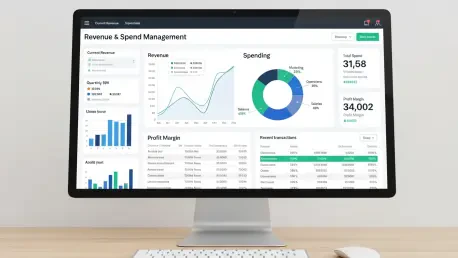

In the complex landscape of modern business finance, long-term profitability is not solely determined by how much a company earns but is equally dependent on how intelligently it manages its expenditures. Revenue Management and Spend Management represent two distinct but deeply complementary financial disciplines that form the bedrock of a robust corporate strategy. Historically relegated to back-office functions focused on bookkeeping and compliance, these areas have evolved dramatically. They are now recognized as strategic drivers of both growth and efficiency, providing the end-to-end financial visibility that modern enterprises need to thrive in a competitive market. This evolution reflects a broader shift toward proactive financial governance, where every dollar earned and spent is optimized.
Core Comparison: Objectives, Processes, and Technology
Primary Goal: Maximizing Top-Line Growth vs. Optimizing Bottom-Line Health
The fundamental objectives of Revenue Management and Spend Management diverge significantly, targeting opposite ends of the income statement. Revenue Management is fundamentally an offensive strategy, aimed squarely at maximizing top-line growth. It achieves this by enabling businesses to implement sophisticated and flexible monetization models, such as consumption-based, tiered, or hybrid pricing, that adapt to customer demands and market dynamics. This discipline is about capturing the maximum possible value from the products and services offered.
In contrast, Spend Management operates as a defensive strategy, focused on optimizing bottom-line health and bolstering profitability. Its primary goal is to gain control over all corporate expenditures, from procurement to employee expenses, thereby creating operational savings and improving efficiency. By meticulously tracking and managing where money is going, organizations can identify waste, negotiate better terms with vendors, and ensure that every dollar spent contributes directly to strategic business objectives.
Operational Scope: The Customer Billing Cycle vs. The Source-to-Pay Workflow
The operational arenas for these two disciplines are also clearly defined and distinct. Revenue Management governs the entire customer-facing financial journey, often referred to as the billing cycle. This scope includes handling complex billing scenarios for products and services, ensuring compliance with international tax regulations across different regions, and adhering to strict revenue recognition standards like IFRS 15 and ASC 606. Its focus is external, ensuring that income is billed, collected, and reported accurately and efficiently.
Conversely, Spend Management oversees the internal and vendor-facing processes that constitute the source-to-pay workflow. This encompasses everything from the initial sourcing of goods and services to the final payment settlement. Key activities include digital vendor onboarding, managing requests for quotations (RFQs), automating accounts payable through intelligent bill capture, and reconciling travel and employee expenses. Its focus is internal, aimed at streamlining the processes that lead to cash outflow.
Enabling Platforms: Flexible Monetization Engines vs. Unified Expenditure Control
The technological foundations supporting each function are tailored to their unique operational needs. Revenue Management relies on powerful and flexible monetization engines, such as Zoho Billing Enterprise Edition, which are designed to adapt to rapid market shifts and complex pricing structures. These platforms provide the agility for large organizations to roll out new pricing strategies quickly, manage subscriptions, and ensure global compliance, effectively turning the billing process into a strategic asset.
Spend Management, on the other hand, utilizes integrated solutions that consolidate disparate spending activities into a single, cohesive platform. Tools like Zoho Spend bring procurement, AP automation, and travel management under one roof to provide a holistic view of all corporate spending. This unified approach eliminates data silos and empowers finance teams with the insights needed to control costs, mitigate risk, and make more informed purchasing decisions.
Integration Challenges and Strategic Alignment
Viewing these two critical functions in isolation creates significant limitations and undermines a company’s overall financial health. When revenue and spend data are kept in separate silos, leadership receives an incomplete picture, making it difficult to assess true profitability or forecast accurately. This disconnect hinders strategic decision-making, as insights from one side of the financial equation are not available to inform actions on the other.
The primary challenge lies in aligning forward-looking revenue forecasts with backward-looking procurement budgets and actual expenditures. Without a seamless flow of information, a company might aggressively pursue a sales goal without allocating the necessary resources in its spending plan, leading to operational bottlenecks. Overcoming these obstacles requires a concerted effort to break down departmental barriers and integrate the systems that manage revenue-generating and cost-incurring activities.
Conclusion: Building a Unified Financial Ecosystem
The comparative analysis revealed that while Revenue Management and Spend Management pursued different objectives through distinct processes and technologies, they were fundamentally two halves of a single, coherent financial strategy. One focused on maximizing income, while the other concentrated on optimizing outflow, yet both were essential for sustainable profitability. Treating them as separate functions often led to data silos and strategic misalignment, hindering a company’s ability to achieve comprehensive financial control.
Ultimately, the most successful organizations were those that built a unified financial ecosystem where these disciplines worked in tandem. This integrated approach transformed billing from a simple administrative task into a dynamic revenue engine and converted spending from a necessary cost center into a source of strategic insight and savings. By bridging the gap between earning and spending, businesses unlocked a more complete and powerful view of their financial performance.