
We are joined by Vijay Raina, a leading expert in enterprise SaaS technology, to dissect the monumental shifts occurring within India’s IT landscape. As generative AI continues to reshape industries, legacy giants are forging new alliances to stay ahead. The conversation today will revolve around the recent landmark partnership between Infosys and Anthropic, exploring how so-called “agentic” AI will redefine complex enterprise workflows, the strategic evolution of the traditional IT services model in response to automation fears, and how India is rapidly becoming a global hub for AI development and application.
Infosys is partnering with Anthropic to build ‘agentic’ AI for sectors like banking and telecoms. Could you detail a complex workflow these agents will autonomously handle and explain what specific features or safeguards make them ‘enterprise-grade’ for such regulated industries?
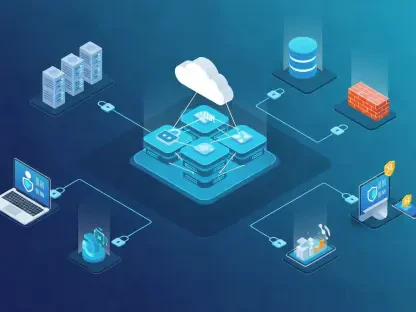
Imagine a telecommunications company launching a new 5G plan. A customer initiates an upgrade request through a chatbot. An AI agent, powered by Claude models integrated into the Topaz platform, takes over. It doesn’t just answer questions; it acts. The agent accesses the customer’s account, verifies their eligibility, analyzes their data usage to recommend the optimal tier, processes the plan change in the billing system, and even schedules a technician if new hardware is required. What makes this ‘enterprise-grade’ is the built-in governance. Every action is logged for auditability, the system is firewalled to prevent data leakage, and it operates within the strict regulatory frameworks of the telecom industry. It’s not just about automation; it’s about compliant, secure, and auditable automation.
Some enterprise AI tools have sparked concerns about disrupting the traditional IT services model. How does this partnership specifically address those industry jitters, and what is your strategy for evolving the labor-intensive outsourcing business model rather than simply replacing it?
The fear in the market is palpable; you saw how IT stocks went into a freefall recently. This partnership is a direct response to that anxiety, but it’s not about replacement—it’s about elevation. The strategy is to shift the workforce from doing to directing. Instead of having thousands of developers manually writing and testing every line of code, we will have skilled teams overseeing fleets of AI agents. They will become AI orchestrators, prompt engineers who design complex workflows, and governance specialists who ensure the AI operates ethically and within regulations. This evolves the labor-intensive model by automating repetitive tasks, freeing up our human talent to focus on higher-value problem-solving, architectural design, and client strategy, which AI cannot replicate.
Your teams are already using Anthropic’s Claude Code internally to write, test, and debug. What specific metrics have you observed regarding developer productivity or code quality, and what is the step-by-step process for translating this internal expertise into tangible benefits for client projects?
While we are still quantifying the precise metrics, the initial observations are incredibly promising. We are seeing a significant acceleration in the early stages of development. The time it takes for a developer to go from a requirement to a functional piece of code is shrinking dramatically. More importantly, we’re seeing improvements in code quality. Claude can often identify potential bugs or suggest more efficient ways to write a function during the creation process itself, which cuts down on long, frustrating debugging cycles later on. We translate this expertise to clients by embedding these AI-augmented practices directly into our project delivery. Our developers, now equipped with these tools, can deliver cleaner code faster, which means our clients get to market quicker and with a more robust product.
There’s a recognized gap between an AI model that works in a demo and one that can be deployed in a regulated industry. What specific industry expertise and governance capabilities does Infosys bring to help Anthropic bridge this gap for sectors like finance?
That gap is precisely what makes this partnership so powerful. As their CEO noted, a demo is one thing, but a real-world financial services application is another beast entirely. Anthropic has a phenomenal model, but we have decades of experience navigating the intricate compliance and risk-management landscapes of global banking. We bring the deep domain knowledge required to build the necessary guardrails. The co-development process involves our financial industry experts working alongside their AI researchers to train and fine-tune the models on sector-specific data and regulations. We are essentially building the governance layers—the audit trails, the security protocols, the compliance checks—directly into the agent’s core logic, ensuring it can operate safely and effectively within these high-stakes environments.
With India becoming Anthropic’s second-largest market for Claude usage, especially in programming, how will this new partnership and local office in Bengaluru shape the development of AI tools specifically for the Indian enterprise landscape?
The fact that India is already their second-largest market, with 6% of global Claude usage, speaks volumes about the talent and appetite here. The new Bengaluru office is a game-changer. It puts their core team right in the heart of our tech ecosystem. This proximity will foster a much tighter feedback loop. We can explore use cases tailored for the Indian market—for example, developing agents that understand the nuances of regional languages for customer service in the banking sector or navigating India’s unique digital public infrastructure like UPI for fintech solutions. This isn’t just about using a global tool; it’s about co-creating solutions that are finely tuned for the specific challenges and opportunities within Indian enterprises.
What is your forecast for the evolution of the global IT services industry over the next five years?
Over the next five years, the global IT services industry will undergo a fundamental transformation from a model based on labor arbitrage to one based on intellectual property and AI-driven value creation. Companies will no longer compete solely on the size of their workforce but on the sophistication of their AI platforms and the expertise of the teams that manage them. We’ll see a dramatic increase in revenue generated from AI-related services, likely far exceeding the current 5-6% that we and our rivals are reporting. The winners will be those who, like us, are not just adopting AI but are deeply integrating it into the core of their service delivery, using it to create unprecedented levels of efficiency, innovation, and client value. The focus will shift from managing processes to delivering outcomes.