
The recent tremor felt across the data landscape was not just another market fluctuation but the aftershock of Snowflake’s monumental acquisition of observability platform Observe, a deal that signals a fundamental realignment in how enterprises will manage and interpret information. Industry insiders and market analysts are now dissecting this billion-dollar move, offering a spectrum of insights on what it means for customers, competitors, and the very definition of a data platform in the age of artificial intelligence. This roundup synthesizes those perspectives to chart the course of this new data era.
Beyond the Billion-Dollar Price Tag Setting the Stage for a New Data Era
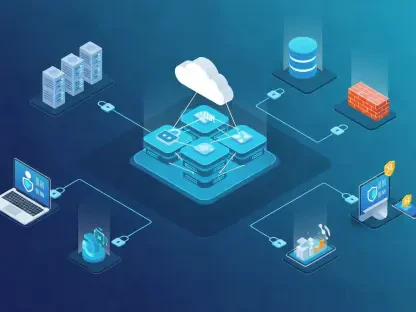
The reported $1 billion acquisition of Observe stands as Snowflake’s largest strategic purchase to date, eclipsing its 2022 buyout of Streamlit. The core motivation, according to most analyses, is clear: to fuse the worlds of data storage and data observability. This move aims to create a singular, cohesive environment where the massive volumes of telemetry data—logs, metrics, and traces—generated by modern applications can live alongside core business data. The goal is to eliminate the silos that have traditionally complicated troubleshooting and performance monitoring.
A strong consensus exists that this convergence is no longer a luxury but a necessity, driven by the explosive data demands of AI. As organizations deploy more sophisticated machine learning models, the data exhaust they produce becomes both a critical resource for monitoring and a significant storage challenge. By integrating Observe, Snowflake is betting that customers will demand a unified platform to not only store this data but also derive immediate operational insights from it, moving from passive data warehousing to active data intelligence.
Looking ahead, this merger is widely expected to redefine what a comprehensive data platform is. The prevailing view is that it will pressure competitors to follow suit, either through internal development or further acquisitions, thereby accelerating the industry-wide consolidation trend that characterized 2025. The move reshapes the competitive landscape, transforming Snowflake from a data cloud into an all-encompassing data and operations hub.
Deconstructing the Deal Strategy Synergy and Industry Shockwaves
A Native Integration How Observe’s Snowflake DNA Changes the Observability Game
One of the most compelling arguments for the deal’s success lies in Observe’s origin story. Having been built natively on Snowflake’s technology since its inception, the platform promises a level of integration that third-party solutions can rarely achieve. This shared technical foundation is seen as a crucial advantage, potentially bypassing the complex and often-clumsy integration hurdles that plague many acquisitions. The core value proposition—enabling teams to diagnose and resolve complex issues up to 10 times faster by centralizing telemetry data—is made far more credible by this deep architectural alignment.
However, some experts caution that even with a shared foundation, merging two distinct product roadmaps, engineering teams, and customer support models presents significant execution challenges. The debate over integrated suites versus best-of-breed tools is also reignited. While the convenience of a single platform is attractive, some customers may remain loyal to specialized observability tools, questioning whether an all-in-one solution can truly match the feature depth and performance of dedicated market leaders.
The One-Stop-Shop Play Redefining the Competitive Landscape for Data Platforms
There is little disagreement that this acquisition positions Snowflake as a direct and formidable challenger to observability giants like Datadog and Splunk. The strategy reflects a broader industry shift toward platform consolidation, where enterprises increasingly prefer to partner with a single vendor that can satisfy a wide range of needs, from data warehousing and analytics to security and operational monitoring. By adding a robust observability layer, Snowflake significantly strengthens its “one-stop-shop” appeal.
Nevertheless, this aggressive expansion comes with strategic risks. Analysts point to potential friction with Snowflake’s existing ecosystem of observability partners, who may now view the company as a competitor. Furthermore, unseating deeply entrenched incumbents is an immense challenge. Competitors have spent years building loyal customer bases and specialized functionalities, and winning significant market share will require more than just a seamless integration; it will demand a demonstrably superior and cost-effective solution.
Fueling the Consolidation Engine Why AI Is Driving a Wave of Data Company Mergers
The Observe acquisition is not viewed in a vacuum but as the latest and most significant move in a broader consolidation wave. It follows Snowflake’s recent purchases of companies like Crunchy Data and Select Star, illustrating a clear strategy to build a comprehensive, end-to-end data suite. This trend is largely fueled by the insatiable data appetite of generative AI, which compels platform providers to control every stage of the data lifecycle, from ingestion and governance to analysis and operationalization.
While market consolidation can lead to more powerful and integrated platforms, a critical perspective questions its ultimate benefit to the customer. Concerns are being raised about the potential for reduced choice, less competitive pricing, and a potential slowdown in niche innovation as a few mega-platforms come to dominate the market. The long-term impact on the health and diversity of the data ecosystem remains a subject of intense debate.
The Sutter Hill Connection Unpacking the Deep-Rooted Ties Behind the Acquisition
The unique backstory of this deal has also drawn considerable attention. Both Snowflake and Observe were incubated at Sutter Hill Ventures, and Observe’s CEO has long held a seat on Snowflake’s board. This “insider” model of acquisition is seen by some as a highly efficient path to strategic alignment, ensuring that the two companies were culturally and technologically in sync long before any papers were signed.
This venture-led growth strategy, where a single firm nurtures a portfolio of complementary companies with an eye toward eventual integration, is being posited as a potential new blueprint for building enterprise technology giants. In contrast to conventional M&A, which often involves navigating disparate corporate cultures and technical stacks, this approach suggests a future where major platforms are assembled more deliberately from a pre-vetted ecosystem of innovators, promising faster and more successful integrations.
Navigating the New Data Ecosystem Actionable Insights for Industry Leaders
The most critical takeaway for industry leaders is that the wall between data analytics and operational observability is crumbling. The fusion of these domains is becoming the new standard, compelling a reevaluation of existing data strategies. Platform consolidation is no longer a distant trend but a present-day reality, and the competitive goalposts have fundamentally moved for both vendors and buyers.
For CTOs and data executives, the immediate task is to assess their current data stack in light of this market shift. This involves weighing the benefits of a unified platform against the potential lock-in risks and determining whether a single-vendor or a multi-cloud, best-of-breed strategy remains the right path forward. The decision will hinge on factors like cost, existing investments, team skills, and long-term innovation priorities.
Meanwhile, data engineers and practitioners must prepare for the rise of these unified platforms. The skills required are evolving beyond traditional data warehousing and ETL processes to include a deeper understanding of logs, metrics, and distributed tracing. Proficiency in managing and analyzing operational data within a single, converged environment will become an increasingly valuable and sought-after expertise.
The Final Word Is This Snowflake’s Checkmate Move in the AI Data Race?
Ultimately, this acquisition was interpreted as far more than a simple feature addition; it represented a fundamental pivot by Snowflake to become the definitive data super-platform for the AI era. The move was a clear declaration of intent to own the entire data conversation, from storage and analytics to the real-time operational intelligence that powers modern digital services.
The long-term implications for the industry were immediately apparent, as the lines between data warehousing, analytics, and operational monitoring became permanently blurred. The deal solidified the narrative that in the age of AI, data is not just a resource to be stored but a dynamic asset to be observed and acted upon in real time.
This left industry watchers with a compelling forward-looking question: as the data wars intensified, who would be the next major player to be acquired, and what would the ultimate all-in-one data platform truly look like in the years to come?