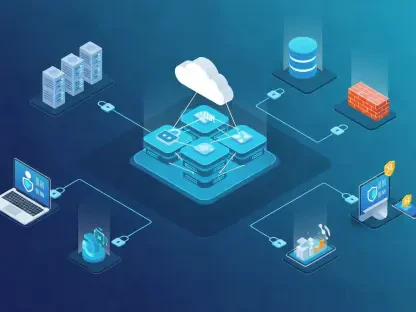

The invisible architecture of global entertainment is currently undergoing a radical renovation as traditional linear television and fluid digital streaming merge into a single, automated powerhouse. This transformation is not merely a technical upgrade; it is a fundamental shift in how media entities manage their most valuable asset: time. As of early 2026, the broadcast scheduling software market is no longer a niche administrative tool but the central intelligence of a media ecosystem that must remain synchronized across dozens of platforms simultaneously. With the market valuation currently climbing from USD 2.69 billion toward a projected USD 5.2 billion by 2035, the industry is witnessing the birth of a new operational standard where manual entry is replaced by predictive algorithms and cloud-native resilience.
Modernizing the Media Brain: Current State of Broadcast Scheduling
Broadcast scheduling software functions as the operational core, serving as the primary logic gate for television, radio, and streaming environments. It orchestrates the flow of content, ensuring that every second of airtime is accounted for, whether it involves a live news broadcast or a pre-recorded drama. By acting as the central intelligence, these systems prevent the catastrophic “dead air” that can ruin a broadcaster’s reputation while ensuring that complex metadata travels alongside the video signal to various end-user devices.
The industry has moved decisively away from silos where linear TV and digital departments operated independently. Today, synchronization is the priority, allowing a single programming team to push updates to cable feeds, mobile apps, and social media streams from a unified dashboard. This integration ensures that branding remains consistent and that regional blackouts or rights restrictions are enforced automatically across all delivery paths without human intervention.
Market composition is increasingly diverse, involving a mix of global commercial giants and specialized public broadcasters. While traditional networks still hold significant weight, emerging Over-the-Top (OTT) players are now the primary drivers of innovation. These stakeholders require solutions that go beyond simple time-slot management, demanding tools that can handle dynamic ad insertion and regionalized content variations for a global audience that never stops watching.
Automation has become the non-negotiable standard for managing the complex lifecycle of modern media. Digital solutions now handle everything from the initial ingest of content to the final ad reconciliation reports. This level of automation is essential for managing regional synchronization, where a national feed must be seamlessly interrupted for local news or advertisements in hundreds of different markets at the exact same millisecond.
Navigating the Path to a $5.2 Billion Valuation
Technological Catalysts and Shifting Viewer Patterns
The rise of cloud-native architectures is perhaps the most significant catalyst for the democratization of high-end scheduling tools. By moving to a Software-as-a-Service (SaaS) model, smaller regional broadcasters can now access the same sophisticated automation features previously reserved for billion-dollar networks. This shift reduces the need for massive on-site server rooms, allowing organizations to scale their operations up or down based on seasonal demand or special events like the Olympics.
Artificial intelligence and predictive scheduling are turning historical data into a strategic roadmap for engagement. Machine learning models now analyze years of viewer behavior to forecast which program lineups will retain the most audience members during specific dayparts. These tools can even suggest the optimal placement for promotional trailers, ensuring that viewers are successfully funneled from one program to the next without switching the channel.
Scheduling is evolving from a “one-to-many” broadcast model toward a hyper-personalized “one-to-one” experience. In this new landscape, two neighbors watching the same streaming “channel” might see slightly different program orders or tailored advertisements based on their individual preferences. Dynamic content management allows broadcasters to treat their linear feeds as living organisms that adapt to the viewer in real-time.
Managing multi-platform consistency has become a survival requirement for media brands. As audiences fragment across cable, OTT, mobile apps, and Video-on-Demand (VOD) platforms, the scheduling software must act as the “source of truth.” If a live sports event goes into overtime, the software must instantly update the schedules for the mobile app and the DVR recordings of millions of users to ensure no content is missed.
Market Projections and Economic Growth Indicators
The steady 6.9% compound annual growth rate (CAGR) represents a consistent upward trajectory that reflects the ongoing digital transformation. Starting from the USD 2.69 billion mark in 2025, the market is benefiting from a wave of legacy system replacements. As older hardware reaches the end of its lifecycle, broadcasters are not just buying new boxes; they are investing in long-term software contracts that provide continuous updates and cloud scalability.
Mapping the financial journey toward the $5.2 billion benchmark by 2035 reveals several key revenue milestones. The initial surge is driven by the migration to the cloud, while the latter half of the decade will likely see growth fueled by the integration of advanced AI and automated ad-tech. This financial evolution suggests that the market will nearly double in size as scheduling becomes inseparable from revenue optimization and data analytics.
Regional growth engines show a fascinating contrast between the mature North American market and the high-velocity expansion in the Asia-Pacific region. While North America remains a leader in high-value software contracts and AI adoption, the Asia-Pacific region is experiencing a boom in new channel launches and localized streaming services. This regional diversity ensures that even if one market saturates, global demand remains high due to the rapid urbanization and digital adoption in emerging economies.
Evaluating segment performance indicates that while software platforms remain the largest revenue earners, there is a rising demand for implementation and consulting services. Many organizations lack the internal expertise to navigate the transition from analog logic to cloud-native workflows. Consequently, service providers who can offer both the technology and the strategic guidance for data migration and staff retraining are seeing their influence and market share expand.
Overcoming Structural and Technical Roadblocks
The legacy infrastructure dilemma continues to be a primary hurdle for many established media houses. Integrating modern, cloud-based software with aging hardware systems requires a delicate balance of technical ingenuity and financial patience. Broadcasters often adopt a “hybrid” approach, keeping their mission-critical core on-site while offloading distribution and secondary scheduling tasks to the cloud to mitigate the risks associated with a total system overhaul.
Bridging the talent scarcity gap is a challenge that requires a rethink of industry training. There is a growing shortage of engineers who understand both the traditional logic of broadcast “traffic” and the modern complexities of data science. Organizations are increasingly looking toward automated interfaces that simplify the user experience, allowing creative staff to manage complex scheduling tasks without needing a degree in computer science.
Financial barriers to entry remain significant for mid-sized organizations that are caught between legacy needs and future goals. The initial costs of data migration, software licensing, and staff retraining can be daunting. However, the long-term cost of inaction—manifested in manual errors and lost ad revenue—often outweighs the price of the upgrade, leading many to seek flexible payment models or tiered software subscriptions.
Developing specialized niche solutions for live environments remains a high-stakes frontier for software developers. In the world of breaking news and live sports, schedules are frequently discarded in favor of immediate coverage. Modern software must be flexible enough to handle these unpredictable events with “one-touch” adjustments that propagate across all digital platforms instantly, ensuring that the transition from a live game to the next scheduled program is flawless.
Governance, Security, and Compliance Standards
Navigating global regulatory frameworks is an increasingly complex task for software developers. Different countries have vastly different rules regarding age ratings, the frequency of commercial breaks, and the mandatory inclusion of closed captioning or public service announcements. Advanced scheduling tools now include localized “compliance engines” that automatically flag content that violates the specific legal mandates of the region where it is being aired.
Cybersecurity in a cloud-first world has moved to the forefront of corporate strategy. Protecting high-value media assets and sensitive advertising contracts from evolving cyber threats is no longer just an IT concern but a legal and financial necessity. Modern scheduling platforms utilize end-to-end encryption and multi-factor authentication to ensure that a network’s lineup cannot be hijacked or tampered with by external actors.
Balancing aggressive data-driven scheduling with stringent consumer privacy laws like GDPR and CCPA is a delicate act. While broadcasters want to use viewer analytics to optimize their lineups, they must do so without compromising the personal data of their audience. Software vendors are responding by building privacy-by-design features that anonymize viewer data while still providing the high-level insights needed for effective scheduling.
Standardizing multi-language feeds involves managing the legal and technical complexities of diverse geographical regions simultaneously. A single master schedule might need to trigger different audio tracks, subtitle files, and even different versions of the same show to comply with local censorship or cultural norms. The software must manage these variations as a single cohesive project to prevent errors that could result in heavy fines or loss of broadcasting licenses.
The Future Landscape: Innovations and Disruptors
The integration of 5G and edge computing is set to reduce latency for real-time global broadcasts significantly. By moving data-heavy scheduling tasks closer to the viewer, broadcasters can offer more interactive and responsive content. This technology allows for the nearly instantaneous synchronization of live events, ensuring that the “second screen” experience on a smartphone is perfectly aligned with the main broadcast on the living room television.
The convergence of ad-tech and scheduling is moving the industry toward a programmatic future. Dynamic ad insertion (DAI) allows broadcasters to swap out commercials in real-time, matching the advertisement to the specific viewer rather than the program itself. This shift turns the broadcast schedule into a high-precision marketing tool, significantly increasing the value of every commercial break by ensuring relevance and reducing ad fatigue.
Unified workflow evolution is gradually erasing the boundaries between traditional TV scheduling and digital streaming management. In the coming years, the idea of a “broadcast” schedule will simply refer to a master timeline of assets that are distributed through whatever medium the viewer prefers. This holistic approach eliminates redundant departments and allows for a more agile response to changing viewer trends and breaking news events.
Sustainability in broadcasting is becoming a key factor in corporate social responsibility (CSR) initiatives. As the industry moves to the cloud, the energy efficiency of data centers and the optimization of code to reduce processing power are becoming competitive advantages. Software vendors are now highlighting their “green” credentials, helping broadcasters reduce their carbon footprint while simultaneously lowering their operational energy costs.
Strategic Outlook: Thriving in the New Media Economy
The momentum behind the broadcast scheduling sector is sustained by the fundamental need for efficiency in an era of infinite content. By doubling the market size over the next decade, the industry proved that the “brain” of the media operation is its most critical investment. The transition from manual coordination to AI-enhanced automation has not only reduced operational overhead but has also unlocked new revenue streams through hyper-personalization and programmatic ad placement.
Moving forward, the primary “blue ocean” opportunities lie in the development of integrated analytics dashboards that bridge the gap between content scheduling and financial performance. Software that can provide real-time ROI on a specific programming choice allows executives to make data-driven decisions that were previously based on intuition. Investors and developers should focus on tools that treat the broadcast schedule as a living data set rather than a static calendar.
Maintaining a competitive edge in this new media economy requires a commitment to flexibility and continuous technological integration. Organizations that cling to legacy systems or siloed workflows will find themselves unable to keep pace with the rapid shifts in viewer behavior and the technical demands of multi-platform delivery. Automation is no longer a luxury for the largest networks; it is the entry requirement for any media entity that intends to remain relevant.
The ultimate health of the broadcast scheduling sector was secured by its ability to adapt to the streaming revolution rather than being replaced by it. By 2035, the sector became a unified ecosystem where the distinction between “traditional” and “digital” ceased to exist. Media organizations successfully moved toward a future where the scheduling software did more than just fill time; it actively managed the relationship between content, audience, and revenue with unprecedented precision.