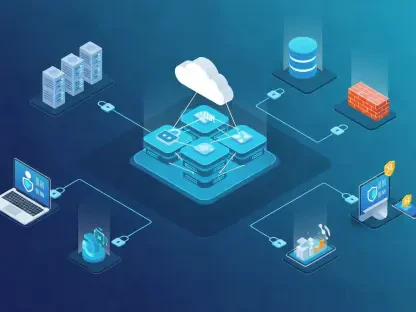

The digital landscape has undergone a radical transformation where the lone hacker in a basement has been replaced by a sophisticated, corporate-style adversary operating with the efficiency of a Fortune 500 company. This systemic evolution signifies a departure from the chaotic, disorganized attacks of the past toward a structured, industrialized market. Criminal organizations now utilize advanced supply chains, specialized labor, and high-level strategic planning to breach modern defenses. The result is a threat environment that is no longer defined by the cleverness of an individual, but by the relentless scalability of global criminal enterprises that treat data theft as a high-margin business model.
The Shift From Independent Hackers to Global Criminal Enterprises
Today, the cybercrime ecosystem functions as a professionalized marketplace where specialized roles are outsourced to the highest bidder. Attackers no longer need to build their own infrastructure from scratch; instead, they leverage cloud environments and Software-as-a-Service (SaaS) platforms to amplify their reach. This shift has turned criminal activity into a forced multiplier, allowing small groups to manage massive campaigns that target thousands of organizations simultaneously. By utilizing the same technical stacks that legitimate businesses use for productivity, these actors have achieved an unprecedented level of operational efficiency and global connectivity.
This industrialization is driven by a strict adherence to a “measures of effectiveness” philosophy, where return on investment (ROI) is prioritized over technical flair. Modern criminals favor automation and speed, seeking the path of least resistance to extract value from their targets. The scale of this challenge is reflected in telemetry data showing the mitigation of over 234 billion threats daily across global networks. This sheer volume indicates that the primary threat is no longer a targeted surgical strike, but a continuous, automated bombardment designed to find and exploit any minor oversight in a company’s digital perimeter.
The Rise of Automated Exploitation and Market-Driven Threats
Artificial Intelligence and SaaS Weaponization as Force Multipliers
Generative artificial intelligence has bridged the technical gap for low-level criminals, providing them with the tools to mass-produce flawless phishing lures and develop exploits at a fraction of the traditional cost. This technology acts as a catalyst for rapid weaponization, enabling attackers to translate complex vulnerabilities into functional code within hours. Moreover, the emergence of multi-tenant breaches has changed the risk profile of SaaS-to-SaaS connections. Attackers now exploit trusted integrations to hop between platforms, navigating enterprise environments in real-time to locate sensitive data before security teams can even register an anomaly.
A closer look at recent campaigns, such as the GRUB1 operation, reveals how AI is utilized to scan and identify high-value data within seconds of an initial breach. These industrialized campaigns do not waste time on manual exploration; instead, they use machine learning models to sift through vast amounts of information to find financial records or proprietary intellectual property. This speed ensures that the window for human intervention is effectively closed, as the entire lifecycle of an attack—from entry to exfiltration—can now occur in the time it takes for a security analyst to receive a first-level alert.
The Metrics of Malice: Growth Projections and Financial Performance
The commercial success of “Phishing-as-a-Service” has fundamentally altered how identity theft is conducted by providing turnkey solutions for bypassing traditional multifactor authentication. These services harvest live session tokens, rendering static passwords and basic MFA obsolete. Financially, these operations are highly optimized, with Business Email Compromise (BEC) tactics often targeting a specific “sweet spot” of approximately $49,000. This figure is carefully calculated to be high enough for significant profit while remaining low enough to avoid triggering the rigorous auditing processes that usually accompany larger wire transfers.
Looking toward the immediate future, the threat of hypervolumetric DDoS attacks continues to grow as botnet capabilities reach new heights. These assaults now reach baseline speeds of 31.4 terabits per second, capable of overwhelming even the most robust data centers in a matter of moments. Because these attacks peak so quickly, the traditional model of manual traffic scrubbing is no longer viable. The financial performance of criminal groups is now tied to their ability to launch these massive, automated strikes, forcing organizations to invest in equally automated defensive systems to maintain uptime.
The Critical Vulnerabilities of an Interconnected Digital Economy
Despite the focus on high-tech AI, the persistence of simple link-based phishing remains a glaring vulnerability due to the failure of global authentication standards. A significant portion of corporate email traffic still lacks proper DMARC validation, leaving the door open for impersonation and credential harvesting. This reliance on legacy protocols creates a massive surface area for industrialized attackers to exploit. Furthermore, the modern trend of “stealth over spectacle” means that many breaches go undetected for months as command-and-control traffic is hidden inside legitimate cloud service requests, blending in with normal business operations.
The erosion of the traditional network perimeter is further accelerated by the proliferation of overprivileged API keys and unmanaged SaaS supply chains. As organizations connect more third-party tools to their core infrastructure, they create a web of interdependencies that are difficult to monitor and secure. Each connection represents a potential entry point for an industrialized actor who can exploit a single weak link to gain access to a much larger ecosystem. This interconnectedness means that a vulnerability in a small, niche service can have cascading effects across an entire industry, making supply chain security a top priority.
Regulatory Response and the Demand for Standardized Authentication
In response to these systemic threats, regulatory bodies are increasingly mandating the adoption of advanced email security protocols such as SPF, DKIM, and DMARC. These standards are no longer viewed as optional best practices but as essential components of a national security strategy. Governments have recognized that nation-state actors are “pre-positioning” themselves within critical telecommunications and government infrastructure, waiting for the opportune moment to strike. This has led to a push for stricter compliance requirements and more transparency regarding how organizations handle their internal digital identities.
The shift in regulation is also moving toward holding organizations more accountable for the security of their SaaS-to-SaaS integrations. As the identity layer becomes the primary target, regulators are demanding that companies implement more rigorous vetting processes for third-party API access. This change reflects a growing understanding that the security of a single organization is tied to the security of its digital partners. By standardizing authentication and forcing a move away from legacy systems, regulatory frameworks aim to raise the baseline cost of entry for criminal enterprises, making industrial-scale attacks less profitable.
Toward Identity-Centric Resilience and Automated Defense
The evolution of cybercrime necessitates a transition from infrastructure-centric security to a model focused on identity-centric resilience. Since the network perimeter has largely vanished, the goal of modern defense is to ensure that even if an attacker gains access, their ability to move laterally is severely restricted. Zero Trust architecture is expected to see significant growth, with a focus on utilizing biometrics and geofencing to neutralize session hijacking. These tools create a dynamic security environment where access is constantly re-evaluated based on real-time context rather than a one-time login event.
To counter the near-zero response windows of modern botnets, systemic and automated defense mechanisms are becoming the standard requirement for enterprise protection. Innovation in AI-driven security tools will define the next decade, as defenders must match the speed and scale of their adversaries. These automated systems are designed to detect anomalies and mitigate threats in milliseconds, providing a level of protection that human operators simply cannot achieve. This shift toward self-healing networks and automated threat hunting is the only way to stay ahead of the industrial-scale efficiency of modern criminal groups.
Building a Resilient Future Against Industrialized Threats
The transformation of cybercrime into a corporate-style enterprise was a predictable outcome of a globalized digital economy that prioritized connectivity over inherent security. Moving forward, organizations must recognize that their defensive strategies require a fundamental structural change rather than incremental updates. This involves prioritizing the security of the identity layer above all else and acknowledging that lateral movement within a network is the primary indicator of a successful breach. Implementing strict least-privilege access and ensuring that every API connection is monitored and authenticated are no longer luxury measures but survival requirements.
As the arms race between automated criminal efficiency and automated cybersecurity resilience continues, the focus should shift toward building systems that are resilient by design rather than by patch. Organizations should consider investing in decentralized identity solutions and hardware-backed authentication to remove the vulnerabilities inherent in software-based tokens. Furthermore, fostering a culture of continuous monitoring and rapid incident response will be essential as attackers refine their stealth tactics. By embracing these systemic defensive strategies, the global community can begin to neutralize the advantages of an industrialized criminal market and secure the future of the digital economy.