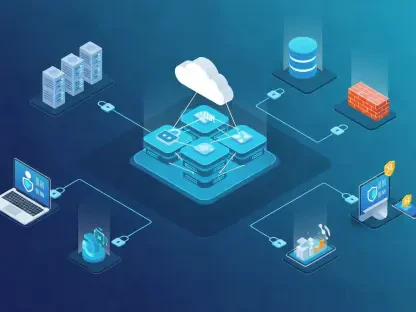

The evolution of artificial intelligence from standalone conversational models into functional, autonomous agents capable of interacting with the real world has been hampered by a significant technical hurdle: the complex, fragile, and insecure process of connecting them to external tools and data sources. Developers have long struggled with a patchwork of custom connectors and bespoke integrations, a method that is not only difficult to scale but also introduces considerable governance and security risks for enterprises. Addressing this critical bottleneck, Google has introduced a strategic initiative designed to provide the foundational “plumbing” for the next generation of AI. By launching fully managed, remote servers based on the open-source Model Context Protocol (MCP), the company aims to replace weeks of custom development with a simple, secure endpoint, effectively creating an “agent-ready” infrastructure that allows AI to seamlessly and safely plug into a vast array of services.
A New Standard for AI Connectivity
Embracing the Model Context Protocol
The foundation of this new infrastructure is the Model Context Protocol (MCP), an open-source standard initially developed by Anthropic and now under the stewardship of the Linux Foundation. The adoption of a widely supported, open standard is a pivotal move, as it fosters a collaborative ecosystem and prevents vendor lock-in. Because Google’s servers are built on MCP, they are inherently interoperable with a diverse range of AI clients, including Google’s own Gemini models, Anthropic’s Claude, and OpenAI’s ChatGPT. This universal compatibility ensures that developers are not restricted to a single AI provider and can choose the best model for their specific use case while still benefiting from a standardized method of tool integration. This approach effectively creates a common language for communication between AI agents and external services, much like how HTTP standardized communication on the web. By championing an open standard, Google is not just building a product but is contributing to a more interconnected and resilient AI landscape where innovation can flourish across different platforms and models without the friction of proprietary protocols.
The practical impact of standardizing on MCP is a dramatic simplification of the development lifecycle for AI-powered applications. Previously, integrating an AI agent with an external tool required developers to build and maintain brittle, custom-coded connections for each specific service, a process that was both time-consuming and prone to errors. This new server-based approach replaces that complexity with a stable, managed endpoint accessible via a simple URL. The shift is analogous to the standardization of physical connectors like USB-C, which eliminated the need for a different proprietary cable for every device. For developers, this means less time spent on low-level integration challenges and more time focused on creating innovative applications and user experiences. For enterprises, it translates to faster deployment cycles, reduced maintenance overhead, and a more robust and scalable architecture. This standardization is a crucial step in maturing AI technology, making it more accessible, reliable, and practical for solving real-world business problems at scale.
Initial Services and Practical Applications
To demonstrate the immediate utility of this new framework, the initial wave of MCP servers, now available in public preview, provides direct access to several key Google and Cloud services. These include Google Maps, BigQuery, Compute Engine, and Kubernetes Engine. This selection is not arbitrary; it unlocks a range of powerful, real-world applications that were previously difficult to implement reliably. For example, an advanced analytics agent can now be configured to directly and securely query a BigQuery database to generate business intelligence reports in natural language, or a logistics agent could interact with Compute Engine and Kubernetes Engine to manage and scale cloud infrastructure based on real-time operational demands. A travel-planning agent can now access the vast, up-to-date repository of location data within Google Maps, allowing it to provide accurate, contextually relevant recommendations grounded in factual information. These initial integrations serve as powerful proofs of concept, showcasing how agents can be transformed from simple conversationalists into highly functional digital assistants.
This direct connection to authoritative data sources is fundamental to addressing one of the most persistent challenges in AI: the tendency for models to “hallucinate” or generate plausible but incorrect information. By grounding an agent’s responses in real-time, verified data from services like Google Maps or a corporate database via BigQuery, its reliability and trustworthiness are significantly enhanced. This process of grounding is essential for enterprise use cases where accuracy is paramount. The initial offering is just the beginning of a broader strategy to build a comprehensive ecosystem of agent-ready tools. There are plans to rapidly expand support to other critical services, including cloud storage, additional databases, and logging systems. This expansion will further broaden the scope of tasks that AI agents can perform, solidifying their role as indispensable components of modern enterprise software and paving the way for more sophisticated and autonomous applications in the near future.
Enterprise-Grade Security and Governance
Fortifying Agent Interactions
Recognizing that granting AI agents access to critical systems introduces new and complex security challenges, Google has integrated a robust, multi-layered security framework directly into the MCP servers. This security-first approach is designed to provide enterprises with the confidence to deploy agent-based applications without compromising their security posture. A core component of this framework is Google Cloud IAM, which enables administrators to define highly granular permissions for each agent. This ensures that an agent has access only to the specific data and functions necessary for its designated task, adhering to the principle of least privilege. Layered on top of this is Google Cloud Model Armor, a specialized firewall designed to protect against AI-specific threats. Model Armor actively monitors and filters interactions to mitigate risks such as prompt injection, where malicious input could trick an agent into executing unintended commands, and data exfiltration, preventing the unauthorized extraction of sensitive information. Completing the security triad is comprehensive audit logging, which provides detailed records of all agent activities for enhanced observability, compliance, and forensic analysis.
The necessity of such a purpose-built security framework cannot be overstated. As AI agents become more autonomous and are integrated more deeply into business processes, they represent an increasingly attractive target for malicious actors. Traditional security measures are often ill-equipped to handle the unique vulnerabilities associated with large language models. For instance, a successful prompt injection attack could have severe consequences, potentially allowing an attacker to manipulate an agent into deleting critical data, placing fraudulent orders, or accessing confidential customer information. The proactive measures implemented by Google, such as the AI-native firewall capabilities of Model Armor and the strict access controls of IAM, are essential for building a trustworthy environment. By addressing these security concerns at the foundational infrastructure level, this initiative removes a major barrier to enterprise adoption and allows organizations to leverage the power of AI agents while maintaining stringent control over their digital assets and operations.
Seamless Integration with Apigee
A cornerstone of the enterprise strategy for these new servers is their deep integration with Apigee, Google’s flagship API management platform. This integration serves as a critical bridge, enabling businesses to connect their existing internal and external APIs to AI agents without undertaking a massive re-architecting effort. Apigee allows companies to take their standard APIs—such as a REST API for an internal product catalog or a SOAP API for a legacy system—and effectively “translate” them into MCP-compliant servers that AI agents can understand and interact with. This is a game-changing feature for established enterprises, as it allows them to leverage decades of investment in their existing IT infrastructure and expose their valuable data and services to the world of AI in a controlled, secure, and scalable manner. This functionality dramatically lowers the barrier to entry for creating sophisticated, agent-driven applications that are deeply integrated with core business processes.
The benefits of routing agent traffic through Apigee extend far beyond simple translation. This integration empowers enterprises to apply their existing, battle-tested API governance, security, and management policies directly to AI agent interactions. This means that an AI agent, when accessing a corporate API via an MCP server, is subject to the same rules and controls as any human-driven application. IT and security teams can enforce consistent authentication and authorization protocols, apply rate limiting and quotas to prevent abuse, and gain detailed visibility and analytics into agent usage patterns through Apigee’s monitoring dashboards. This unified approach to governance is crucial, as it ensures that the deployment of AI agents does not create a shadow IT problem. By treating agents as first-class citizens within the existing API ecosystem, organizations can confidently manage and scale their AI initiatives while maintaining strict adherence to corporate policies and regulatory compliance requirements.
A Foundational Step Toward an Agent-Driven Future
Google’s launch of managed servers built on the Model Context Protocol marked a significant infrastructural pivot in the evolution of artificial intelligence. The initiative directly addressed the persistent challenges of complexity, security, and governance that had previously slowed the transition from standalone models to truly functional, interconnected AI agents. By championing an open standard and integrating robust, enterprise-grade security and management tools from the outset, this move provided a standardized and secure “plumbing” that was essential for building the next generation of AI applications. The introduction of this framework simplified the development process and established a clear path for enterprises to safely integrate powerful AI capabilities into their core operations. This strategic step ultimately accelerated the maturation of AI agents from experimental technology into reliable, scalable, and indispensable tools for businesses worldwide.