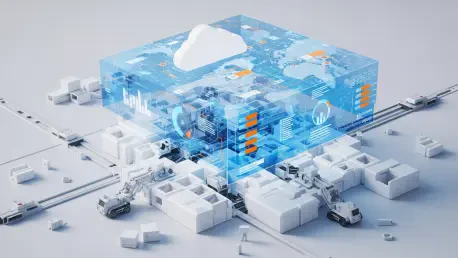

The skyline of any modern metropolis serves as a testament to engineering prowess, yet beneath the scaffolding lies a fragile digital foundation currently buckling under the weight of escalating software subscription fees. The construction sector, long considered a laggard in digital adoption, recently completed a massive migration from legacy on-site software to Software-as-a-Service models. This transition was initially hailed as a victory for efficiency, providing engineering, procurement, and construction firms with the tools needed to manage the staggering complexity of multi-billion-dollar infrastructure projects.
However, the honeymoon period for cloud subscriptions has ended as the sheer scale of modern asset management strains traditional software delivery methods. Today, the reliance on common data environments and building information modeling has created a paradox where the tools meant to save money are now consuming a disproportionate share of project margins. As digital tools become the literal nervous system of the job site, the industry is forced to confront whether the current software ecosystem is sustainable for the long-term health of global infrastructure development.
Building on Shifting Sands: The State of Digital Infrastructure in Construction
The historical shift from localized, license-based software to the pay-as-you-go SaaS model was driven by the need for real-time collaboration across disparate geographic locations. In the current landscape, a single infrastructure project can involve hundreds of sub-contractors, each requiring access to synchronized data sets that update in milliseconds. Digital tools have moved from being peripheral administrative aids to central components of engineering and procurement, facilitating everything from supply chain logistics to heavy equipment telemetry.
This reliance has empowered a few key market players who dominate the common data environment space, essentially acting as the gatekeepers of project information. While these platforms offer robust features, their architecture often struggles with the massive data loads generated by modern sensor arrays and high-resolution modeling. As projects grow in complexity, the limitations of these traditional cloud platforms become apparent, leading to latency issues and data silos that hinder the very productivity they were designed to enhance.
The Great Re-Evaluation: Market Drivers and Economic Forecasts
The ‘SaaSpocalypse’ and the Demand for Flexible Architectures
A fundamental shift is occurring in how software is priced and consumed, leading many industry analysts to describe the current era as the SaaSpocalypse. Established vendors are increasingly moving away from predictable, flat-rate subscriptions toward volatile, consumption-based pricing models that can fluctuate wildly based on data usage. This unpredictability is a significant risk for construction firms that operate on razor-thin margins and require fixed-cost certainty for multi-year contracts.
In response, there is a burgeoning demand for cloud-native architectures that offer greater flexibility and digital sovereignty. Companies are no longer content with being locked into proprietary ecosystems that make it nearly impossible to move data between platforms without incurring massive exit fees. The preference is shifting toward modular systems that allow firms to own their data layer while only paying for the specific compute power they use, rather than being tethered to a specific vendor’s long-term roadmap.
Projecting the Costs and Performance Indicators of Digital Transformation
The financial drag of digital transformation is becoming visible in the cumulative costs of licensing, implementation, and recurring compute-driven overages. Current market data indicates that a rising percentage of operational budgets is being swallowed by recurring software fees, sometimes exceeding the costs of physical equipment maintenance. For a major project, these fees can compound over years, turning a digital advantage into a liability that erodes the eventual return on investment.
Forward-looking projections suggests that unless cloud-native models are adopted, the cost of software will continue to outpace productivity gains. Performance indicators now show that the efficiency of data movement is just as important as the speed of a crane on a job site. By moving toward architectures that reduce redundant data processing, firms can restore profit margins that were previously lost to the inefficiencies of the standard subscription model, ensuring that long-term projects remain financially viable.
Breaking the Chains of Operational Inertia and Vendor Lock-In
One of the most significant barriers to innovation is the logistical nightmare of platform migration, often referred to as the twenty-four-month hurdle. The time and capital required to move a massive organization from one software provider to another often outweigh the perceived benefits of the new system. This operational inertia is reinforced by established reporting workflows and consultant relationships that are deeply integrated into specific software environments, creating a fear of disruption that keeps firms stuck in suboptimal contracts.
To mitigate this, organizations are exploring hybrid approaches that bridge the gap between legacy spreadsheets and modern data backends. Instead of a total system overhaul, these strategies involve layering cloud-native data engines over existing tools, allowing for better performance without the trauma of a full migration. This method addresses the hidden costs of customization and scope creep by providing a more stable foundation that can adapt to changing project requirements without requiring constant vendor intervention.
Standards, Governance, and the Push for Data Integrity
The regulatory landscape is becoming increasingly complex as environmental, social, and governance reporting requirements become mandatory for infrastructure projects. Data residency requirements are also tightening, particularly in regions facing geopolitical instability where local control over intellectual property is a matter of national security. Cloud-native frameworks offer a solution by allowing for decentralized data storage that satisfies regional compliance while maintaining global accessibility for stakeholders.
Establishing industry-wide standards for interoperability is the next critical step in reducing transition friction and ensuring data integrity. When different software systems can communicate through standardized protocols, the risk of data corruption during transfers is minimized, and security measures can be enforced more consistently. This move toward open standards protects the intellectual property of engineering firms and ensures that project data remains a valuable asset long after the physical structure is completed.
The Intelligent Future: AI Integration and the Democratization of Analytics
The evolution of digital tools is moving from reactive reporting toward proactive decision-making through the integration of artificial intelligence into financial planning and analysis. By utilizing cloud-native architectures that solve the bottleneck of repeated data movement, AI can process vast quantities of transactional data in real time. This allows non-technical stakeholders to access sophisticated financial insights through natural language processing, democratizing the power of data analytics across the entire organization.
Predictive modeling is now being used to mitigate the impacts of supply chain volatility and labor shortages, providing a level of foresight that was previously impossible. These intelligent systems analyze historical project data alongside current market trends to forecast potential delays or cost overruns before they occur. This shift from manual data entry to automated intelligence represents a fundamental change in how construction projects are managed, turning financial planning into a dynamic tool for project success.
From Subscriptions to Sovereignty: A Strategic Roadmap for Leaders
The investigation into current market trends highlighted how the economic necessity of moving away from restrictive software models became a top priority for industry executives. Leaders realized that the era of blind dependency on monolithic software providers was no longer compatible with the goal of operational resilience. The data suggested that organizations which prioritized digital sovereignty and data control were better positioned to weather economic shifts and supply chain disruptions.
It was found that the most successful firms focused their investments on cloud-native financial intelligence and interoperable data layers. These strategic decisions allowed for a more granular control over costs and a significant reduction in long-term licensing overhead. The roadmap for the coming years was built on the principle that digital tools must serve the project, rather than the project serving the software vendor. This change in perspective provided the stability needed to ensure the financial future of the global construction industry.