
The Dawn of Collaborative Intelligence in Project Management
The integration of autonomous agents into project management workflows is currently redefining how global enterprises approach the concept of human-machine collaboration. As organizations face increasing pressure to deliver complex software at unprecedented speeds, the traditional reliance on human oversight alone has become a bottleneck. Atlassian’s introduction of agents in Jira represents a pivotal shift, moving beyond simple automation toward a model where digital entities act as active participants in the development lifecycle. This transformation aims to solve the persistent problem of administrative “chaos” that often stifles innovation during periods of rapid corporate expansion.
From Static Tracking to Dynamic Automation: The Evolution of Jira
Jira has long served as the fundamental framework for agile development, yet the platform’s utility was previously constrained by the manual effort required to keep data synchronized across vast ecosystems. Historically, the proliferation of disconnected applications led to significant “tool sprawl,” necessitating constant human intervention to maintain project integrity. The transition from static tracking to dynamic, agent-led automation addresses these legacy inefficiencies by providing a system that actively contributes to work execution. Understanding this evolution is essential for leaders who recognize that human throughput has reached its natural ceiling in the modern digital economy.
Architecting a Scalable AI Strategy Within Atlassian
Quantifying Performance and the Unified Workforce Model
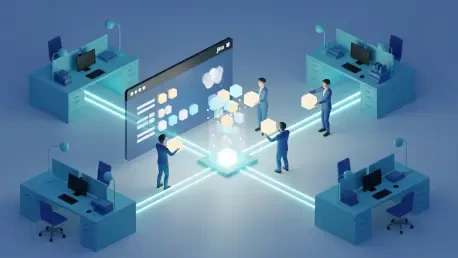
The primary innovation lies in the unified workforce model, which allows managers to oversee AI agents with the same transparency applied to human staff. By tracking performance metrics within a single dashboard, leadership gained the empirical evidence needed to distinguish between tasks requiring human empathy and those optimized for algorithmic speed. This visibility effectively eliminated the risks of uncoordinated automation, ensuring that every digital action aligned with broader organizational goals.
Enhancing Workflow Synergy and Reducing Management Friction
Furthermore, embedding these agents into existing professional workflows drastically reduced the “coordination tax” that typically burdens growing teams. Agents now handle the heavy lifting of documentation and ticket triaging, which allowed human developers to focus on high-level architecture. This synergy ensured that data remained consistent across the enterprise while minimizing the friction associated with manual status reporting.
Navigating the Complexities of Regional and Technical Implementation
However, the deployment of such technology required careful navigation of regional data residency and industry-specific compliance standards. Different global markets exhibited varying levels of readiness for autonomous decision-making, highlighting the need for a nuanced approach to technical implementation. Successful firms treated these agents not as replacements, but as specialized specialists capable of clearing the high-volume backlogs that previously hindered senior management.
Future Horizons: The Roadmap for Agent-Led Innovation
The trajectory for project orchestration suggests a move toward proactive intervention, where agents identify potential delays before they impact the bottom line. Emerging trends indicate that the synthesis of generative intelligence with deep project context will soon produce highly specialized agents for niche sectors like hardware engineering. Experts anticipated that the ability to effectively manage a hybrid workforce of humans and machines would become the defining competency for executive leadership in the coming years.
Strategic Recommendations for Implementing AI Agents
To capitalize on this shift, organizations should prioritize the automation of high-volume, low-risk processes to establish a reliable performance baseline. It is crucial to maintain a rigorous feedback loop, allowing human supervisors to refine agent outputs and ensure continuous improvement. Additionally, leaders must frame this integration as a cultural evolution, ensuring that teams view digital agents as supportive assets rather than competitive threats.
The Long-Term Impact of AI-Human Collaboration in Jira
The move to incorporate AI agents into the Jira environment functioned as a foundational step toward a new era of enterprise productivity. By centralizing disparate contributions into a single platform, the system provided the order necessary to navigate modern business complexities. Leaders who embraced this collaborative model effectively positioned their companies to lead in a highly automated landscape. The focus shifted toward establishing a permanent hybrid governance framework to ensure long-term scalability and operational excellence.