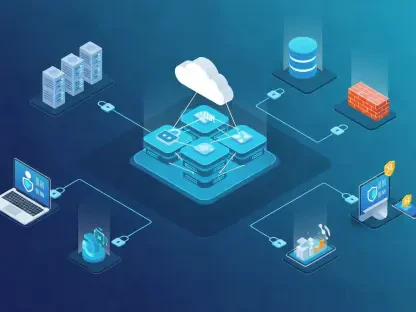

The rapid acceleration of cloud adoption has fundamentally dissolved traditional security boundaries, forcing SaaS teams to confront a reality where applications, data, and users exist in a constantly shifting, borderless landscape. In this environment, relying on a single defensive tool is akin to locking the front door while leaving all the windows wide open. The sophistication of modern threats demands a more resilient and comprehensive approach.
A multi-layered security strategy is no longer a recommendation but a non-negotiable standard for protecting the entire technology stack. This defense-in-depth model ensures that if one control fails, another is in place to thwart an attack. The following framework outlines seven critical layers essential for any robust security posture: the Human, Perimeter, Network, Endpoint, Application, Data, and Mission-Critical Asset layers. Each serves a unique purpose, and together they create a formidable barrier against intrusion.
The Strategic Value of a Layered Defense
Implementing a comprehensive, multi-layered security model extends far beyond technical necessity; it is a cornerstone of sustainable business continuity and growth. By systematically addressing vulnerabilities at every level, organizations can create an environment where security enables, rather than hinders, innovation. This strategic investment in resilience pays dividends in both operational stability and market reputation.
The benefits are clear and compelling. A layered approach drastically reduces the overall attack surface, which in turn minimizes the risk of costly breaches and the associated financial fallout. Moreover, demonstrating a serious commitment to security builds invaluable trust with customers and partners, becoming a key competitive differentiator. It also ensures that the business remains aligned with an ever-expanding web of regulations, including GDPR, PCI DSS, and ISO 27001, safeguarding it from punitive fines and legal complications.
A Practical Guide to the 7 Layers of Security
Layer 1: The Human Layer Turning People into Your First Line of Defense
Despite technological advancements, the human element remains the most unpredictable and frequently exploited vulnerability in any security system. The vast majority of breaches can be traced back to human error, where sophisticated phishing campaigns and social engineering tactics prey on natural tendencies like trust and urgency. Attackers understand that manipulating a person is often easier than breaking through complex code, making employees the de facto front line.
Turning this potential weakness into a strength requires embedding security awareness deep within the company culture. This is achieved through continuous, engaging security training and regular phishing simulations that teach employees to recognize and report suspicious activity. These educational efforts must be reinforced with strict technical controls, such as enforcing strong, unique password policies and mandating multi-factor authentication (MFA) across all services to create a resilient first line of defense. The attacks on T-Mobile and Sony Pictures serve as stark reminders of this reality, where attackers exploited employees through phishing and misconfigurations, leading to colossal data breaches and severe financial penalties.
Layer 2: Perimeter Security Protecting a Borderless World
The concept of a traditional, well-defined network perimeter has become obsolete. In the modern SaaS ecosystem, the perimeter is no longer a physical location secured by firewalls but a dynamic boundary defined by identity, data, and applications. With employees and customers accessing resources from anywhere in the world on a multitude of devices, security must follow the user and the data, not the network.
Adopting a Zero Trust architecture is the most effective strategy for securing this new, borderless world. This model operates on the principle of “never trust, always verify,” treating every access request as if it originates from an untrusted network. Implementation involves deploying strong identity governance, using conditional access policies that evaluate context like device health and location, and universally enforcing MFA. By adhering to the principle of least privilege and constantly monitoring sign-in risks, organizations can ensure that access is granted only to the right people, on the right devices, and for the right reasons. The SolarWinds incident, where a single weak password exposed a critical server, perfectly illustrates the catastrophic failure of perimeter controls when identity is not properly secured.
Layer 3: Network Security Keeping Malicious Actors Out
While the perimeter has evolved, the fundamental importance of network security remains. In a cloud-centric environment, networks are the connective tissue that links users, applications, and data. Consequently, maintaining robust network-level controls is essential for preventing unauthorized access and stopping malicious actors before they can gain a foothold within the infrastructure.
Effective network defense today involves deploying next-generation firewalls equipped with advanced capabilities like deep packet inspection, intrusion prevention systems, and integrated threat intelligence feeds. These tools provide visibility into traffic and can block sophisticated threats in real time. Furthermore, network segmentation is a critical tactic for containing potential breaches. By dividing the network into smaller, isolated zones, organizations can limit an attacker’s ability to move laterally and access sensitive systems, thereby minimizing the impact of a successful intrusion. Past vulnerabilities at companies like Facebook and Wetherspoon highlight how network-level intrusions can lead to the exposure of millions of user records and sensitive financial details.
Layer 4: Endpoint Security Securing Every Device
Every laptop, mobile phone, and tablet that connects to corporate resources represents a potential entry point for an attack. These endpoints are often the primary targets for malware and ransomware, as they exist outside the direct control of the central IT infrastructure. Securing these devices is therefore a critical layer in any comprehensive defense strategy, as a single compromised endpoint can provide an attacker with the initial access needed to infiltrate the entire organization.
To counter these threats, organizations must deploy advanced Endpoint Detection and Response (EDR) or Managed Detection and Response (MDR) solutions. These services go beyond traditional antivirus by continuously monitoring endpoint activity to detect, investigate, and remediate suspicious behavior. In addition, enforcing full-disk encryption ensures that data remains protected even if a device is lost or stolen. Implementing Mobile Device Management (MDM) policies further allows for the consistent application of security configurations and the ability to remotely wipe a device if it becomes compromised. The 2016 Uber breach, where attackers gained access through a misconfigured cloud service linked to an employee’s mobile device, affected 57 million users and underscores the severe risks posed by unsecured endpoints.
Layer 5: Application Security Closing the Vulnerability Gap
Unpatched software and vulnerable third-party components are among the most common vectors for cyberattacks. The modern SaaS environment is a complex web of interconnected applications, libraries, and frameworks, where a single flaw in any one component can create a significant security risk for the entire ecosystem. Attackers actively scan for and exploit these known vulnerabilities, making timely remediation an absolute necessity.
A robust vulnerability management and patching program is the foundation of application security. This involves systematically identifying, assessing, and remediating security weaknesses across all software assets. Static and dynamic code analysis tools should be integrated into the development lifecycle to discover flaws before they reach production. Once vulnerabilities are identified, fixes must be prioritized based on risk and potential impact, ensuring that the most critical issues are addressed first. The infamous Equifax breach, which exposed the records of 147 million people, was the direct result of failing to patch a single known vulnerability in the Apache Struts web framework, a devastating example of the consequences of neglecting application security.
Layer 6: Data Security Protecting Your Crown Jewels
At the heart of any organization lies its data—customer records, intellectual property, and sensitive financial information. Protecting these “crown jewels” from theft, leakage, and unauthorized access is paramount. In a SaaS environment where data is constantly in motion and stored across various cloud services, ensuring its confidentiality, integrity, and availability requires a dedicated and multi-faceted approach.
Implementing Data Loss Prevention (DLP) policies is a crucial step in safeguarding sensitive information. DLP solutions monitor and control data across endpoints, networks, and cloud applications, preventing accidental leaks or malicious exfiltration through email, file sharing, or other channels. Data should also be classified using sensitivity labels, which allows for the automatic application of security controls, such as encryption at rest and in transit, based on its level of importance. The severe financial and reputational damage resulting from the Capital One data breach and the insider data theft at Tesla illustrates the critical need for strong data-centric controls to defend against both external attacks and internal threats.
Layer 7: Mission Critical Assets Planning for the Worst
Even with the most robust defenses, a catastrophic event—whether a sophisticated ransomware attack, a critical hardware failure, or a simple human error—can still occur. In these moments, the ability to recover quickly and maintain business operations depends entirely on the resilience of the organization’s backup and disaster recovery plan. Without a reliable way to restore mission-critical assets, a single incident can lead to irreversible data loss and business failure.
Ensuring business continuity requires a disciplined approach to data backup, often summarized by the 3-2-1-1-0 rule: maintain at least three copies of data on two different media types, with one copy stored offsite, one of which is immutable or air-gapped, and zero errors verified through regular testing. It is not enough to simply have backups; recovery procedures must be tested frequently to ensure they work as expected. The contrasting fates of Maersk and Code Spaces offer a powerful lesson. Maersk survived the devastating NotPetya attack thanks to a single offline backup, whereas Code Spaces was forced to cease operations permanently after an attacker deleted both its production systems and all its backups.
Conclusion Building an Integrated and Resilient Security Posture
It became clear that achieving genuine security in the modern era was not about finding a single, perfect product but about architecting a continuous, integrated strategy. The seven layers provided a practical framework for SaaS teams to protect identities, data, and applications wherever they resided. By systematically addressing each layer, organizations successfully minimized downtime and fortified trust with their customers and partners. Ultimately, this layered approach was recognized as an essential discipline for any team committed to assessing and strengthening its security posture in a complex and ever-changing threat landscape.