
The moment a single anonymous sharing link is created in a corporate OneDrive folder, it creates a potential bridge that sophisticated attackers can exploit to traverse into deep cloud infrastructure. This reality has redefined the boundaries of modern cybersecurity, moving away from isolated software silos toward a unified defense model. The Wiz Microsoft 365 security solution serves as a primary example of this evolution, offering a comprehensive platform that integrates Software-as-a-Service security into the broader context of cloud infrastructure. By examining this technology, one can see how the convergence of identity, data, and configuration management is no longer optional but a fundamental requirement for maintaining digital integrity.
This review focuses on the general availability of the Wiz expansion for Microsoft 365, a move that signals a significant shift in how enterprises manage risk across their digital estates. The purpose is to evaluate whether this integration truly solves the “silo problem” that has plagued security teams for years. Traditionally, SaaS security was treated as a separate discipline from cloud infrastructure security, leading to blind spots where attackers could hide. Wiz attempts to bridge this gap by treating M365 not just as a productivity tool, but as a critical node in the enterprise cloud graph.
The Convergence of SaaS and Cloud Infrastructure
The emergence of integrated cloud security platforms stems from the realization that modern business operations are inherently interconnected. Microsoft 365 acts as the central nervous system for most organizations, housing sensitive communications in Exchange, critical documents in SharePoint, and collaborative workflows in Teams. However, these applications do not exist in isolation; they are deeply entwined with Azure cloud services and external identity providers. The technology under review acknowledges this complexity by providing a single pane of glass to monitor these diverse yet related environments.
The relevance of this technology in the current landscape is driven by the increasing sophistication of cross-domain attacks. Adversaries frequently use a minor misconfiguration in a SaaS application as a foothold to gain administrative access to broader cloud environments. By integrating M365 security into a wider cloud security posture, organizations can finally visualize the entire attack surface. This context is vital because it allows security professionals to understand how a vulnerability in a collaborative document might lead to a catastrophic breach of a backend database.
Core Capabilities of the Wiz Security Platform
The Unified Security Graph
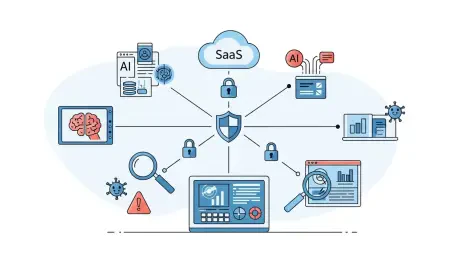
At the heart of the Wiz platform lies the Security Graph, a sophisticated engine that maps the complex relationships between identities, data, permissions, and workloads. Unlike traditional security tools that present data in flat tables or disconnected lists, the graph visualizes how different entities interact. For example, it can show how an over-privileged user in Microsoft Entra has access to a specific SharePoint site that contains an embedded AWS access key. This level of visibility is transformative because it identifies “toxic combinations” of risks that might otherwise go unnoticed.
The performance of the Security Graph is characterized by its ability to perform agentless scanning, which minimizes the impact on system performance while maintaining deep visibility. By analyzing the metadata and configurations of the M365 environment, the platform constructs a real-time model of the security posture. This approach is unique because it prioritizes alerts based on actual reachability and potential impact. Instead of drowning security teams in a sea of low-priority notifications, the graph highlights the specific paths that an attacker would most likely follow to reach high-value targets.
Data Security Posture Management: DSPM
Data remains the ultimate prize for most cybercriminals, and the platform’s Data Security Posture Management capability is designed to protect it at scale. Wiz employs an AI-powered classification engine that automatically discovers and categorizes sensitive information across the M365 suite. This includes identifying Personally Identifiable Information, financial records, and healthcare data. What sets this implementation apart is its ability to look for “secrets” or hardcoded credentials hidden within documents, which often serve as the literal keys to the kingdom for malicious actors.
Furthermore, the platform monitors how this sensitive data is shared and accessed. It scans for anonymous links or folders shared with external domains, providing a clear view of data exposure risks. By integrating with Microsoft Purview, the system allows for the automated application of sensitivity labels, ensuring that data protection policies are enforced consistently. This technical synergy ensures that the security team is not just identifying problems but is also actively participating in the governance and remediation of data risks without manual intervention.
Identity and Posture Governance
Identity is the new perimeter in a cloud-first world, and managing it effectively requires rigorous governance. Wiz analyzes Microsoft Entra configurations to identify risky privileged roles and users with excessive permissions. The platform checks these configurations against established CIS benchmarks, ensuring that the organization adheres to industry best practices. This proactive stance on posture management helps prevent the gradual “drift” that often occurs as new users are added and permissions are modified over time.
Beyond simple configuration checks, the platform evaluates the behavioral aspects of identity risk. It looks for anomalies in how accounts are utilized, such as a standard user suddenly gaining access to high-level administrative tools. By governing both the static configuration and the dynamic usage of identities, the system creates a robust defense against account takeovers and insider threats. This dual-layered approach is essential for securing the interconnected nature of M365 applications, where a single compromised account can have far-reaching consequences.
Innovations in AI Security and Platformization
The rapid adoption of generative AI has introduced a new set of security challenges that this platform is uniquely positioned to address. Recent updates include specialized visibility into Microsoft Copilot Studio, allowing organizations to monitor the AI agents and bots being deployed within their environments. These AI tools often have deep access to corporate data to function effectively, which creates a significant risk if they are misconfigured or accessed by unauthorized individuals. Wiz treats these AI entities as part of the broader security graph, applying the same level of scrutiny to them as it does to human users.
This focus on AI security reflects a broader trend toward platformization, where a single solution manages a diverse array of digital risks. The market is shifting away from point solutions that only handle one aspect of security, such as email filtering or document encryption. Instead, the industry is moving toward unified platforms that can correlate data from AI pipelines, SaaS applications, and infrastructure workloads. This holistic view is necessary to keep pace with the speed of modern business and the agility of modern threat actors.
Real-World Applications and Cross-Domain Security
In practical terms, the utility of Wiz for Microsoft 365 is most evident in large-scale enterprises with complex regulatory requirements. In the healthcare sector, for instance, the platform can be used to ensure that patient records stored in SharePoint are not inadvertently shared through Teams or Outlook. The ability to automatically identify Protected Health Information and enforce strict access controls is a game-changer for compliance officers. Similarly, in the financial industry, the platform helps prevent the leakage of proprietary trading algorithms or client financial data that might be stored in collaborative environments.
A unique use case involves the identification of lateral movement paths. A security team might discover that a marketing contractor has access to a folder containing a script used by the DevOps team. If that script contains credentials for a production environment, an attacker compromising the contractor’s account could jump from a SaaS application directly into the core infrastructure. Wiz identifies these cross-domain risks before they can be exploited, allowing organizations to close the gaps between their various cloud platforms and productivity suites.
Challenges in Securing Interconnected Ecosystems
Despite its advanced capabilities, the technology faces several hurdles that can complicate its implementation. One of the primary technical challenges is the sheer volume of data generated by M365 environments. Large organizations produce millions of events and configuration changes daily, which can lead to “alert fatigue” if the platform’s prioritization engines are not finely tuned. While the Security Graph helps mitigate this, the initial setup and calibration require a deep understanding of the organization’s specific risk profile and operational workflows.
Regulatory issues also play a significant role, as different jurisdictions have varying laws regarding data privacy and monitoring. While Wiz provides the tools to maintain compliance, the act of scanning sensitive documents for “secrets” can sometimes trigger privacy concerns or legal questions in strictly regulated regions. Furthermore, the reliance on API-based integrations means that the platform is subject to the limitations and changes of the underlying Microsoft environment. Ongoing development efforts must focus on maintaining high-fidelity scanning while respecting the privacy boundaries and performance constraints of the host system.
Future Outlook: The Evolution of Cloud Defense
The trajectory of cloud defense is moving toward a state of autonomous security, where the platform not only identifies risks but also predicts and prevents them before they manifest. In the coming years, one can expect even deeper integrations between security graphs and automated remediation workflows. The goal is to reach a point where a misconfiguration is corrected the millisecond it is detected, based on pre-defined security policies and AI-driven logic. This shift will allow human security analysts to focus on high-level strategy rather than the constant manual fixing of routine errors.
Another potential breakthrough lies in the expansion of visibility into the “shadow” AI and SaaS applications that employees often use without official sanction. As the boundaries of the enterprise continue to blur, the ability to bring these unauthorized tools into a managed security framework will be vital. The long-term impact of this technology will likely be a significant reduction in the success rate of multi-stage attacks, as the visibility provided by unified graphs makes it increasingly difficult for adversaries to move undetected across different domains.
Final Assessment of Wiz for Microsoft 365
The evaluation of Wiz for Microsoft 365 revealed a platform that successfully bridged the historical gap between SaaS and cloud infrastructure security. By utilizing a unified security graph, the system provided a level of context that was previously unavailable to most security teams. The integration of data posture management and identity governance created a comprehensive defense that addressed the most common vectors of modern cyberattacks. While the complexity of large-scale environments remained a hurdle, the platform’s ability to prioritize risks based on reachability proved to be a significant advancement in operational efficiency.
Actionable steps for organizations involved the immediate auditing of cross-domain permissions and the implementation of automated sensitivity labeling for critical data. The evidence suggested that a proactive approach to SaaS security, treated as an extension of the cloud estate, significantly reduced the overall attack surface. Future considerations must include the ongoing monitoring of AI-driven tools as they become more integrated into daily workflows. Ultimately, the transition toward a platform-centric security model was validated as the most effective way to secure the interconnected digital ecosystems that define the current technological era.