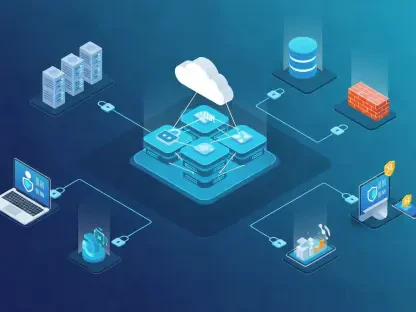

The modern corporate perimeter has effectively dissolved, replaced by a complex web of decentralized devices where the line between human productivity and autonomous machine intelligence is increasingly blurred. As enterprises navigate this landscape, the transition from traditional antivirus to AI-driven detection has become a survival imperative. The decentralized work environment demands a shift in how security is perceived, moving away from reactive measures toward proactive, autonomous defense mechanisms. This evolution is driven by the need to protect data not just at the server level, but at the very edge where interaction occurs.
In the current market ecosystem, the influence of cloud-native architectures is being challenged by the rise of “Edge AI.” While centralized processing was once the gold standard, the demand for instantaneous response times is pushing security intelligence closer to the user. Key players are now competing to provide frameworks that can handle massive telemetry without the latency of a cloud round-trip. This shift is not merely a technical preference but a strategic necessity as organizations seek to secure their operations without compromising the speed of their digital transformation.
Global regulatory pressures further complicate this transition, as international data sovereignty laws like GDPR and CCPA force a reimagining of data handling. Organizations are now required to prove that sensitive information remains within specific geographic or even physical boundaries. Consequently, the pulse of the industry is beating toward localized security processing, where data classification happens on-device. This ensures compliance by design, reducing the risk of data leakage during transit to the cloud and providing a more robust posture against regulatory scrutiny.
Emerging Trends and the Economic Trajectory of AI Security
The Evolution of the AI-Integrated Workplace
The rise of “Shadow AI” represents one of the most significant unmanaged risks in the modern enterprise. Employees are increasingly adopting unauthorized AI copilots and SaaS tools to boost their productivity, often bypassing official IT channels and inadvertently exposing proprietary data. These hidden tools create a massive blind spot for traditional security protocols, which struggle to monitor data flows that occur within local browser sessions or isolated applications. Addressing this requires a new level of visibility that can track data lineage across fragmented workflows.
Decentralized intelligence is emerging as the primary solution to these visibility gaps. By moving processing power directly to the endpoint, Edge AI reduces the reliance on external servers and enhances user privacy. This localized approach allows for real-time monitoring of how data is being used, shared, and transformed by AI agents. Moreover, it mitigates the bandwidth costs associated with shipping large volumes of logs to the cloud, making it an economically viable model for large-scale organizations with thousands of remote endpoints.
Security is also undergoing a cultural shift to become a business enabler rather than a restrictive barrier. The trend toward “unobtrusive” security prioritizes employee productivity by ensuring that threat mitigation happens silently in the background. Modern tools are designed to intervene only when a high-risk event is detected, reducing the friction that often leads employees to seek workarounds. This harmony between safety and efficiency is becoming a key performance indicator for successful CISO strategies in the current year.
Market Forecasts and the Capital Influx
The economic trajectory for AI-integrated cybersecurity is exceptionally steep, with analysts projecting the market valuation to exceed $160 billion by 2035. Between 2026 and 2030, the industry is expected to see a surge in adoption as legacy systems reach their breaking point against automated threats. This growth is fueled by the realization that human-led defense cannot keep pace with machine-speed attacks, making AI-driven infrastructure a mandatory investment for any competitive enterprise.
The current investment climate reflects this urgency, highlighted by strategic funding rounds such as Bold Security’s recent $40 million emergence. Such significant capital injections validate the move toward new architectural models that prioritize the edge. Investors are no longer just looking for incremental improvements in detection; they are betting on foundational shifts that redefine the relationship between the endpoint and the cloud. This influx of capital is accelerating the research and development of self-contained AI models that can operate independently of a constant internet connection.
Performance indicators from early adopters provide a glimpse into the future of operational efficiency. Organizations implementing localized AI defense have reported up to a 90% reduction in alert fatigue, a metric that directly correlates with reduced human error in Security Operations Centers. By filtering out the noise through intelligent on-device classification, these systems allow human analysts to focus on complex, strategic threats. This reduction in operational overhead is a primary driver for the rapid ROI promised by next-generation endpoint platforms.
Navigating the Friction of Modern Cybersecurity Implementation
The latency and privacy paradox remains a primary hurdle for organizations clinging to cloud-centric telemetry. Every millisecond spent sending data to a remote server for analysis is a window of opportunity for an attacker to execute a payload. Furthermore, the risk of data interception or leakage during transit remains a constant concern for legal teams. Solving this requires a move toward immediate, local decision-making that removes the necessity of the “round-trip,” ensuring that a threat is neutralized the moment it appears on the device.
Overcoming alert fatigue is another critical challenge, as the sheer volume of security “noise” can overwhelm even the most sophisticated SOC. When every minor anomaly triggers an alert, critical signals often get lost in the shuffle. Strategies for localized filtering allow the endpoint to distinguish between harmless user behavior and genuine malicious intent before the data ever reaches a central dashboard. This “pre-filtering” ensures that security teams are only engaged when a situation truly demands their expertise, preserving their cognitive resources for high-stakes incidents.
The deployment hurdle often prevents large enterprises from adopting advanced AI agents due to the complexity of integrating them across diverse device fleets. Operational downtime during a security rollout is often seen as a greater risk than the threats themselves. However, newer models are solving this by offering rapid-deployment capabilities that can protect an entire organization in under a minute. Achieving this level of scalability without disrupting existing workflows is the new gold standard for vendors looking to capture the enterprise market.
The Regulatory Landscape and the Mandate for Data Sovereignty
On-device compliance is becoming the standard for enterprises operating in highly regulated sectors. By performing data classification locally, sensitive information never has to leave the protected environment of the endpoint. This simplifies adherence to global privacy standards, as the organization can maintain a clear audit trail showing that data sovereignty was preserved. In a world where a single data breach can lead to catastrophic fines, the ability to keep data on-premises is a significant competitive advantage.
Establishing trust in autonomous AI agents requires a high degree of transparency and rigorous governance. In sectors like finance and healthcare, the idea of an “autonomous” tool making decisions can be met with skepticism. To build this trust, vendors must provide clear insights into how their AI models make decisions and what safeguards are in place to prevent false positives. Transparency in the logic of threat detection is essential for ensuring that automated tools are seen as reliable partners rather than “black box” liabilities.
Future-proofing against evolving laws is a continuous process for modern cybersecurity teams. As governments around the world draft new regulations specifically targeting AI, automated threat response systems must be flexible enough to adapt. Anticipating these shifts allows organizations to build resilient architectures that remain compliant even as the legal landscape shifts. This foresight prevents the need for costly “rip and replace” cycles, ensuring that the security investment remains viable for years to come.
The Future Frontier: Intelligent Autonomy and Global Scalability
The weaponization of AI by adversaries is creating a future where zero-day exploits are discovered and deployed at machine speed. Attackers are already using automated tools to scan for vulnerabilities and tailor phishing attacks with unprecedented precision. To counter this, defensive AI must be equally agile, capable of identifying and patching flaws before they can be exploited. This ongoing arms race is driving the development of “self-healing” endpoints that can automatically revert to a known safe state after an attempted breach.
The convergence of human and machine intelligence will transform future endpoints into collaborative partners in risk detection. Instead of acting as passive monitors, these devices will actively engage with users to verify suspicious activity or offer guidance on secure data handling. This collaborative model turns every employee into a part of the security fabric, reinforced by an AI that understands the nuances of their specific role. The goal is to create a seamless feedback loop where the AI learns from human intuition and the human benefits from machine-scale analysis.
Market disruptors are already moving toward fully autonomous, self-healing networks that require minimal human intervention. Serial entrepreneurs with deep roots in the security industry are leading these innovations, drawing on decades of experience to solve the most persistent flaws in digital defense. As these technologies mature, the role of the traditional SOC may shift from active monitoring to high-level oversight and strategic planning. This evolution toward intelligent autonomy represents the final frontier in securing the global digital economy.
Redefining the Shield for the Next Generation of Productivity
The synthesis of Edge AI and localized classification provided a clear path forward for securing the modern workspace. By moving intelligence to the device, organizations significantly reduced the risks associated with data transit and centralized processing. This architectural shift proved to be the most effective way to manage the proliferation of AI tools while maintaining strict adherence to global privacy mandates. Stakeholders found that prioritizing these “edge-first” architectures was the most reliable method for protecting their intellectual property in a volatile landscape.
The long-term viability of high-precision, rapid-deployment security was confirmed through successful implementations in diverse corporate environments. Organizations that moved away from legacy cloud models experienced a dramatic decrease in both breach attempts and operational fatigue. This success demonstrated that the next generation of productivity does not have to come at the expense of safety. Ultimately, the adoption of autonomous, localized defense mechanisms established a new baseline for enterprise resilience, allowing businesses to innovate with confidence while remaining shielded from increasingly sophisticated threats.