
The Unseen Engine of Modern Industry
In a world saturated with complex products and systems, clarity is not just a convenience—it’s a necessity. From assembling furniture to servicing a jet engine, the ability to understand intricate information quickly and accurately is paramount. This is the domain of technical illustration, a specialized field dedicated to translating complex data into clear, concise visuals. The market for the software that powers these illustrations is booming, projected to surge from US$4.82 billion in 2023 to US$7.52 billion by 2031. This article explores the powerful forces fueling this expansion, examining the technological shifts, industrial demands, and future innovations that are transforming technical illustration from a niche discipline into a cornerstone of global commerce.
From Blueprints to Pixels: The Evolution of Visual Communication
Technical illustration is far from a new concept; its roots lie in the hand-drawn schematics and blueprints that built the industrial age. For decades, dense, text-heavy manuals were the standard for product documentation, often leading to errors, inefficiencies, and steep learning curves. The digital revolution marked the first major shift, replacing drafting tables with 2D computer-aided design (CAD). However, the true transformation began with the advent of 3D modeling and specialized illustration software. This leap allowed creators to move beyond flat, static images to dynamic, interactive visuals, laying the groundwork for the modern market. Understanding this evolution from paper to pixel is crucial, as it highlights a fundamental, ongoing trend: the relentless pursuit of greater clarity and accessibility in technical communication.
The Core Drivers Behind the Market’s Explosive Growth
The Mandate for Clarity in an Increasingly Complex World
At the heart of the market’s growth is the escalating complexity of modern products. Industries like manufacturing, aerospace, engineering, and healthcare are developing systems with an unprecedented number of interconnected parts and processes. In this environment, traditional text-based instructions are no longer sufficient. Companies are driven by a need to reduce assembly errors, improve maintenance efficiency, and ensure user safety, all of which are directly enhanced by high-quality visual aids. Furthermore, stringent regulatory and compliance standards often mandate unambiguous documentation, making clear illustrations a legal and operational necessity. This push away from ambiguity toward visual precision is a primary catalyst, turning technical illustration software into an essential investment rather than a discretionary expense.
The Technological Leap from Static Images to Interactive Experiences
Technology itself is a powerful accelerator. The market is undergoing a significant transition from on-premises software to more flexible, cloud-based SaaS solutions. This shift lowers the barrier to entry for smaller businesses, offering subscription-based models that eliminate hefty upfront costs and facilitate seamless collaboration among geographically dispersed teams. Simultaneously, the capabilities of the software are evolving dramatically. The integration of 3D data directly from engineering and CAD files has streamlined workflows, ensuring accuracy and consistency from design to documentation. This ability to create, manipulate, and animate detailed 3D models provides a level of depth and understanding that static 2D images could never achieve, making complex information more engaging and digestible for end-users.
The Geographic and Sector-Specific Surges in Demand
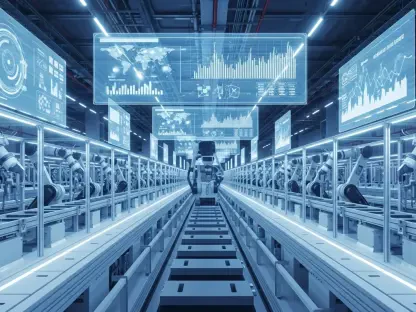
The demand for technical illustration is not uniform; it is concentrated in key sectors and experiencing rapid growth in specific regions. Manufacturing remains the largest and most dominant application, where illustrations are vital at every stage of the product lifecycle—from factory floor assembly guides to consumer-facing user manuals. The engineering and healthcare sectors are also major adopters, using the software for everything from architectural blueprints to detailed anatomical diagrams for medical devices. Geographically, while North America currently leads the market due to its mature industrial base, the Asia-Pacific region is projected to be the fastest-growing frontier. This surge is fueled by the region’s expanding manufacturing capabilities and increasing investment in advanced technology, creating a fertile ground for the adoption of sophisticated visual communication tools.
The Next Frontier: AI, AR, and a Collaborative Future
The future of technical illustration is being shaped by disruptive technologies that promise to redefine the creation and consumption of visual information. The integration of Artificial Intelligence (AI) is poised to automate repetitive tasks, suggest optimal viewing angles, and even generate instructional steps automatically from 3D models, boosting efficiency and reducing human error. The most profound shift, however, is the rise of immersive technologies. Augmented Reality (AR) and Virtual Reality (VR) are set to transform technical illustrations from on-screen graphics into interactive, real-world experiences. Imagine a technician wearing AR glasses that overlay digital instructions directly onto the machinery they are repairing, or an engineer simulating a complex assembly process in a risk-free VR environment. These innovations will make technical guidance more contextual, intuitive, and effective than ever before.
Navigating the Market: Strategic Takeaways for Businesses
The market’s rapid growth presents immense opportunities, but also challenges that businesses must navigate strategically. The high initial cost of advanced software and the need for specialized training can create significant barriers, particularly for small and medium-sized enterprises (SMEs). To overcome this, decision-makers should explore scalable, cloud-based solutions that offer flexible pricing and reduce the need for in-house IT infrastructure. Investing in workforce training is equally critical to close the skills gap and maximize the return on software investment. Furthermore, ensuring seamless integration with existing Product Lifecycle Management (PLM) and CAD systems is essential to create a unified, efficient workflow from design to documentation. The key is to view technical illustration not as an isolated function, but as an integral part of the entire product ecosystem.
Why Visuals Are the New Universal Language
The $7.5 billion technical illustration market was more than just a growing software segment; it became a reflection of a fundamental shift in how complex information was communicated. Fueled by industrial complexity, technological innovation, and the universal demand for clarity, this market enabled industries to build, maintain, and use sophisticated products more safely and efficiently. As technologies like AI and AR became further integrated, technical illustrations evolved into even more powerful, immersive, and indispensable tools. For any organization operating in a technically demanding field, embracing this visual-first approach was no longer an option—it was the key to effective communication and a powerful competitive advantage in the modern global economy.