
The landscape of digital infrastructure underwent a tectonic shift on November 20, 2026, when Oracle Corporation confirmed the full capitalization of its multi-billion-dollar commitment to OpenAI. This monumental financial event signals a departure from the traditional cloud computing models that have defined the last decade, transitioning the industry into an era where hardware-intensive, industrial-scale development is the prerequisite for survival. As the demand for generative artificial intelligence reaches an inflection point, the requirements for cloud service providers have fundamentally changed, moving away from purely software-centric services toward the construction of massive physical environments capable of sustaining unprecedented compute loads.
The rapid advancement of frontier AI models has created a specialized niche in the hyperscale market that few companies are currently equipped to fill. While the market was once dominated by a trio of tech giants providing general-purpose cloud services, the emergence of liquid-cooled, gigawatt-scale data centers has narrowed the field to those who can master both the engineering and financing of such projects. This shift is characterized by the necessity for specialized networking fabrics and high-density electrical systems that traditional data centers simply cannot support. Consequently, the ability to secure massive capital upfront has become the primary differentiator for companies vying to host the next generation of AI research, turning cloud competition into a high-stakes race of financial and physical scale.
Within this evolving landscape, the infrastructure layer is no longer a background utility but the very engine of innovation. The current environment demands more than just incremental upgrades; it requires a total reimagining of how energy and data move through physical space. As AI labs like OpenAI push for larger training runs, the cloud provider that can offer the most robust and stable physical backbone gains a strategic monopoly. Oracle has recognized that the winners of this cycle will not necessarily be those with the best software, but those who can build and power the largest clusters of accelerators in the shortest amount of time.
The Evolution of the Hyperscale Cloud and AI Infrastructure Landscape
The transformation of the hyperscale cloud market is being driven by an insatiable appetite for computing power that far exceeds the historical growth rates of enterprise software. Traditionally, providers like Amazon, Microsoft, and Google focused on broad utility, offering a wide array of services to millions of small and medium-sized customers. However, the rise of specialized AI development has forced a pivot toward a more concentrated model where a few massive customers require nearly all available resources. This concentration of demand has led to a building boom that looks more like heavy industrial construction than traditional tech office development, with a focus on securing energy contracts and cooling capabilities that can handle thousands of high-performance GPUs in a single location.
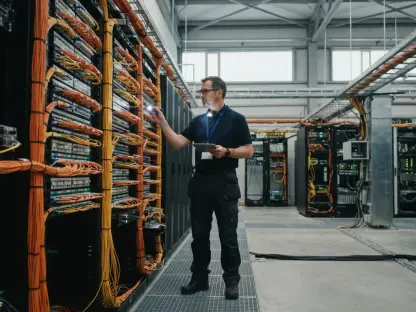
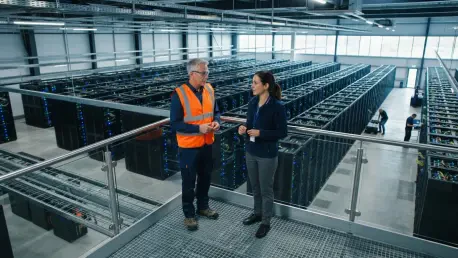
This new reality has created a significant hurdle for smaller players and even some established cloud firms that lack the financial strength to compete at this level. The industry is witnessing the birth of the gigawatt data center, a concept that was almost unthinkable only five years ago. These facilities are not just large warehouses for servers but complex engineering feats that require direct integration with high-voltage power grids and massive liquid cooling systems to dissipate the heat generated by modern accelerators. This evolution has shifted the competitive moat from software features to the physical and financial capacity to execute these mega-projects, effectively raising the barrier to entry for the hyperscale market.
Furthermore, the relationship between cloud providers and AI developers has shifted toward a model of deep integration and long-term partnership. In this landscape, the cloud provider acts as more than just a vendor; it becomes a critical infrastructure partner whose reliability determines the success of the client’s research. This dependency means that financial stability and the ability to guarantee future capacity are the most valuable commodities in the market. As Oracle secures its position with OpenAI, it is effectively setting a new standard for what it means to be a modern hyperscaler, proving that the ability to fund and build the physical infrastructure is now just as important as the ability to write code.
Strategic Capitalization and the $20 Billion Funding Mechanism
The recent $20 billion capital raise by Oracle represents a sophisticated orchestration of corporate finance tailored to the unique demands of the AI era. This funding mechanism is designed to provide the liquidity necessary for immediate expansion while maintaining the long-term health of the company’s balance sheet. By securing these funds, Oracle has effectively removed the financial uncertainty that often plagues large-scale infrastructure projects, allowing it to proceed with construction at a pace that competitors might find difficult to match. This strategic move is not just about the volume of capital but about the timing and structure of the raise, which maximizes flexibility in a volatile market.
This massive infusion of capital allows Oracle to move away from the piecemeal, project-by-project financing common in the earlier days of cloud expansion. Instead, the company is now operating from a position of total readiness, with the cash on hand to navigate supply chain fluctuations and secure long-lead items like specialized transformers and cooling components. This “fully funded” status is a powerful signal to both the market and its primary partners that Oracle is committed to the long-term roadmap of AI development. It shifts the narrative from speculative planning to a concrete reality, providing a level of assurance critical for maintaining high-stakes partnerships.
Modern Financing Trends for High-Growth AI Expansion
The current investment cycle is defined by an aggressive shift toward multibillion-dollar capital raises intended to lock in hardware allocations and energy contracts before they are snapped up by competitors. As the demand for H100 and newer Blackwell-class accelerators intensifies, infrastructure providers are recognizing that operational cash flow is no longer sufficient to fund the necessary scale of growth. This has led to a trend where large-scale, dedicated funding rounds are becoming the norm for those who wish to remain relevant in the frontier AI market. The prevailing market sentiment suggests that the primary competitive advantage in artificial intelligence is no longer purely algorithmic but lies in the sheer physical capacity to train and deploy models at scale.
This trend reflects a broader belief that we are in the midst of a once-in-a-generation infrastructure buildout. Financing for these projects is increasingly being viewed through the lens of industrial development rather than traditional venture-backed tech growth. Investors are looking for companies that can demonstrate a clear path to physical completion, valuing those that have secured the necessary land, power, and hardware. Oracle’s proactive approach to capitalization is a direct response to this trend, positioning the company as a leader in the race to industrialize AI computing. By raising capital now, the company is insulating itself against a potential future tightening in the credit markets while ensuring it has the resources to capture immediate opportunities.
Performance Indicators and Financial Composition of Oracle’s Raise
The financial structure of Oracle’s $20 billion capital raise is a calculated balance designed to protect its investment-grade credit rating while providing massive liquidity. By splitting the raise between $10 billion in new equity issuance and $10 billion in structured debt, the company created a cushion to absorb the risk of high-interest obligations. The equity component provides permanent capital that strengthens the balance sheet, while the debt portion allows the company to leverage its existing assets to maximize the return on its infrastructure investments. This two-pronged approach was finalized in early November 2026, ensuring that the company entered the final stretch of the year with a fully funded war chest.
Market forecasts indicate that this specific financial composition will allow Oracle to accelerate its data center construction timeline by approximately 18 to 24 months compared to rivals that are forced to rely on ongoing operational cash flow. This speed is a critical performance indicator in a market where being first to provide capacity can lead to multi-year contracts and deeper customer lock-in. By being “fully funded,” Oracle has eliminated the need for future, smaller rounds that could be subject to higher interest rates or less favorable market conditions. This stability is viewed by institutional investors as a sign of mature leadership and a clear-eyed understanding of the capital-intensive nature of the current AI cycle.
Navigating Structural and Operational Barriers to AI Deployment
Despite having the capital in place, the industry faces significant structural challenges that cannot be solved by money alone. The primary bottleneck is no longer just liquidity, but the transition of that capital into operational capacity within a constrained global supply chain. Oracle and its peers are currently navigating a landscape where long-lead items, such as high-voltage electrical transformers and high-density liquid cooling units, have lead times that stretch into years. This means that even with billions of dollars available, the speed of deployment is dictated by the manufacturing capacity of the global industrial base. Oracle has sought to mitigate this by engaging in early, large-scale procurement strategies that prioritize these critical components.
Operational risks also involve the concentration of revenue and exposure within a single major partnership. While the contract with OpenAI is a massive win, it also introduces volatility if market demand for generative AI shifts or if regulatory hurdles slow OpenAI’s deployment of new models. To mitigate this potential instability, Oracle is diversifying its operational approach by leveraging vendor financing agreements. These arrangements allow the company to share the financial burden with hardware manufacturers, creating a buffer that protects Oracle’s immediate capital reserves. This strategy ensures that the company is not overleveraged on a single outcome while still meeting its contractual obligations.
Additionally, the physical act of building these centers requires navigating complex local regulations and grid constraints. Securing gigawatts of power is a massive undertaking that involves negotiations with utility companies and local governments, many of which are struggling to upgrade their infrastructure fast enough to meet demand. Oracle’s operational strategy includes a focus on power-resilient designs and the exploration of alternative energy sources to ensure that its data centers can remain operational even as regional grids face increased strain. The success of the $20 billion investment will ultimately depend on the company’s ability to overcome these tangible, physical barriers to entry in a world where digital expansion is now tethered to the limits of the electrical grid.
Regulatory Standards and the Shifting Compliance Environment
As the sheer volume of debt tied to data center expansion begins to account for a measurable percentage of bank balance sheets, regulatory oversight is intensifying across the globe. Organizations such as the European Central Bank have started to increase their monitoring of “AI-linked” financing, wary of the systemic risk that could arise if the AI sector fails to meet its lofty growth projections. This heightened scrutiny means that companies like Oracle must maintain a high level of transparency in their financial dealings. By securing its funding through public equity and debt markets rather than through more opaque private credit channels, Oracle is proactively aligning itself with the expectations of financial regulators who are increasingly cautious about a potential “AI bubble” driven by unserviceable debt.
Compliance in the modern era has also expanded beyond the realms of data privacy and security to include environmental sustainability and societal impact. Governments are now requiring detailed assessments of how massive data centers will impact local power grids and water supplies, often demanding that providers invest in renewable energy offsets or more efficient cooling technologies. Oracle’s commitment to sophisticated cooling systems and high-efficiency hardware is part of a broader strategy to meet these evolving standards before they become mandatory hurdles. This proactive compliance helps the company avoid the costly delays that can occur when projects are halted by environmental lawsuits or regulatory interventions.
Furthermore, the transparency provided by Oracle’s public capital raise serves to reassure institutional investors concerned about the long-term viability of AI investments. In an environment where some firms rely on complex, multi-layered private financing, Oracle’s straightforward approach to its $20 billion raise stands out as a benchmark for financial responsibility. This strategy not only satisfies immediate legal requirements but also builds a foundation of trust with the broader financial community. As the industry moves toward more standardized reporting for AI infrastructure projects, Oracle’s early moves in this direction position it as a leader in corporate governance within the hyperscale cloud sector.
Future Projections for the Global AI Infrastructure Market
The trajectory of the global AI infrastructure market suggests a future where computing power is treated as a standardized, tradable commodity. We are likely to see the emergence of sophisticated financial instruments backed by computing capacity, similar to how oil or gold are handled in traditional markets. This industrialization of computing will require a massive shift in how companies view their digital assets, moving toward a model where GPUs and accelerators are treated as depreciable physical assets, much like aircraft or heavy machinery. This shift will likely lead to more structured vendor financing models that allow for the rapid scaling and upgrading of hardware as new generations of chips are released.
Looking ahead, the focus of innovation is expected to shift toward power efficiency and the development of edge computing nodes that can reduce reliance on centralized, gigawatt-scale clusters. While massive training centers will still be necessary for frontier models, the deployment phase of AI will likely become more decentralized to save on latency and energy costs. This potential disruption could challenge the current dominance of hyperscalers if they are unable to adapt their business models to a more distributed environment. Oracle’s current strategy of building massive centralized capacity is the first step, but the long-term winners will be those who can also manage the transition to a more efficient, edge-based deployment architecture.
Emerging Technologies and the Industrialization of Computing
The next phase of the industrialization of computing will be marked by the integration of technologies that prioritize energy density and thermal management. As we reach the physical limits of air cooling, liquid immersion and direct-to-chip cooling systems will become the industry standard for any high-performance AI cluster. Oracle’s investment in these technologies is a clear indicator that the company is preparing for a future where the physical constraints of the data center are the primary limiting factor for AI development. This focus on the “physical layer” of computing stands in stark contrast to the software-first approach that dominated the previous decade of cloud growth.
Moreover, the emergence of sovereign AI clouds represents a significant growth area as nations seek to build their own independent computing capacity for national security and economic reasons. Oracle’s experience in building massive, secure, and fully funded infrastructure for OpenAI provides a blueprint for these sovereign projects. By demonstrating that it can handle the logistics and financing of the world’s most demanding AI workloads, Oracle is positioning itself to capture a significant share of the government and public sector market. This industrial-scale approach to computing is not just a commercial trend but a strategic one that will shape the geopolitical landscape of the late 2020s.
Long-Term Growth Areas and Market Disruption
The long-term viability of the current infrastructure boom is inextricably linked to the successful commercialization of frontier models, such as the anticipated GPT-5 and its successors. If these models can demonstrate a clear path to profitability by solving complex, high-value problems for enterprises, the current $20 billion investment will be seen as the foundation of a new era of productivity. However, the industry remains in a phase of heavy investment where returns are still largely speculative. The integration of autonomous agents into the global economy represents the most significant growth frontier, as these agents will require massive amounts of constant, low-latency computing power to function effectively in real-world environments.
Disruption is also likely to come from the shift toward sovereign AI clouds and specialized hardware that can outperform general-purpose GPUs for specific tasks. Oracle’s early lead in securing funding for the OpenAI roadmap gives it a tactical advantage, but the company must remain agile to avoid being trapped by obsolete technology. The move toward “compute-backed” financial instruments will likely bring more liquidity into the market, but it also increases the risk of market volatility if the underlying value of that computing power fluctuates. Ultimately, the industry is moving toward a state where the most successful firms will be those that can master the complex interplay between high finance, heavy industry, and cutting-edge software development.
Strategic Outlook for Oracle and the AI Ecosystem
Oracle’s successful $20 billion capital raise fundamentally altered the risk profile of its partnership with OpenAI, ensuring that the physical requirements for the next generation of frontier models were fully supported. By securing this massive sum through a balanced mix of equity and debt, the company established a new benchmark for financial transparency and readiness in a sector often criticized for its reliance on speculative projections. This move effectively derisked the most capital-intensive portion of the AI development cycle, providing a stable foundation upon which OpenAI can continue its research without the immediate threat of liquidity constraints or infrastructure bottlenecks.
The focus within the hyperscale market has shifted toward execution and the physical reality of building the next generation of data centers. Oracle positioned itself as a leader by proving it possessed the financial strength to move faster than traditional market leaders, who often remained tethered to slower, more cautious reinvestment cycles. The success of this venture now rests on the company’s ability to navigate the complexities of global supply chains and energy procurement. For the broader AI ecosystem, this event signaled that the era of experimentation had concluded, replaced by a period of massive, funded industrial expansion that required a new level of corporate discipline.
Moving forward, the primary challenge for infrastructure providers will be the acquisition of power and the management of the environmental impact of their operations. Oracle’s proactive strategy in securing funding allowed it to focus its attention on these critical operational hurdles before they became crises. For investors and industry observers, the $20 billion raise served as a clear indicator that the competitive landscape of the cloud had been redefined. The companies that thrived in this new environment were those that could successfully bridge the gap between digital innovation and the physical infrastructure required to sustain it, turning capital into the raw compute power that fuels the modern world.
The long-term success of these investments will depend on the continued evolution of AI applications and their ability to generate sustained economic value. Oracle’s strategy assumed that the demand for frontier models would continue to grow exponentially, justifying the massive upfront costs. As the industry looked toward the future, the integration of autonomous agents and the expansion of sovereign clouds provided new avenues for growth that could build upon the foundation laid by the OpenAI partnership. The era of industrial-scale computing had arrived, and Oracle’s decisive financial maneuvers ensured that it would remain a central player in the technological landscape for years to come.
Institutional investors responded to this shift by demanding greater clarity regarding the physical assets and power contracts that backed AI-related debt. Oracle’s transparent approach to its $20 billion raise satisfied this demand, setting a precedent for how other firms would need to communicate their own infrastructure strategies. The narrative of the AI boom evolved from one of software potential to one of physical capacity, with the “fully funded” status of a company becoming the most critical metric for assessing its future prospects. By leading this shift, Oracle not only secured its own position but also helped to stabilize the broader financial environment surrounding the AI sector.
In the final assessment of this period, the industry recognized that the massive capitalization of infrastructure was the necessary response to the unprecedented scale of generative AI. The shift toward treating compute as a commodity and a financeable asset became the defining characteristic of the late 2020s economy. Oracle’s move to secure $20 billion was not just a corporate milestone but a signal that the infrastructure layer had become the most important strategic asset in the global tech economy. The successful deployment of this capital into high-performance data centers provided the necessary backbone for the next wave of human-machine collaboration, marking a new chapter in the history of industrial computing.