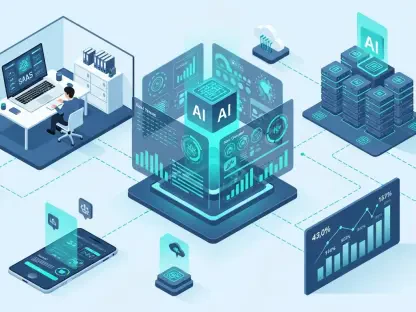

The professional tax accounting sector is currently navigating a transformative period as boutique and mid-sized firms move beyond traditional manual entry toward high-efficiency automated workflows. San Diego-based startup Juno has recently secured twelve million dollars in seed funding, signaling a major investor commitment to modernizing the “missing middle” of the financial services market. This analysis examines how the integration of artificial intelligence is not merely a convenience but a structural necessity for firms handling complex returns in a labor-constrained environment. By prioritizing a human-in-the-loop approach, the industry is witnessing the birth of a new standard where clerical data entry is subordinated to high-level strategic advisory services.
The Catalyst for Change: Navigating the Shift from Manual Labor to Machine Efficiency
For decades, the professional accounting world operated under a predictable, if grueling, cycle of manual data extraction and repetitive clerical tasks. This traditional model faced an existential challenge when general-purpose large language models demonstrated an unexpected proficiency in processing tax-related queries. Such a shift forced a re-evaluation of the industry’s reliance on human labor for low-level data entry, revealing that the “missing middle” of the market—accounting firms too small for enterprise software but too complex for consumer apps—was ripe for a specialized solution.
The foundational shift toward automation was accelerated by the realization that firms must either adapt to technological progress or face gradual obsolescence. While large-scale corporations had access to bespoke enterprise solutions, the thousands of mid-sized firms remained trapped in a cycle of processing hundreds of pages of raw data by hand. This historical context provides the necessary background to understand why a specialized, professional-grade AI platform is now viewed as a vital infrastructure component rather than an optional upgrade.
The Architecture of Innovation: Balancing Human Oversight and Artificial Precision
Modern fintech is no longer about replacing the professional; it is about providing the technical infrastructure that allows that professional to function at a higher capacity. The integration of artificial intelligence into the tax workflow addresses the inherent tension between the need for extreme precision and the massive volume of unstructured data that firms must process. By automating the extraction of data from over ninety different document types, these systems allow for a drastic reduction in time spent on clerical overhead, effectively shifting the firm’s value proposition toward strategic consulting.
Redefining Professional Roles: Moving from Preparer to Strategic Advisor
In the contemporary landscape, a ninety-nine percent accuracy rate in tax preparation is often categorized as a failure, given that even the slightest error can trigger audits or severe financial penalties. Specialized platforms are now designed to handle the bulk of data extraction while ensuring that the final ten percent of the process remains firmly under human control. This human-in-the-loop philosophy ensures that the nuanced decisions required for high-net-worth individuals and complex business structures are made by experts, not algorithms. Consequently, accountants are shedding their roles as data processors to become high-level financial architects.
Overcoming Technical InertiConnecting Legacy Systems to Modern AI
One of the most significant barriers to this evolution has been the fragmented and often antiquated nature of existing tax software infrastructure. Most legacy databases in the industry were built without the benefit of modern application programming interfaces, creating a “walled garden” effect that resisted outside innovation. To circumvent these obstacles, the newest wave of fintech startups has spent significant resources building custom bridges to these twentieth-century systems. This technical pragmatism is what separates successful professional tools from general AI models that struggle to integrate with the specific tools CPAs use daily.
Mitigating Risk: Transparency and the Prevention of Algorithmic Errors
The industry remains rightfully cautious regarding the phenomenon of AI hallucinations, where a model might confidently produce incorrect data. This risk is managed through a commitment to transparency and auditability, where every piece of information extracted is traceable back to its source document. Unlike black-box systems, professional-grade AI provides a clear trail for the CPA to verify, which is essential for maintaining client trust and regulatory compliance. This focus on verification rather than blind automation helps dismantle the misconception that AI will operate autonomously in high-stakes financial environments.
Market Outlook: The Evolution of Specialized Fintech and Vertical AI
The broader fintech ecosystem is currently experiencing a robust influx of capital, with global funding reaching over fifty-three billion dollars. This surge is driving a move toward “vertical AI,” where software is meticulously tailored for specific workflows like business tax returns or complex legal filings rather than general use. As the profession continues to face a significant shortage of qualified CPAs, the adoption of these specialized tools is becoming an economic necessity to handle increasing workloads. We are seeing a transition where the ability to leverage automation becomes a key differentiator in a firm’s valuation and competitive standing.
Practical Strategies: Implementing Automation in a High Stakes Environment
For firms looking to stay ahead of this curve, the primary objective should be a thorough audit of internal workflows to identify bottlenecks in manual data entry. Leaders should seek out platforms that offer specialized integrations with their current software suites, even if those integrations appear complex or unconventional. Transitioning a business model to emphasize advisory services over hourly preparation fees is another critical step in capitalizing on the efficiency gains provided by AI. Firms that prioritize these human-centric automation strategies will find themselves better positioned to attract top-tier talent who are increasingly reluctant to perform mundane clerical tasks.
A New Standard of Excellence: The Long Term Impact of Automated Tax Accounting
The recent influx of funding into specialized tax automation signaled a permanent change in how professional services were delivered and valued. By merging deep industry expertise with sophisticated machine learning, the sector successfully addressed the stagnation that had characterized much of the previous decade. The most successful applications of this technology were those that empowered human professionals to reclaim their time, allowing them to focus on high-impact, strategic work they were originally trained to perform. This evolution established a sustainable template for the future of professional services, ensuring that the human element remained central to the financial landscape.