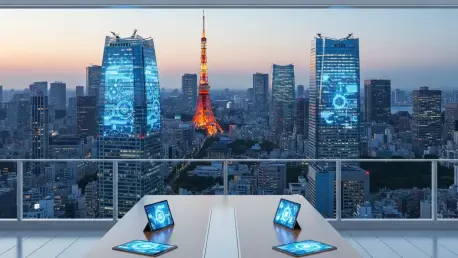

The sheer density of Tokyo, a sprawling megalopolis of 37 million people, is no longer just a logistical marvel but has become a high-velocity testing ground for the world’s most ambitious tech entrepreneurs. While the city was once synonymous with rigid corporate hierarchies and a preference for internal research, a fundamental realignment is currently taking place. This shift has turned the Japanese capital into a strategic magnet for international talent, especially as other traditional tech hubs face market saturation and rising operational costs. Today, the city serves as a vital nexus where deep-rooted industrial expertise meets the agility of a global startup culture.
Understanding this transformation requires looking at how Tokyo is rewriting its economic playbook to prioritize external innovation. The urgency stems from a national objective to revitalize growth by moving beyond the shadow of legacy conglomerates. By integrating global venture capital with domestic technical prowess, Tokyo is not merely participating in the tech race; it is attempting to define the parameters of the next industrial era. This analysis explores the systemic changes, from government-led infrastructure to shifting corporate mindsets, that are cementing Tokyo’s status as a premier global hub.
The Shift: From Corporate Giants to Agile Innovators
For most of the late 20th century, Japan’s economic engine was fueled by massive conglomerates that favored stability and long-term internal development over the disruptive risks of the startup world. This model, while successful for decades, eventually led to a stifling environment for independent innovators who found it nearly impossible to compete for talent or capital. However, the current landscape reflects a departure from this isolationist approach. Stagnation in traditional sectors has forced a realization that the next wave of economic resilience will be driven by small, nimble companies capable of rapid iteration.
As a result, the Japanese private sector has begun to view startups not as competitors, but as essential partners for survival. This cultural pivot is foundational to the city’s current trajectory. Large corporations are now actively seeking outside collaboration to solve complex problems in fields like automation and sustainable energy. By lowering the barriers that previously protected these industrial giants, Tokyo has created a more inclusive ecosystem where new ventures can leverage the massive resources and distribution networks of established industry leaders.
Strategic Government Initiatives: The SusHi Tech Phenomenon
Public Policy: A Catalyst for Growth
The Tokyo Metropolitan Government has evolved into a proactive architect of the city’s innovation strategy, moving far beyond its traditional role as a regulatory body. At the heart of this effort is “SusHi Tech Tokyo,” which has grown into the largest innovation conference in Asia. This initiative is more than a simple networking event; it functions as a high-stakes platform where global leaders and venture capital firms gather to address pressing urban challenges. By focusing on pillars like Artificial Intelligence and urban resilience, the government uses the city’s massive scale to help startups validate their technologies in a real-world environment.
Physical Infrastructure: Open Collaboration
Investment in both “soft” and “hard” infrastructure is significantly reducing the friction that foreign founders previously faced when entering the Japanese market. A standout example is the Tokyo Innovation Base, a centralized hub that provides a collaborative environment for domestic and international talent. This facility serves to demystify the local market, offering free-to-use spaces and direct access to networking opportunities that were once guarded by closed social circles. Such physical presence provides the institutional credibility necessary for startups to navigate the complex local regulatory landscape and secure early-stage partnerships.
Bridging the Gap: Academia and Blue-Chip Corporates
A profound shift is also occurring in the relationship between the startup community and Japan’s legendary “blue-chip” companies. Entities like Sony and Hitachi are increasingly turning toward the Deeptech sector to refresh their innovation pipelines. In the past, these hierarchies were notoriously difficult for outsiders to penetrate. Now, specialized programs like the Sakura Deeptech Shibuya Accelerator act as vital intermediaries. These accelerators provide founders with the “warm connections” required to pitch directly to decision-makers, effectively blending the agility of a startup with the substantial resources of global industrial titans.
Future Projections: Tokyo’s Tech Landscape
Looking toward the next decade, Tokyo’s “Global Innovation Strategy 2.0” remains the primary roadmap for the city’s tech evolution. The explicit goal of fostering at least 20 unicorns by 2035 is driving a steady influx of international investment. As the ecosystem matures, the integration of robotics and AI into the city’s infrastructure will likely become seamless, particularly as Tokyo seeks to address the dual challenges of climate change and a shrinking workforce. This necessity-driven innovation makes the city a unique market where high-tech solutions are not just luxuries but essential requirements for urban stability.
Furthermore, the investment climate is becoming increasingly internationalized. As the government continues to de-risk market entry through subsidies and streamlined visa processes, more American and European venture capital firms are expected to establish permanent bases in the city. This trend suggests that Tokyo will move from being a regional powerhouse to a central node in a global network of Deeptech and sustainable urban solutions, offering a stable and sophisticated alternative to more volatile emerging markets.
Strategies: Success in the Japanese Market
For those aiming to capitalize on this momentum, success depends on a blend of technological superiority and cultural intelligence. Leveraging local accelerators is no longer optional; it is a vital step for navigating the nuances of Japanese business etiquette and building long-term trust. Founders should also pivot their perspective to see the city’s specific demographic and environmental hurdles as niche market opportunities. Whether it is energy efficiency or advanced healthcare for an aging population, Tokyo offers a concentrated demand for specific high-tech applications that can be scaled globally once proven locally.
Establishing credibility quickly is often the biggest hurdle for foreign entities. Utilizing government-backed platforms like the Tokyo Innovation Base can provide the necessary institutional weight to attract local investors. Moreover, a commitment to relationship building is essential, as the Japanese market still values the longevity and reliability of a partnership over short-term gains. By aligning a startup’s mission with the city’s broader goals of sustainability and resilience, entrepreneurs can secure a foothold in one of the world’s most lucrative and stable economies.
Building a Global Innovation Node
Tokyo successfully rebranded itself as an essential destination for the global tech community by merging its vast domestic wealth with a newfound commitment to openness. The city established a fertile environment where cross-continental growth became a tangible reality rather than a distant goal. By bridging the gap between international innovation hubs and the Japanese industrial core, the metropolitan government ensured that the city remained relevant in an increasingly competitive landscape. This evolution suggested that Tokyo’s future would be defined by its ability to foster disruption as effectively as it once managed mass production. Decision-makers and investors who recognized these shifts early were able to position themselves at the forefront of a new era of sustainable, high-tech urban development.