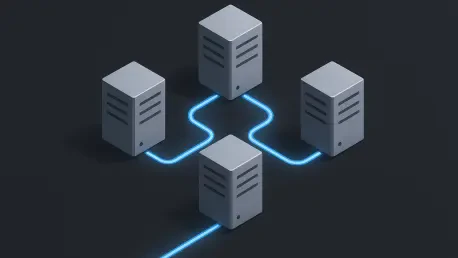

Modern enterprises are currently navigating a digital landscape where the explosion of telemetry data threatens to overwhelm traditional Security Operations Centers, making intelligent automation a necessity rather than a luxury. The current security market, now valued at approximately $121 billion, is witnessing a massive pivot toward data-centric ecosystems where the ability to manage and route telemetry becomes the primary competitive advantage. As infrastructure scales, the importance of efficient data handling has moved from a back-office concern to the forefront of corporate defense strategies.
The Evolving Landscape of Telemetry Data and Security Operations
Modern enterprise infrastructure relies heavily on the constant flow of telemetry data to maintain visibility, yet many organizations remain trapped in legacy architectures that prioritize storage over real-time accessibility. Key players in the security space are increasingly moving toward platformization, where a single, unified foundation replaces a collection of disconnected tools. This shift ensures that every piece of data, from simple logs to complex traces, is processed and routed with surgical precision to the correct destination.
The significance of this evolution lies in the elimination of traditional silos that have historically isolated security operations from the rest of the IT environment. By establishing a unified data foundation, companies can drastically reduce the redundant costs associated with maintaining multiple data lakes. This architectural clarity allows for a more responsive security posture, where analysts no longer struggle to piece together information from fragmented sources.
Driving Innovation Through AI-Powered SOC Automation
Strategic Shifts in Threat Detection and Response
The integration of artificial intelligence into the Security Operations Center represents a departure from the static, prebuilt playbooks that have long hampered incident response efficiency. Instead of following rigid logic, modern systems now utilize AI to generate dynamic triage paths based on the unique context of each incoming alert. This innovation allows for real-time investigation against raw telemetry data exactly where it resides, which helps in identifying the root cause of an issue without moving massive datasets.
Moreover, combining detection engineering with automated resolution workflows creates a closed-loop system that handles threats from identification to remediation. By reducing the noise generated by false positives, security teams can focus their limited human resources on high-value cognitive tasks. This strategic alignment ensures that the speed of defense finally matches the speed of modern digital threats.
Market Projections and the Rise of Data-First Security
Market projections for the period from 2026 to 2028 indicate a steep growth trajectory for the SOC automation sector as organizations seek to maximize their return on security investments. Key performance indicators already demonstrate that automated triage can lead to significantly increased detection speeds and a reduction in the mean time to respond to critical incidents. This trend suggests that telemetry platforms are quickly becoming the primary operating systems for all AI-driven security applications.
Future success in this space will likely be defined by how well a platform can handle the transition from raw data ingestion to actionable intelligence. As enterprises prioritize efficiency, the move toward data-first security will become the standard for any organization looking to survive in a high-threat environment. The goal is to create a seamless pipeline where data is not just stored but actively utilized to predict and prevent future compromises.
Overcoming the Complexity of Fragmented Security Stacks
Fragmented security stacks have created a heavy burden of tool fatigue, where analysts are forced to navigate dozens of disconnected interfaces to perform a single investigation. This complexity leads to significant gaps in coverage and high operational overhead, as redundant data silos consume both financial budgets and human attention. Centralized intelligence platforms offer a way out of this cycle by acting as a filter that transforms raw telemetry into meaningful security outcomes.
To maintain a competitive edge, organizations must implement strategies that preserve data sovereignty while still leveraging the power of third-party AI assets. Bridging the gap between raw ingestion and resolution requires a modular approach that allows for the rapid integration of new tools without disrupting existing workflows. This flexibility is essential for maintaining a modern defense that can adapt to changing organizational needs and emerging threat vectors.
Navigating the Regulatory and Compliance Standards for AI in Cybersecurity
As governments globally introduce stricter regulations regarding the use of artificial intelligence, transparency in automated triage logic has become a fundamental requirement for compliance. Organizations must ensure that their telemetry analysis remains within the boundaries of global data privacy laws, especially when processing sensitive information at scale. Maintaining a clear audit trail is vital for forensic purposes, as it allows investigators to understand the reasoning behind every automated decision.
Furthermore, protecting the integrity of automated workflows requires robust security measures to prevent the manipulation of AI models by malicious actors. Compliance is no longer just a checkbox but a continuous process of ensuring that every automated action is both legal and ethical. By prioritizing transparency, companies can build trust with stakeholders and regulators while still enjoying the efficiency gains provided by advanced automation.
The Future of AI-Driven Ecosystems and Unified Platforms
The industry is moving toward a wave of consolidation where specialized security applications will increasingly run on top of open, modular telemetry platforms. Both consumer and enterprise preferences are shifting away from monolithic, proprietary vendors in favor of customizable stacks that offer greater control over data flow. This evolution will likely see the rise of generative AI as a tool to further streamline complex operational tasks, making the SOC more efficient than ever before.
Innovation in this sector will focus on creating a backbone that supports a wide variety of security use cases, from threat hunting to compliance monitoring. As these ecosystems mature, the distinction between a data platform and a security tool will continue to blur. The result will be a more integrated and resilient digital environment where automation is the default state of operations rather than an optional add-on.
Strengthening the Modern SOC Through Strategic Asset Integration
The acquisition of assets from Radiant Security and CardinalOps provided a necessary blueprint for organizations looking to modernize their defensive capabilities within a rapidly changing landscape. It was determined that a unified telemetry foundation served as the only viable way to achieve the scale required for AI-driven security success. Forward-thinking leaders prioritized the control of data flow as the ultimate form of enterprise protection, ensuring that every byte of information was accounted for.
The shift toward modular, AI-enhanced platforms demonstrated that the future of security resided in the ability to act upon data in real time. Organizations were encouraged to move away from disconnected tools and instead invest in ecosystems that offered both flexibility and deep intelligence. By focusing on the integration of automated triage and sophisticated detection engineering, the industry moved closer to a reality where security operations were both proactive and nearly autonomous.