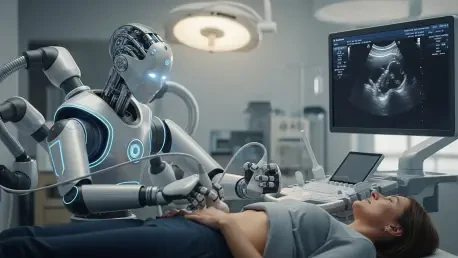

A groundbreaking artificial intelligence platform designed to dramatically improve the accuracy of fetal ultrasounds has received clearance from the U.S. Food and Drug Administration, paving the way for its deployment in clinics across a nation grappling with a severe maternal health crisis. BioticsAI, a startup that captured the top prize at the TechCrunch Disrupt Battlefield competition in 2023, is now positioned to introduce its technology to healthcare systems, marking a pivotal moment in the integration of AI into prenatal care. The software aims to serve as a critical tool for sonographers, addressing diagnostic inconsistencies that can have profound consequences for both mother and child.
A Potential Turning Point in Maternal Health Outcomes
The United States currently holds one of the most troubling records for maternal health outcomes among high-income countries, a crisis that has prompted urgent calls for innovative solutions. This challenge is underscored by significant disparities in care, where factors like image quality and diagnostic oversight can lead to poorer outcomes. The introduction of advanced AI tools like BioticsAI’s platform offers a potential pathway to standardize care quality, mitigate human error, and provide a more equitable standard of prenatal screening for all expectant mothers.
This technology arrives at a critical juncture, as the systemic issues plaguing prenatal care disproportionately affect marginalized communities. Black women, for instance, face a significantly higher risk of adverse outcomes, a statistic linked to a combination of systemic biases and inconsistencies in healthcare delivery. By enhancing the reliability of a fundamental diagnostic tool like the ultrasound, AI could help establish a higher baseline of care, ensuring that critical anatomical details are not missed, regardless of the clinical setting.
Addressing the Unseen Problem in Prenatal Diagnostics
At the heart of many prenatal diagnostic challenges lies a seemingly simple issue: the quality of the ultrasound image. Low-quality or incomplete scans can obscure vital anatomical information, leading to missed or delayed diagnoses of fetal abnormalities. These oversights can prevent timely medical intervention and negatively impact patient outcomes, turning a routine procedure into a high-stakes event where clarity is paramount. The subjectivity inherent in interpreting these images creates a variability that technology is uniquely positioned to address.
BioticsAI directly confronts this issue by leveraging sophisticated computer vision to act as a co-pilot for sonographers. The system analyzes scans in real time, providing immediate feedback on image quality and anatomical completeness. This function serves as an essential safeguard, helping technicians capture the clearest possible images and ensuring all necessary fetal structures are properly visualized and documented. This automated verification process is designed to reduce the likelihood of diagnostic errors stemming from substandard imaging.
An AI Co-Pilot for Sonographers in Action
The core of BioticsAI’s platform is its AI-driven engine, which was trained on a vast and diverse dataset of hundreds of thousands of fetal ultrasounds. This extensive training enables the software to recognize and assess key fetal anatomical structures with a high degree of accuracy. For healthcare professionals, the technology automates several critical functions that are traditionally manual and time-consuming.
Its primary capabilities include automated quality assessment, which guides sonographers to optimize image clarity during the scanning procedure. Furthermore, it verifies anatomical completeness, cross-referencing the captured images against a required checklist to prevent any crucial details from being overlooked. Finally, the platform streamlines the reporting process by auto-populating findings and seamlessly integrating with existing clinical workflows and electronic health record systems, reducing the administrative burden on medical staff.
The Founder’s Mission and a Technological Hurdle
The drive behind BioticsAI stems from a deeply personal connection to the field of obstetrics. Founder and CEO Robhy Bustami, whose family includes several obstetricians, was motivated by a direct awareness of the prenatal care crisis in the U.S. This firsthand perspective on the challenges faced by both clinicians and patients fueled the mission to develop a tool that could bring greater precision and reliability to fetal medicine.
According to Bustami, while building the complex AI models was a significant undertaking, the greatest challenge was ensuring the technology performed reliably across diverse and high-risk patient populations. Creating an AI that is not only accurate but also equitable and unbiased required a meticulous approach to data sourcing and model validation. This focus was critical to developing a tool that could be trusted in real-world clinical scenarios, especially for those patients most vulnerable to poor outcomes.
A Strategic Path to Approval and Future Growth
BioticsAI achieved FDA clearance in a notably accelerated timeframe, completing the rigorous regulatory process in under three years. Bustami attributed this success to a strategic decision made at the company’s inception: to integrate engineering, clinical, and regulatory efforts from the very beginning. This concurrent approach, rather than a traditional sequential one, allowed the team to anticipate and address regulatory requirements throughout the development cycle, ensuring a smoother path to market.
With this crucial approval secured, the company’s focus has shifted toward scaling operations and distributing its technology to health systems across the United States. The initial rollout represents the first step in a broader vision to expand the platform’s capabilities. Plans are already underway to incorporate additional features aimed at advancing other areas of fetal medicine and reproductive health, signaling the company’s long-term commitment to leveraging AI to improve women’s healthcare.