
Vijay Raina has spent his career dissecting the mechanics of enterprise software, but even for a veteran of software architecture, the speed of the “SaaS-Pocalypse” is breathtaking. As the industry watches Emergent scale from a niche research lab to a $1.5 billion powerhouse in just two years, the conversation has shifted from whether AI can code to how it will redefine the very foundation of small business operations. Today, we sit down with Vijay to explore how this paradigm shift is putting the power of a full engineering team into the hands of those who have never written a line of code. By bridging the gap between business requirements and technical execution, this technology is effectively turning domain experts into creators of their own digital tools.
You began as a research lab focused on autonomous coding agents before shifting toward a broader vision for the industry. How did that initial realization about the future of AI lead to the creation of over 12 million applications today?
Two years ago, the team at Emergent looked at the landscape and saw a massive shift coming that most people were still ignoring. We weren’t just looking at a better way to write snippets of code; we were looking at a future where the entire software development lifecycle—including the tedious bits like code reviews, testing, and deployment—was managed by autonomous agents. This realization allowed the company to move beyond simple automation and build a platform that actually emulates a complete software engineering team. Seeing some 12 million applications spring to life proves that when you remove the friction of manual coding, you unlock a tidal wave of creativity that has been suppressed for decades. It feels like the magic of AI is finally becoming practical, turning what used to be months of expensive labor into a conversation that happens in minutes.
The “SaaS-Pocalypse” suggests a massive shift where traditional software vendors might suffer while businesses benefit. In your view, why is the “one-size-fits-all” model of traditional software failing compared to these new custom AI solutions?
There is a fundamental principle in economics where the benefit of the many often results in the disruption of the few, and right now, the “few” are the traditional independent software vendors. For years, businesses have been forced to settle for software that was designed to meet the needs of as many customers as possible, which meant it was actually a perfect fit for almost no one. This created a yawning gulf between what a business owner actually needed and what the software could deliver, leading to a mess of spreadsheets and costly, risky custom coding projects. Now, we are seeing those old models consigned to the junk heap of history because AI allows for “right-fit” software that is built exactly for a specific workflow. The cost of outcomes is becoming commoditized, and while it’s a painful transition for traditional developers, the businesses using these tools are finally getting the efficiency they deserve without the “standard application” tax.
We’ve seen the “consumerization of IT” before with smartphones, but how does allowing a business owner to “talk” software into existence change the role of the traditional software engineering team?
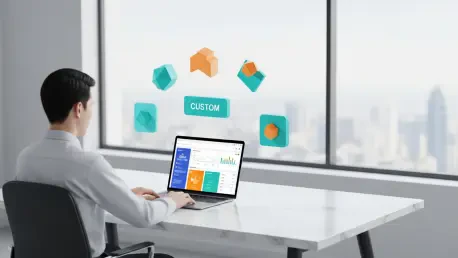
Think back to how smartphones changed our relationship with technology; most people have no idea how the underlying operating system works, and frankly, they shouldn’t have to. We are now hitting that same point in software development where the “code behind the scene” becomes invisible to the user. Instead of translating business requirements through a complex chain of analysts and developers—who often lose the original intent in translation—the business owner interacts directly with a coding agent using natural language. It’s an incredible shift where the owner of the business essentially becomes the owner of the software, instructing agents just as they would chat with a human developer. This effectively removes the technical bottleneck that has historically prevented small companies from having high-quality, specialized tools.
It was initially expected that architects and senior engineers would be the primary users, yet business operators—like a roofing company in Ohio—are the ones leading the charge. What does this tell us about the hidden demand for specialized tools?
It was a huge surprise to see that the most active users weren’t the “techies,” but rather the people with deep domain expertise who were tired of being held back by a lack of access to quality engineering shops. Take that roofing company in Ohio, for example; they were juggling multiple SaaS products and trying to paper over the gaps with Excel sheets that never quite worked for their specific needs. By using this technology, they were able to build a custom system that perfectly mirrored their specific workflow, something no off-the-shelf product could ever do. This shows that there is a massive, untapped market of operators who know exactly what they want but have been ignored because their needs were too niche for big software companies. They aren’t looking to become programmers; they just want tools that work as hard as they do, and AI is finally making that economically possible.
With a recent $130 million Series C round and a $1.5 billion valuation, the focus is now on becoming an “operating system” for small businesses. What is your forecast for software development?
My forecast is that we are moving toward a world where the distinction between “buying” software and “building” software completely disappears for the average business owner. With this new $130 million in funding, we are going to see a deep push into the small and medium business market, turning AI from a novelty into a core partner that manages the entire digital infrastructure of a company. We will see the rise of “vibe coding” as a standard practice, where the intent and the outcome are separated by nothing more than a few lines of natural language. Traditional software will likely become a relic of the past as millions of businesses realize they no longer have to adapt their workflows to fit a rigid tool, but can instead demand that their tools adapt to them. This is the beginning of an era where software is no longer a product you purchase, but a living extension of your business logic.