
Government initiatives are bridging the digital divide by helping local coffee bean factories and small retailers drive traffic through advanced data-driven marketing tools. This movement reflects a broader, more aggressive trend where businesses across the globe are reclaiming their technological sovereignty from the gatekeepers of the software industry. For the past several years, the standard operational procedure for any enterprise was to outsource its foundational needs to a myriad of subscription-based platforms. However, the paradigm is shifting rapidly toward a model of self-sufficiency driven by highly sophisticated artificial intelligence systems. Organizations are no longer content with being passive consumers of technology; they are becoming creators. This change is not merely a cost-saving measure but a strategic pivot to ensure that every digital tool is perfectly aligned with specific internal workflows and long-term corporate goals. As the barrier to entry for complex software development continues to fall, the very definition of a tech company is expanding.
The Decline of the SaaS Model and Proprietary Innovation
Internal Development: The Shift in Software Consumption
The emergence of “vibe coding” serves as a primary catalyst for this massive shift in how software is consumed and developed within the modern enterprise. This process allows non-technical employees to generate functional, high-quality code by simply providing natural-language instructions to advanced AI models. It represents a democratization of engineering power that was previously reserved for those with years of specialized training. By leveraging these intuitive interfaces, startups are moving away from the rigid structures of legacy Enterprise Resource Planning (ERP) and Human Resources (HR) management systems. Instead of adapting their business processes to fit the limitations of a third-party application, companies are now building tools that adapt to them. This transition is rendering many traditional Software-as-a-Service (SaaS) offerings obsolete, as internal teams can now prototype and deploy custom solutions in a fraction of the time and cost it takes to manage multiple external vendor contracts.
Strategic Autonomy: Bypassing the Software Bloat
Looking at the economic landscape, the financial incentives for moving away from standardized subscriptions are becoming impossible to ignore for most growth-oriented firms. For instance, several innovative ventures have successfully replaced collaboration platforms that previously cost them over 12 million won annually by developing internal equivalents focused on specific needs like electronic approvals. Another notable case involved a startup consolidating disparate ERP functions into a single AI-generated system, effectively eliminating a recurring monthly bill of 5 million won. These are not isolated incidents but part of a systematic rejection of the “bloat” typically found in premium software suites. By focusing strictly on the features that provide actual value, companies are streamlining their operations while simultaneously strengthening their bottom lines. This trend suggests that the SaaS industry is entering a “survival of the fittest” era, where only the most integrated platforms can survive.
Reverse Engineering: The Role of the Open-Source Community
To further accelerate this transition, many organizations are utilizing AI to perform sophisticated reverse engineering on existing high-end software architectures. This allows internal development teams to analyze the core functionalities of industry-standard tools and replicate the most valuable components without the unnecessary overhead. The rise of the open-source community plays a vital role here, with platforms like GitHub hosting an ever-expanding library of free alternatives to suites once dominated by software giants. By combining these open-source foundations with custom AI-generated code, businesses can maintain a high level of technical capability without the burden of restrictive licensing agreements. This approach empowers firms to take full ownership of their data and infrastructure, ensuring that they are not vulnerable to sudden price hikes or service changes from external providers. The result is a more resilient and agile business model that prioritizes long-term stability and independence.
Market Consequences: The Pressure on Traditional Vendors
The broader market consequences of this shift are forcing established software providers to fundamentally rethink their value propositions to avoid obsolescence. As custom-built internal tools become more prevalent, the traditional model of selling generalized, one-size-fits-all software is losing its competitive edge. Providers must now offer deep integration and unique ecosystem benefits that cannot be easily replicated by an AI-assisted internal team. For example, major communication platforms maintain their position by serving as central hubs for complex networks that require high levels of cross-platform compatibility. However, for more utilitarian tasks, the pressure is mounting. The democratization of development means that the once-high barriers to entry are crumbling, allowing smaller players to compete on the same level as established giants. This competition is driving a wave of innovation that benefits the end-user but poses a significant threat to the recurring revenue models that defined the tech sector.
Technological Benchmarks and Industrial AI Integration
High-Growth Milestones: The Alteogen Example
In the biotechnology sector, the performance of Alteogen (196170) provides a clear benchmark for how specialized platform technology can drive massive financial success. The company recently achieved a historic milestone by surpassing 100 billion won in quarterly revenue, marking a staggering 144.4% increase compared to the previous year. Much of this growth is rooted in the successful commercialization of its Hybrozyme platform, known as ALT-B4, and the expansion of subcutaneous formulations for major treatments like Keytruda. Alteogen’s business model focuses on the strategic export of its proprietary technology through licensing deals with global pharmaceutical leaders such as MSD and Novartis. These partnerships have secured billions of dollars in potential milestone payments, demonstrating that owning a unique technological process can be far more lucrative than simply manufacturing a finished product. This success story highlights the shifting focus within the industry toward high-value intellectual property and vertical integration.
Global Infrastructure: The New Gold Rush
While software is becoming a commodity, the underlying physical infrastructure required to support advanced AI models has become the new focus of global investment. Recent financial disclosures from major players like Anthropic reveal an unprecedented commitment to building out computing capacity. The organization has entered into infrastructure purchase and lease contracts totaling nearly $895.4 billion, a figure that underscores the sheer scale of the resources needed to remain at the frontier of intelligence. These investments are strategically spread across a diverse network of suppliers, including Broadcom, Google Cloud, and Amazon Web Services, as well as specialized providers like SpaceX AI. This diversification is not accidental; it is a calculated effort to avoid vendor lock-in and ensure a continuous supply of high-performance chips and data center availability. The race to secure these physical assets has created a new “gold rush” in the tech sector, where the winners command raw power.
Standardization: Robotics and the Food-Tech Sector
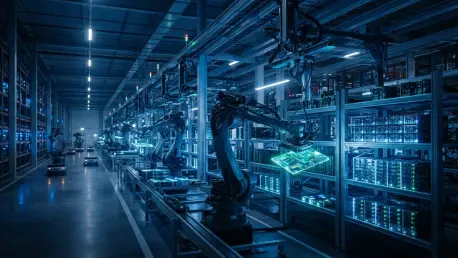
The physical application of AI is reaching a critical turning point with the establishment of specialized humanoid data factories designed to train the next generation of robots. South Korea has recently inaugurated its first facility of this kind, a joint venture between the Korea Institute of Machinery and Materials and the Electronics and Telecommunications Research Institute. The primary goal of these centers is to overcome the data bottleneck that has long hampered the development of bipedal robotics. By collecting vast amounts of multimodal data during complex task execution, researchers can train AI models to handle real-world physical interactions with the same level of precision as a human worker. Furthermore, in the food-tech sector, government-led initiatives are focusing on the standardization of AI-driven manufacturing to address the challenges of processing non-uniform materials. By providing a clear technical framework, the government is helping enterprises overcome the labor shortages.
Small Business Support: Bridging the Digital Divide
While large-scale infrastructure projects often dominate the conversation, the application of AI and digital platforms to support small business owners is equally transformative. The Ministry of SMEs and Startups has significantly expanded its digital marketing support programs, now covering over 1,200 businesses to help them compete in an increasingly crowded online marketplace. This initiative focuses on high-conversion platforms like Instagram and Facebook, providing entrepreneurs with expert-led diagnosis and consulting to optimize their ad spending. By democratizing access to the same data-driven marketing tools used by large corporations, these programs ensure that local retailers can effectively drive traffic to their digital storefronts. This strategic support is vital for businesses that may lack the internal technical expertise to navigate the complexities of modern social media algorithms. The success of these programs demonstrates that modest investments in digital literacy can lead to gains.
The practical results of these marketing initiatives were evident in the success of the Beompyo Coffee Bean Factory, which attracted thousands of new customers and generated significant revenue through targeted data-driven traffic. This example illustrated how the focus of technology shifted from mere utility to being a core engine of growth across all levels of the economy. In light of these developments, businesses prioritized the development of their own proprietary data sets and explored the creation of custom internal tools to reduce dependency on third-party vendors. The most successful firms were those that actively participated in the standardization of their respective industries while securing the necessary hardware and compute power to remain autonomous. Investors and stakeholders began shifting their attention toward the physical infrastructure and platform technologies that underpinned this new digital reality. The transition to a more self-sufficient and automated landscape required immediate strategic adaptation.