
Listen to the Article
Software pricing used to be a simple process across the enterprise. Count the heads, multiply by the fee, then sign the contract.
Whether employees logged in daily or forgot their passwords made no difference to the invoice. Vendors collected license revenue, and buyers accepted the arrangement. It was familiar, predictable, and easy to justify or defend in budget meetings.
Today, that exact model is collapsing under its logic.
Modern SaaS platforms perform work autonomously, with artificial intelligence assistants already used to summarize meetings, generate content, monitor security threats, and execute workflows. There’s minimal human interaction. Charging by seat when software creates value independently makes about as much sense as charging a factory by the number of supervisors rather than production output.
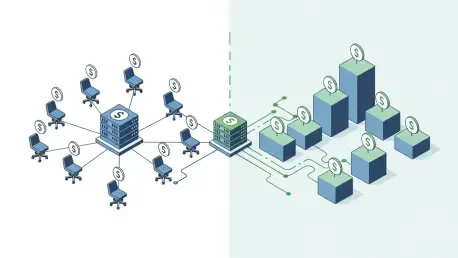
That’s why, across the industry, pricing is shifting from access to outcomes. Organizations increasingly pay according to consumption metrics or measurable results rather than headcount. API calls, storage volume, transactions, automated workflows, AI tokens, or business performance now determine the final invoice.
For procurement teams, finance departments, and IT leaders, it’s a shift that demands a fundamental rethinking of how software value is assessed, budgeted, and negotiated.
The Economics Driving Vendor Behavior
Traditional licensing worked when software functioned primarily as a digital workspace. Employees logged into customer relationship management systems or accounting platforms, making user counts a reasonable proxy for value delivered.
In the age of AI, this logic breaks down quickly. For example, take into consideration a customer support solution. Two companies might each have fifty employees accessing the dashboard. One processes five hundred conversations monthly while another handles fifty thousand. Their infrastructure costs differ by orders of magnitude, and traditional pricing would charge both nearly the same amount, creating an unsustainable subsidy from light users to heavy ones.
Vendors must prepare for a different economic reality. Running advanced AI models consumes significant computing resources, where every content generation request, data analysis, language translation, and workflow automation results in real costs. Absorbing unlimited artificial intelligence consumption within flat subscriptions threatens margins and limits investment in product improvement.
Usage-based pricing brings a solution to such a pain point by aligning revenue with actual demand. Vendors recover costs proportionally while allowing customers to start small and expand naturally. The incentive structure also shifts. Additionally, providers earn more when customers successfully adopt features and automate processes, not simply when they hire more employees.
What Usage-Based Pricing Actually Looks Like
Cloud infrastructure providers pioneered consumption pricing years ago, charging for storage, bandwidth, and processing power, leading to a model now spreading rapidly across software categories.
Organizations encounter pricing tied to emails sent, documents processed, invoices generated, API requests, AI prompts, records analyzed, workflow executions, or gigabytes stored. The flexibility appears attractive at first glance, as companies avoid paying for unused licenses and can launch projects with lower upfront commitments.
The trade-off? Predictability.
Monthly invoices fluctuate alongside business activity. A successful marketing campaign increases customer engagement and software usage simultaneously, seasonal sales spikes might trigger additional transaction fees, and expanding AI adoption across departments can significantly increase computing costs without any change in employee count.
Finance teams accustomed to fixed annual software expenses would now require active monitoring rather than passive budgeting. It’s here that forecasting software spending begins to resemble forecasting utility costs: historical averages provide guidance but future expenses depend on organizational behavior and market conditions.
The Promise and Complexity of Outcome-Based Models
If usage pricing charges for activity, outcome-based pricing brings something far more ambitious: charging for results.
A sales platform might price based on the number of qualified leads generated. Recruitment software could link fees to successful hires. Marketing automation vendors may tie costs to campaign performance. Procurement software might receive compensation based on documented cost reductions.
The appeal is obvious, as vendors become financially invested in customer success. Instead of selling licenses and moving on, providers have direct incentives to improve onboarding, optimize workflows, and demonstrate measurable business impact.
But the implementation is a complicated matter.
Which metrics matter? How are they measured? What happens when external market conditions affect results? Which outcomes are genuinely attributable to software rather than internal teams?
These questions make outcome-based contracts substantially more complex than traditional agreements. The model works best when attribution is clear and measurement is objective, limiting its applicability to specific use cases rather than general enterprise software.
How AI Changes the Buying Conversation
Artificial intelligence has become the primary catalyst accelerating pricing model evolution. The computational intensity of modern models creates costs that scale with every user interaction.
Many vendors have responded by introducing AI-specific pricing structures, in which customers receive monthly credits, token allowances, processing quotas, or automation limits. Heavy users pay more because they consume more resources.
Instead of asking how many employees need access, organizations must now ask how frequently teams will rely on AI features, how many automated tasks will run monthly, and whether productivity improvements justify additional expense.
Companies that understand their workflows often find these models beneficial. They pay proportionally for measurable value. But organizations without clear visibility into usage patterns may struggle to forecast costs accurately, creating budget variance that undermines confidence in technology investments.
Renewals Now Require Operational Intelligence
The shift in the current pricing evolution appears most clearly during contract renewals.
In the past, renewal negotiations were centered on user counts, discount percentages, contract length, and support packages. The variables were limited and familiar.
Now, vendors arrive at renewal meetings armed with detailed behavioral analytics. They know which features receive heavy usage, which departments generate the highest workloads, and where automation delivers measurable value. Information asymmetry advantages sellers who can demonstrate exactly how much value customers extract from their platforms.
To get the best deal and limit their expenses, organizations must arrive equally prepared.
Internal analysis should reveal usage frequency, capability utilization, adoption gaps, and spending alignment with business priorities. Without that information, customers negotiate from uncertainty while vendors possess detailed consumption data.
Historical usage deserves a particular level of scrutiny. Temporary spikes can result from one-time projects rather than permanent growth. Certain departments often generate high consumption because of inefficient workflows rather than genuine needs.
Reviewing this data before renewal creates opportunities to optimize operations before committing to expanded contracts.
Preparing for the Next Renewal
Organizations approaching SaaS renewals should begin preparation well before a contract ends, with best practices dictating to start the process 90 to 180 days before expiration. Internal teams need to understand current usage patterns, identify underutilized features, evaluate business outcomes, forecast growth, and review pricing triggers.
Cross-functional collaboration is essential for the best outcomes. Finance contributes forecasting expertise, IT provides technical usage insights, procurement negotiates commercial terms, and business leaders assess operational impact. Together, these perspectives create a far stronger negotiating position than isolated decision-making.
In Closing
The transition from per-seat licensing to consumption and outcome-based pricing reflects a broader transformation in enterprise software. Companies no longer purchase digital tools simply to provide employee access. They invest in platforms expected to automate work, generate insights, improve efficiency, and deliver measurable results.
Pricing naturally follows that evolution.
Per-seat subscriptions will not disappear entirely. Many collaboration and productivity platforms will continue using user-based licensing because it remains simple and effective for their use cases.
Yet an increasing number of software categories, particularly those powered by automation and AI, will embrace models that align costs with value creation.
For businesses like yours, this transmission demands greater visibility into software usage, stronger financial forecasting, and more sophisticated renewal planning. Organizations that monitor consumption, measure outcomes, and negotiate contracts with a clear understanding of operational needs will be better positioned to control costs while maximizing returns.