
Operations teams often scrutinize search implementations that introduce additional stateful systems alongside existing production databases such as PostgreSQL or SQL Server. Adding secondary data stores can increase an application’s operational footprint, affecting backups, disaster recovery, monitoring, security reviews, and maintenance. Database researchers note that extending an existing relational database with vector search can avoid costly data migration and reduce operational overhead through a unified platform.
At the same time, SaaS providers are expanding search and retrieval-augmented generation (RAG) capabilities across their products. This creates an architectural challenge: how to support advanced retrieval while maintaining appropriate levels of operational control, performance, security, and scalability.
Organizations have several options. They can extend existing databases, introduce dedicated search or vector infrastructure, use managed services, or combine multiple approaches. The right choice depends on workload characteristics, data requirements, existing infrastructure, operational resources, and compliance obligations. Continue reading to discover:
- How multi-tenant architectures can protect data across retrieval workflows;
- What to consider when integrating search with existing databases;
- How retrieval pipelines affect performance, cost, and scalability;
- Why deployment flexibility and grounded responses matter for enterprise RAG.
Multi-Tenant Search and Rag Architecture
Searching over a single user’s data can be relatively straightforward. Supporting thousands of isolated tenants adds requirements for data separation, indexing, query performance, access control, and operational management.
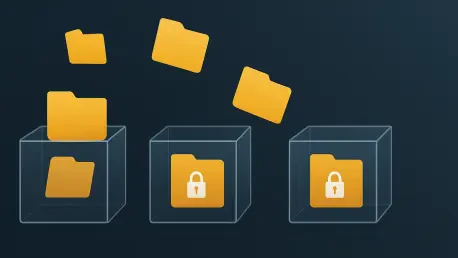
Multi-tenant isolation must therefore be considered throughout the retrieval architecture. Retrieval systems rank documents by relevance, which means a query from one tenant can surface another tenant’s confidential data. Application-level filtering can be part of the control model, but organizations may also use database-level policies, separate indexes, tenant-specific storage, or other mechanisms depending on their security requirements.
The choice of architecture also affects how organizations manage third-party services. A hosted vector database or search platform can reduce infrastructure management requirements, but it also introduces another external service and potentially another data-processing relationship. For organizations handling sensitive information, those considerations can affect security reviews, contractual requirements, data residency, and compliance processes.
The resulting architecture must balance these factors rather than optimize for a single requirement.
Multi-Tenant Isolation: Designing for Data Separation
Data isolation is a fundamental requirement for SaaS applications that store information belonging to multiple organizations. The architecture needs to prevent users from accessing information outside their authorized tenant or security context.
Application-level filtering is one approach. Other mechanisms can enforce this at lower layers of the technology stack. These can include row-level security, tenant-specific indexes, separate databases, access-control policies, or combinations of these controls.
The appropriate model depends on the application’s data architecture and risk profile. Organizations should also consider how isolation applies across the entire retrieval pipeline, including source documents, metadata, embeddings, caches, indexes, logs, and generated responses.
External search and vector services introduce additional architectural considerations. Depending on the service and deployment model, data or embeddings may need to be transferred outside the organization’s primary environment. When a provider relies on external cloud infrastructure or third-party tools, those dependencies add a risk of data exposure. Security and legal teams may therefore need to assess data-processing arrangements, residency requirements, access controls, and contractual obligations before approving the architecture.
Balancing Integration and Performance
Integrating search capabilities with existing production infrastructure can reduce the number of systems an engineering team needs to operate. Some organizations may extend PostgreSQL with vector capabilities, for example. SQL Server 2025 includes a native vector data type, and approximate vector indexing and vector search are available in preview. Other SQL Server environments may still rely on a separate indexing layer or dedicated search engine.
No single storage architecture fits every workload. Factors such as query volume, dataset size, latency requirements, geographic distribution, availability targets, and operational expertise all influence the appropriate design.
Some deployments may use local storage for embedded or self-contained applications. Others may require distributed databases or dedicated search infrastructure to support large or geographically dispersed workloads.
API-based architectures can provide another deployment option by separating the application from the retrieval service. This can support centralized management, although it also introduces network dependencies and additional infrastructure between the application and search layer.
The key architectural question is how the search system should interact with the rest of the application and which components need to scale independently.
Managing Data Preparation
The complexity of search and RAG systems often extends well beyond the query itself. Documents may need to be parsed, normalized, divided into meaningful segments, embedded, indexed, and associated with metadata.
These processes also create ongoing operational requirements. Changes to embedding models, chunking strategies, metadata structures, or indexing methods may require reprocessing some or all of an existing corpus.
Organizations should therefore consider how re-indexing will work before deploying a retrieval architecture. Options range from application-managed pipelines and scheduled jobs to centralized indexing services and managed platforms.
Hybrid retrieval can add another layer of complexity by combining keyword-based and semantic techniques. Reranking may then refine the retrieved results before passing them to a generative model. In the NIST-run TREC 2025 RAG Track, one research team combined keyword and semantic retrievers and then reranked the results with a large language model. That raised the system’s nDCG@5 ranking score from 0.486 to 0.778, a relative gain of about 60%.
Automating these processes can reduce engineering effort, but the appropriate degree of automation depends on the organization’s infrastructure, data volume, and operational requirements.
Evaluating the Retrieval Architecture
Search infrastructure can become part of an organization’s security and compliance review, particularly when it processes customer or proprietary information.
Several questions are relevant during this assessment: where data is stored, which systems can access it, how tenant boundaries are enforced, how embeddings and indexes are protected, and how retrieved information is passed to AI models.
The architecture should also account for logging, monitoring, retention, encryption, access management, and incident response.
For RAG applications, security considerations extend to generated responses. Retrieval controls must prevent unauthorized information from entering the model context, while application controls must govern what users are permitted to request.
Grounding and retrieval quality are related but distinct concerns. A system may retrieve relevant information while still generating an inaccurate response. In a 2025 test of eight AI search tools, researchers asked each tool to identify the source of news excerpts. Collectively, the tools gave incorrect answers to more than 60% of queries and rarely signaled uncertainty. Organizations may therefore use source citations, confidence indicators, response validation, or refusal mechanisms where the available evidence does not support an answer.
These controls can improve transparency and make it easier for users to verify AI-generated information.
Connecting Answers to Source Material
For enterprise applications, users may need to understand where an AI-generated answer came from before relying on it.
RAG systems can support this by returning the documents, passages, or other sources used to construct a response. Citations let users verify the underlying information and provide additional context when the generated answer needs review.
Organizations can also establish rules for situations where retrieval produces insufficient evidence. Depending on the use case, the system may return a limited response, request additional information, or decline to generate an answer.
Hallucinations can persist even when a system cites its sources. A 2025 audit of generative search engines and deep research agents found large fractions of statements unsupported by the systems’ own listed sources, with citation accuracy ranging from 40% to 80% across systems. These mechanisms provide additional controls to identify unsupported responses and improve the traceability of generated content.
The appropriate approach depends on the consequences of an incorrect answer. Applications supporting low-risk information retrieval may require different controls from systems used in financial, legal, healthcare, or other regulated environments.
Building Retrieval Around Business Requirements
The objective of a search and RAG architecture is to help users find and interpret relevant information efficiently. Achieving that objective requires more than selecting a search engine or vector store.
Organizations need to evaluate the complete retrieval workflow, including data preparation, indexing, query processing, ranking, access controls, model interaction, monitoring, and response validation.
Hybrid retrieval can combine keyword matching with semantic search to address different types of queries. Keyword methods can help when users need exact terminology, identifiers, or names, while semantic retrieval can surface conceptually related information. In a 2025 peer-reviewed study, a mixture of keyword and semantic retrievers outperformed every individual retriever by 10.8% on average. The right mix depends on the application’s content and user behavior.
Architecture decisions should therefore follow workload requirements. Factors such as tenant isolation, data volume, latency, availability, cost, deployment environment, compliance, and engineering capacity can all influence the appropriate design.
Conclusion
Multi-tenant search and RAG introduce architectural requirements that extend beyond basic search functionality. Data isolation, database integration, retrieval pipelines, infrastructure costs, security controls, deployment models, and response traceability all need to be considered as part of the overall design.
Organizations can choose among several approaches, including extending existing databases, deploying dedicated search or vector infrastructure, using managed services, or combining these models.
The appropriate architecture depends on the application’s workload, data sensitivity, operational requirements, and customer environment. Evaluating those factors early can help teams build retrieval systems that remain manageable as data volumes, tenant counts, and AI capabilities grow.