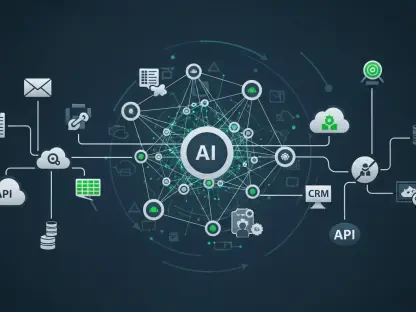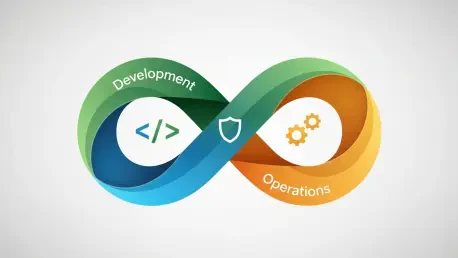

The digital architecture of 2026, intricately woven from cloud services, countless APIs, and burgeoning AI integrations, has inadvertently created a sprawling and permeable attack surface where integrated security is no longer an option but a foundational imperative. This profound shift in application development repositions developers from mere coders to the primary defenders of the enterprise. They now stand at the forefront, tasked with guarding against breaches that threaten not only sensitive data and critical uptime but the very trust customers place in a brand. This analysis will explore the latest adoption data, delve into the core pillars of implementation, synthesize insights from industry experts, and examine the future challenges currently shaping the DevSecOps landscape.
The State of DevSecOps Data and Application
By the Numbers: DevSecOps Growth and Urgency
The integration of security into the development lifecycle has officially transitioned from an emerging trend to a standard practice. A January 2026 analysis from Techloy confirms that DevSecOps is a key enabler of modern software delivery, allowing teams to ship more secure code faster by significantly reducing the rework associated with late-stage vulnerability discoveries. This proactive approach is a direct response to a threat landscape where even minor weaknesses can lead to major incidents.
The urgency for this shift is starkly illustrated by the latest industry risk assessments. The OWASP Top 10:2025 report identifies Broken Access Control as the single most prevalent risk, while the rise of Security Misconfiguration to a top position highlights the complexities of securing cloud-native environments. Compounding this, staggering statistics reveal that 95% of organizations have experienced API security issues, with a concerning 23% suffering a breach as a direct result. These figures underscore a clear and present danger that demands an integrated, developer-centric security model.
From Theory to Practice: Five Core DevSecOps Pillars
A central tenet of modern DevSecOps is the principle of “shift-left” security, which has taken center stage in development workflows. This approach involves embedding security considerations at the earliest phases of the software development lifecycle. Teams now incorporate threat modeling directly into sprint planning sessions to identify potential exploits before a single line of code is written. Subsequently, Static Application Security Testing (SAST) tools are integrated into Continuous Integration and Continuous Delivery (CI/CD) pipelines, automatically scanning for vulnerabilities and providing immediate feedback to developers, making security an intrinsic part of the creation process.
At the heart of any robust security posture lies the mastery of secure coding practices, anchoring the entire defensive strategy. Developers are increasingly expected to be fluent in the principles outlined by the OWASP Top 10, implementing fundamental defenses like rigorous input validation to prevent injection attacks and leveraging frameworks with secure-by-default configurations. This move away from custom-built, error-prone security logic toward standardized, battle-tested solutions is critical for building a resilient foundation.
The proliferation of open-source components has made dependency management a critical battleground. Organizations now routinely deploy sophisticated dependency scanners, such as Snyk, directly within their CI pipelines to detect known vulnerabilities in third-party libraries. This practice is increasingly accompanied by the automated generation of a Software Bill of Materials (SBOM), a comprehensive inventory of all software components. This not only provides essential visibility for vulnerability tracking but also ensures compliance with evolving regulations, including the EU’s Cyber Resilience Act (CRA).
As applications become more interconnected, the methods for managing identity and access have evolved significantly. The industry has largely standardized on robust authentication protocols like OAuth 2.1 and OpenID Connect to manage user access securely. By adopting these established frameworks, organizations effectively offload the complexities of authentication to specialized services, drastically reducing the risks associated with custom-built logic, which is often a source of critical vulnerabilities.
Finally, with APIs serving as the connective tissue of modern applications, their fortification has become a top priority. Securing these critical endpoints involves a multi-layered strategy that is no longer optional. Essential practices now include enforcing authentication on all APIs by default, implementing rate limiting to thwart abuse, and utilizing OpenAPI validation to ensure that all requests conform to predefined schemas. These measures are vital for countering the widespread vulnerabilities that have made APIs a primary target for attackers.
Voices from the Field: Expert Perspectives on Integration
Industry consensus firmly supports the integration of security as a core function of software engineering. Techloy’s analysis captures this sentiment perfectly, stating that “successful application security relies on treating security as a core engineering discipline, rather than an afterthought.” This perspective moves security from a peripheral compliance check to an integral part of creating quality software, aligning it directly with engineering goals and workflows.
The rise of generative AI in development introduces both powerful efficiencies and novel risks, prompting expert guidance on responsible adoption. Veracode advises organizations to “Govern AI, Don’t Ban It,” urging leadership to establish clear and pragmatic policies for how developers can leverage AI tools. This approach aims to harness the benefits of AI-assisted coding while implementing guardrails to mitigate the potential for introducing new, unforeseen security flaws.
Despite the sophistication of modern tools, the need for foundational security practices remains paramount. Developer Saïd Aitmbarek’s grassroots call for implementing basic defenses, such as input sanitization and proper authentication, highlights a persistent gap between advanced tooling and day-to-day coding habits. His message resonates widely, serving as a powerful reminder that complex security systems are only as strong as their most basic components.
Looking ahead, the efficiency of the security process itself is becoming a competitive differentiator. The forward-looking perspective from Xygeni encapsulates this evolving mindset: “Clear takeaway for 2026: security must enable, not block. The secure path must also be the fastest path.” This philosophy champions the creation of security processes and tools that are so seamlessly integrated into developer workflows that choosing the secure option is also the most efficient one.
The Road Ahead: Future Trajectories and Emerging Challenges
The profound impact of Artificial Intelligence is a double-edged sword for security. On one hand, AI amplifies risks by enabling the rapid generation of code that may contain subtle vulnerabilities. On the other, it offers powerful solutions, with machine learning-powered SAST and Dynamic Application Security Testing (DAST) tools emerging to provide faster and more accurate threat detection, helping security teams keep pace with accelerated development cycles.
Concerns over the integrity of the software supply chain have escalated, solidifying its position as a top-tier security issue. This elevation is driven by its inclusion as a new category in the OWASP Top 10 and reinforced by regulatory mandates from government bodies like CISA and the European Union. Organizations are now under increasing pressure to secure every link in their development chain, from developer workstations to the final production environment.
In response to these complex threats, the industry is pushing toward comprehensive, code-to-cloud security automation. This holistic approach necessitates a defense-in-depth strategy, where multiple layers of security controls are applied across the endpoint, the network, and identity management systems. The goal is to create a resilient security fabric that protects assets even if one layer is compromised.
However, achieving a mature DevSecOps posture remains a significant challenge, particularly when it comes to measurement and visibility. While frameworks like the OWASP Software Assurance Maturity Model (SAMM) provide valuable roadmaps, a recent report found that tool silos remain a major hurdle. For one in three organizations, the lack of integrated systems prevents a unified view of their security posture, hindering their ability to effectively manage risk.
Conclusion: Embedding Resilience for the Future
The analysis made it clear that DevSecOps had transcended its status as an optional trend to become a fundamental requirement for modern software development. This evolution was not a matter of choice but a necessary response to an increasingly sophisticated threat landscape, where integrated security proved to be the only viable path forward.
The critical role of developers in this new paradigm was solidified, as they became the architects of resilience. By embedding practices like shift-left security, disciplined secure coding, and rigorous supply chain hygiene into their daily workflows, development teams were empowered to build applications that were not just functional but inherently secure from the ground up.
Ultimately, organizations that successfully adopted these integrated security measures found themselves better positioned to maintain development velocity without sacrificing safety. This approach allowed them to innovate confidently and build lasting trust in a digital environment where the stakes had never been higher.