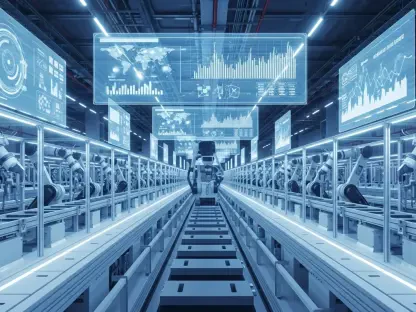

The architectural shift from rigid physical data centers to fluid, multi-cloud environments has created a level of operational complexity that human oversight can no longer realistically manage or secure. As organizations migrate deeper into decentralized landscapes, the traditional perimeter has dissolved, replaced by a sprawling web of microservices and hybrid configurations. Relying on legacy hardware-based security is no longer an option when data exists across a fragmented mosaic of providers. This evolution demands a new philosophy that prioritizes intelligence and autonomy over manual checklists.
Traditional Cloud Security Posture Management (CSPM) tools often struggle to keep pace with the sheer volume of data generated by modern enterprises. While these systems were revolutionary in their prime, they frequently function as simple notification engines that drown security teams in a sea of alerts without providing the means to resolve them instantly. The rise of major providers like AWS, Azure, and GCP has only compounded this issue by introducing specialized services that change the nature of the attack surface. Containerization and serverless computing have turned infrastructure into something ephemeral, where workloads may exist for only seconds before disappearing.
Furthermore, global data protection mandates like GDPR and HIPAA have shifted from being periodic checkmarks to continuous operational requirements. In a landscape where a single misconfiguration can lead to a catastrophic data leak, the margin for error has evaporated. Security is no longer just a technical necessity but a core legal and financial obligation. Consequently, the industry is pivoting toward systems that do not just watch for trouble but possess the inherent intelligence to prevent it before it manifests.
Driving Forces and Market Dynamics of Autonomous Defense
Emerging Trends and the Evolution of Agentic Systems
The transition from reactive, rule-based monitoring to proactive, reasoning-based AI agents marks a significant turning point in digital defense. Unlike previous generations of software that followed static “if-then” logic, modern agentic systems utilize large-scale behavioral modeling to understand the intent behind system changes. This allows security protocols to evolve alongside the infrastructure they protect. As workloads become more ephemeral, the necessity for real-time telemetry ingestion has become absolute, requiring agents that can make split-second decisions without waiting for human intervention.
Integrating these autonomous agents directly into the DevSecOps pipeline is a core component of the “shift-left” strategy. By embedding security intelligence into the development phase, organizations can identify vulnerabilities before code ever reaches production. This proactive stance satisfies the growing enterprise demand for self-healing infrastructures that can automatically correct their own drift. The goal is to create a system that maintains its own integrity, allowing developers to focus on innovation rather than constant patching.
Market Projections and Performance Indicators for AI-Driven Security
Statistical growth within the agentic security sector indicates a massive surge in investment as companies move away from siloed tools. Between now and 2028, the market for autonomous defense is expected to expand at an unprecedented rate, driven by the need for higher operational efficiency. Key performance metrics like Mean Time to Respond (MTTR) and Mean Time to Detect (MTTD) are seeing drastic improvements. In environments where agents are deployed, response times have dropped from hours or days to mere milliseconds.
The economic impact of this shift is profound, primarily due to the reduction of alert fatigue which has long plagued security operations centers (SOC). By automating the resolution of low-level threats, companies can optimize their existing teams and reduce the turnover caused by burnout. Forecasts suggest that adoption rates for autonomous remediation tools will be highest in regulated industries like finance and healthcare, where the cost of a breach is most severe. Efficiency gains are turning security from a cost center into a strategic asset.
Navigating the Technical and Operational Hurdles of Autonomous Security
Managing the complexities of fragmented multi-cloud architectures remains one of the most significant challenges for security architects. AI agents must be able to communicate and operate seamlessly across different environments, each with its own set of proprietary APIs and protocols. Ensuring that an agent can apply a consistent security policy on an Azure database and an AWS Lambda function simultaneously requires a high level of technical sophistication. Without this interoperability, the promise of total autonomy remains out of reach.
Trust is another critical factor, particularly regarding the risk of false positives in autonomous remediation. If an agent incorrectly identifies a legitimate business process as a threat and shuts it down, the resulting downtime can be just as damaging as a cyberattack. Establishing trust requires a gradual implementation of “guardrails” that allow the system to learn the nuances of specific business logic. Overcoming the global cybersecurity talent shortage is also a priority, as agentic systems are increasingly used as force multipliers to help smaller teams manage massive infrastructures.
The Regulatory Framework and Compliance in the Age of AI
In the current era, autonomous agents are becoming the primary mechanism for ensuring always-on adherence to international security standards. These systems provide continuous auditing, meaning that a company is never “out of compliance” between manual reviews. Automated configuration drift correction ensures that if a setting is changed—whether by accident or malice—it is immediately reverted to a secure state. This level of persistent oversight is essential for meeting the strict legal mandates found in modern data privacy laws.
However, the legal implications of autonomous decision-making in the event of a breach are still being debated within global governance frameworks. Who is accountable when an AI agent makes a choice that leads to a loss? Emerging AI governance standards are beginning to address these questions, emphasizing the need for transparency and explainability in security agents. Companies must balance the speed of automation with the necessity of maintaining a clear audit trail that can satisfy regulators and legal entities.
The Future of Cybersecurity: Toward Self-Healing Security Ecosystems
The development of interconnected AI agent networks is paving the way for a future where security is a holistic, context-aware ecosystem. These networks will likely communicate across the full technology stack, sharing intelligence from the network layer up to the application layer. This collaborative intelligence will enable the prediction of novel zero-day exploits through complex behavioral modeling, rather than relying on known threat signatures. As automated threats from adversaries become more sophisticated, the move toward total autonomy will only accelerate.
Global economic conditions and the increasing frequency of high-profile attacks are pushing the industry toward a state where security is a self-healing characteristic of the cloud itself. In this scenario, the infrastructure becomes an immune system, capable of recognizing and neutralizing pathogens in real time. The focus is shifting away from individual tools toward a unified defense layer that understands the specific context of the business it protects. This transformation will redefine the relationship between technology and security, making safety an inherent property of the digital environment.
Strategic Conclusions and the Path Forward for Cloud Defense
The move toward agentic security was recognized as a structural necessity for organizations operating at an enterprise scale. Stakeholders realized that manual notification was no longer a viable defense strategy against the velocity of modern threats. Decisions were made to prioritize investments in autonomous action over passive monitoring, marking a departure from traditional SOC models. The integration of AI agents into long-term digital strategies became a standard practice for maintaining a competitive edge in a volatile landscape.
Analysts observed that the transition successfully reduced the operational burden on human teams, allowing them to focus on high-level governance. The path forward involved a deep commitment to interoperability and the establishment of robust ethical guardrails for AI. It was concluded that the long-term viability of cloud defense depended on the ability of systems to think and act independently. Ultimately, the industry embraced the shift toward autonomous defense as the only sustainable way to protect the future of global digital commerce.