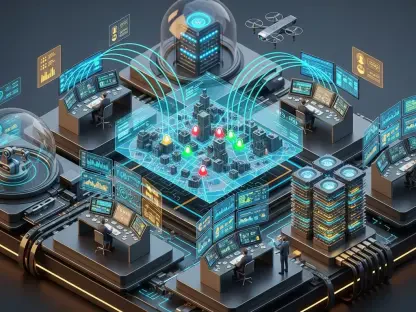

The massive migration of enterprise data into virtualized environments has transformed from a radical technological experiment into the indispensable backbone of the modern global economy. While the early days of this shift promised a simple escape from the physical constraints of server rooms, the current reality reveals a sophisticated yet demanding ecosystem that requires more than just a migration strategy. Today, the cloud is no longer just a place to store files; it is a complex, living architecture that defines how businesses innovate, compete, and survive in an increasingly digital marketplace.
Understanding this evolution requires looking past the marketing slogans of seamless integration. The transition from on-premises hardware to hyperscale environments like AWS, Azure, and Google Cloud has fundamentally altered the DNA of corporate IT. This shift was driven by the necessity for agility, yet it has introduced a new breed of challenges that force organizations to reconsider their relationship with technology, moving from a mindset of ownership to one of continuous orchestration.
The Transformation of Information Technology Infrastructure
The shift toward cloud-centricity represents the most significant architectural change in computing since the invention of the internet itself. At its core, this technology functions by decoupling software and data from the underlying physical hardware, allowing resources to be pooled and distributed over the network. This abstraction layer means that an engineer in Tokyo can deploy a high-performance cluster in a Northern Virginia data center within seconds, a feat that would have taken months of procurement and physical installation just two decades ago.
This emergence has completely rewritten the rules of market entry and industrial competition. In the previous era, the size of a company’s data center often dictated its potential for growth; today, a three-person startup has access to the same world-class infrastructure as a Fortune 500 corporation. However, this democratization of power comes with the context of extreme dependency. As businesses move away from localized control, they become part of a broader technological landscape where the health of a few major providers dictates the operational stability of entire global industries.
Core Pillars of the Cloud Ecosystem
Scalable Data Storage and Management
One of the most impressive technical feats of the modern cloud is its ability to handle astronomical volumes of data with nearly perfect durability. Systems such as Amazon S3 or Google Cloud Storage are designed to manage trillions of objects, utilizing sophisticated sharding and replication techniques across multiple geographic zones. This isn’t just about having a big hard drive in the sky; it is about an intelligent management layer that automatically moves frequently accessed data to high-performance tiers while archiving colder data to low-cost storage, optimizing both speed and budget.
The significance of this performance cannot be overstated for data-heavy sectors like media streaming or genomic research. By automating the lifecycle of data, these systems allow organizations to maintain massive datasets without the manual labor of hardware refreshes or capacity planning. However, this scale introduces a paradox of visibility. When an organization stores hundreds of exabytes, the challenge shifts from finding enough space to understanding exactly what is stored and who has permission to see it, making data governance the new frontline of IT management.
The Pay-As-You-Go Economic Framework
The financial engine of the cloud is built on the promise of operational expenditure over capital investment. By using a metered billing model, companies theoretically only pay for the exact amount of compute power or storage they consume. This technical flexibility allows for “bursting”—the ability to scale up resources during a peak event, such as a holiday shopping season, and scale back down immediately afterward to save money. In practice, this functions as a utility model, much like electricity or water, providing a level of financial elasticity that was previously impossible.
Despite the theoretical savings, the real-world usage of this framework often reveals a “jungle” of hidden costs and pricing tiers. Performance characteristics vary wildly between different instance types, and the ease of spinning up new services often leads to “cloud sprawl,” where forgotten workloads continue to drain budgets. Unlike a physical server that has a fixed cost once purchased, a cloud resource is a recurring liability. This has necessitated the rise of FinOps, a discipline dedicated to reconciling the speed of cloud development with the harsh realities of corporate fiscal responsibility.
Current Market Innovations and Behavioral Shifts
The latest developments in the field are characterized by a move toward serverless computing and edge integration. Instead of managing virtual servers, developers are increasingly writing code that only executes in response to specific events, further abstracting the infrastructure. This shift is influencing industry behavior by reducing the “time to value” for new applications. Moreover, there is a growing trend toward “sovereign clouds,” where providers offer localized regions to satisfy strict national data residency laws, reflecting a shift in consumer and regulatory demands for digital privacy.
Innovation is also being driven by the integration of specialized artificial intelligence hardware within the cloud. Providers are no longer just selling generic compute power; they are offering highly optimized environments for training large language models and running complex simulations. This behavioral shift means that the cloud is becoming a specialized laboratory rather than just a storage locker. As industry leaders prioritize AI-driven insights, the cloud’s trajectory is moving toward a more intelligent, self-healing infrastructure that can predict failures before they happen.
Real-World Deployment Across Industry Verticals
In the healthcare sector, the cloud has enabled the transition to telemedicine and real-time patient monitoring. By utilizing secure, compliant cloud environments, hospitals can share massive imaging files across continents for expert consultation, significantly improving diagnostic accuracy. These implementations rely on the cloud’s ability to maintain strict security protocols while providing high-speed access to data, demonstrating how the technology bridges the gap between massive datasets and life-saving clinical decisions.
The retail and manufacturing sectors have also seen notable implementations through the use of “digital twins.” By hosting a virtual replica of a factory or a supply chain in the cloud, companies can run millions of “what-if” scenarios to optimize efficiency. For instance, a logistics giant can simulate the impact of a port closure in real-time and reroute its entire fleet instantly. This unique use case highlights how the cloud has evolved from a simple hosting platform into a powerful simulation engine that provides a competitive edge in an unpredictable global market.
Strategic Obstacles and Operational Limitations
The primary hurdle facing the cloud today is the “complexity paradox.” While the technology was designed to simplify IT, the reality of managing a multicloud environment—where data is spread across several different providers—has created a massive talent gap. Many organizations find themselves struggling with technical hurdles such as data egress fees, which make it prohibitively expensive to move information out of a specific provider’s ecosystem. This “vendor lock-in” remains a significant market obstacle that can stifle long-term strategic flexibility.
Furthermore, security remains a persistent operational limitation. Although hyperscale providers offer robust physical security, the responsibility for configuring software and access permissions falls on the user. High-profile data breaches are rarely the fault of the provider but are instead caused by human error or overly complex permission structures. Ongoing development efforts are currently focused on automation and “zero-trust” architectures to mitigate these risks, but the fundamental challenge of securing an ever-expanding attack surface continues to plague even the most advanced tech teams.
The Future Trajectory of Cloud Orchestration
The future of the cloud lies in the transition from simple adoption to sophisticated orchestration. We are moving toward an era where the underlying provider becomes invisible, and applications are intelligently distributed across a global fabric of compute resources based on cost, latency, and compliance requirements. Breakthroughs in quantum computing and high-speed satellite internet are expected to further expand the reach of the cloud, bringing high-performance computing to the most remote corners of the planet and enabling a truly decentralized digital economy.
In the long term, the cloud will likely evolve into an autonomous entity, where AI-driven governance systems manage resources and security with minimal human intervention. This impact will be felt across all of society, as the cost of innovation continues to drop and the speed of scientific discovery accelerates. The next decade will not be about moving to the cloud, but about mastering the intricate dance of data and compute that happens within it, turning the “cloud dream” into a resilient and sustainable reality.
Summary and Final Assessment
The evolution of cloud computing has fundamentally rewritten the playbook for global enterprise technology, moving it from a hardware-centric model to a service-oriented one. This review demonstrated that while the core pillars of scalability and economic flexibility remain powerful, they require a high level of maturity to manage effectively. The technology has matured into a sophisticated landscape where the primary challenges are no longer about capacity, but about the intricate governance of cost, security, and multicloud interoperability.
The final verdict on the current state of the cloud is one of pragmatic optimism. The technology remains the most potent tool for innovation available to modern organizations, but it is no longer a “set it and forget it” solution. Success in this era demanded a shift from traditional IT management to a disciplined approach involving FinOps and automated security. By addressing the strategic obstacles of complexity and lock-in, the industry moved toward a more resilient future where the cloud serves as a ubiquitous, intelligent utility powering every facet of modern life.