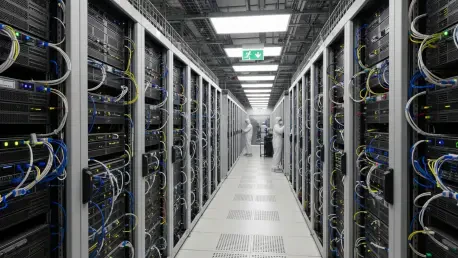

A silent but seismic shift is reshaping landscapes from the American Midwest to the heart of Europe, where colossal structures of steel and concrete are rising to house the digital brain of the modern world. This is not a typical construction cycle; it is a frantic, multi-hundred-billion-dollar race to build the physical foundation for the age of artificial intelligence. Driven by an insatiable demand for computational power, a global spree of data center development is unfolding at a scale and speed that is redrawing economic maps and challenging the limits of our existing infrastructure.
The New Digital Bedrock Charting the Global Infrastructure Landscape
The primary catalyst for this construction surge is the voracious appetite of generative AI and cloud computing. Training complex AI models and delivering their services on a global scale requires an extraordinary amount of processing power, which in turn demands a new generation of hyper-specialized facilities. This AI imperative has transformed the data center from a mere storage facility into the essential bedrock of modern innovation, making its construction a top strategic priority for nations and corporations alike.
The global data center market is now defined by an unprecedented scale of investment and development. Projects are no longer measured in megawatts but in gigawatts, with individual campuses commanding budgets that rival the GDP of small countries. This industry, forged in silicon and powered by immense capital, is in a state of hyper-growth, with a pipeline of projects that promises to add terawatts of capacity over the next decade.
Leading this charge are two core segments working in tandem. On one side are the hyperscale tech giants—Microsoft, Google, and Amazon Web Services (AWS)—who are the primary consumers of this new capacity, pouring billions into expanding their cloud and AI services. On the other are specialized digital infrastructure providers like Vantage Data Centers, STACK Infrastructure, QTS, and NTT, who possess the expertise to design, build, and operate these massive, complex facilities, often in direct partnership with the tech titans. This symbiotic relationship has become the dominant model for development. Consequently, the geographic scope of this boom is expanding rapidly, pushing beyond traditional hubs like Northern Virginia to establish new technology corridors in states like Wisconsin and Texas and across international markets in Europe and Asia.
Unpacking the Unprecedented Growth Spurt
The New Norm Megaprojects Strategic Alliances and Shifting Geographies
The defining feature of the current boom is the rise of the megaproject. The industry has entered a “gigawatt gold rush,” where developers are planning and executing colossal, billion-dollar campuses designed to deliver over a gigawatt of power. These are not single buildings but sprawling complexes that function like small cities dedicated to computation, requiring their own dedicated power substations and water infrastructure to operate. This trend toward massive scale reflects the consolidated, high-density power needs of modern AI hardware.
This era of megaprojects is sustained by a crucial symbiosis between hyperscalers and builders. Tech innovators like OpenAI and Oracle are increasingly forming strategic alliances with infrastructure specialists such as Vantage and STACK. This model allows each party to focus on its core competency: the tech giants drive the demand and provide the anchor tenancy, while the infrastructure firms manage the immense complexities of land acquisition, permitting, construction, and utility management. These partnerships de-risk the massive capital outlay required and accelerate the speed at which new capacity can be brought online.
A direct consequence of this explosive growth is a strategic geographic diversification away from saturated markets. America’s new tech hubs are emerging in states like Wisconsin, Texas, and New Mexico, where land is more available and power is potentially more accessible. This shift is not arbitrary; it is a calculated move to find locations that can support the gigawatt-scale campuses that are now the industry standard, fundamentally altering regional economies and creating new epicenters of digital infrastructure.
By the Numbers A Tsunami of Investment and Capacity
The financial scale of this expansion is staggering, with hundreds of billions of dollars in new projects announced by key players in a condensed timeframe. This tsunami of investment underscores the long-term commitment of the technology industry to building out the physical world required for AI. Microsoft, for instance, has committed tens of billions globally, including a multi-billion-dollar expansion in Wisconsin and massive investments to grow its cloud and AI footprint in India, Canada, and the United Kingdom.
Several project spotlights illustrate the monumental scale of these ventures. The STACK and OpenAI “Stargate” campus in New Mexico, valued at an estimated $165 billion, is planned to deliver over a gigawatt of power. Similarly, Microsoft’s ongoing work in Wisconsin involves a new $4 billion facility to complement its initial $3 billion investment. Google Cloud is matching this pace with a $40 billion commitment to Texas, which includes two new data center campuses, alongside multi-billion-dollar expansions in Germany, Belgium, and India.
These massive investments translate directly into tangible capacity and clear timeline forecasts. AWS has announced plans to add nearly 1.3 gigawatts of capacity for U.S. government services alone, with construction starting in 2026. Vantage Data Centers aims to complete its nearly one-gigawatt campus in Wisconsin by 2028, while NTT Global Data Centers continues its $10 billion global expansion, having recently added over 370 megawatts across ten new facilities. These figures collectively point toward a future where digital capacity is growing exponentially to meet projected demand.
Navigating the Growing Pains of Hyperscale Expansion
This unprecedented expansion is not without significant challenges, chief among them being the power and water dilemma. These gigawatt-scale facilities place an immense strain on local energy grids and water resources, often requiring more electricity than entire cities. In many regions, the existing utility infrastructure is simply not equipped to handle the sudden, massive increase in demand, creating a critical bottleneck for development.
Beyond utilities, developers face considerable community and environmental hurdles. Securing thousands of acres of suitable land is a complex and competitive process. Furthermore, large-scale construction projects often encounter pushback from local residents concerned about noise, resource consumption, and the environmental impact of such massive industrial facilities. Navigating the approval process has become a delicate balancing act between demonstrating economic benefits and addressing legitimate community concerns.
These challenges have led to a fundamental shift in the development model, creating a significant infrastructure investment burden for the data center builders themselves. It is no longer enough to simply be a customer of a local utility. Companies like QTS and Vantage are now directly funding or heavily investing in regional utility upgrades, such as building new substations or water pipelines, to support their campuses. This self-funding model adds hundreds of millions of dollars to project costs but has become a necessary step to ensure projects can move forward.
The Regulatory Gauntlet Power Permits and Public Approval
Successfully bringing a hyperscale data center online requires navigating a complex web of local, state, and national regulations. This greenlight labyrinth can involve dozens of agencies and a multi-year approval process that scrutinizes every aspect of a project, from its energy source to its water usage and ecological footprint. Delays in this regulatory gauntlet are common and can significantly impact project timelines and costs.
Central to this process are zoning and environmental compliance. Developers must secure the appropriate land-use permits and demonstrate that their projects meet increasingly stringent environmental impact standards. This often involves detailed studies on air quality, water runoff, and biodiversity, with regulatory bodies demanding comprehensive mitigation plans. As public awareness of the environmental cost of data centers grows, the bar for compliance continues to rise.
Given these hurdles, engaging with stakeholders has become more important than ever. The viability of a project now depends not just on technical and financial strength but also on securing a social license to operate. This requires proactive community engagement and the formation of public-private partnerships to ensure that local communities share in the economic benefits of development. By addressing concerns head-on and collaborating with local governments, developers can build the goodwill necessary to navigate the regulatory process and ensure long-term success.
Blueprint for Tomorrow The Next Wave of Digital Infrastructure
The current wave of investment is solidifying new data center alleys that will permanently alter the technological landscape. Regions like the American Midwest are no longer just flyover country; they are becoming critical, large-scale technology hubs on par with established markets. This geographic diversification is creating a more resilient and distributed global digital infrastructure, a trend that is expected to accelerate as demand continues to grow.
Looking ahead, the future of data center development is collaborative. The model of strategic alliances between cloud providers and infrastructure builders will not only continue but deepen. As projects become even larger and more complex, the need for specialized expertise in both technology and physical construction will make these partnerships indispensable. This collaborative approach will remain the primary engine driving the next wave of development.
The designs of these future facilities are also evolving to meet AI’s unique demands. Next-generation data centers will be purpose-built to handle the extreme power density and cooling requirements of advanced AI hardware. This includes a shift toward liquid cooling technologies and more sophisticated power distribution systems designed to support racks that consume many times more electricity than their predecessors, ensuring that the physical infrastructure can keep pace with the rapid innovation in silicon.
The Final Byte A World Remade by Silicon and Steel
The AI-driven construction boom is an unstoppable transformation, a defining feature of our technological era. The sheer scale and frantic pace of development signal a fundamental reordering of priorities, where building the physical home for artificial intelligence has become one of the world’s largest infrastructure undertakings. This is more than an industry trend; it is the physical manifestation of a digital revolution.
This massive inflow of capital is profoundly reshaping regional economies. The construction and operation of these campuses create thousands of high-skilled jobs, stimulate local businesses, and generate significant tax revenue. The investment and economic outlook confirm that these data centers are not just technological assets but powerful engines of local and national growth, cementing the physical foundation for the future of the global AI economy.
The road ahead points to a continued, unabated growth trajectory. As AI becomes more integrated into every facet of society, the demand for the computational power it rests on will only intensify. The projects being built today are merely the first phase of a long-term infrastructure build-out that will continue to redefine our world for decades to come, leaving a lasting legacy written in silicon and steel.