
The theoretical hum of autonomous systems that once echoed from research labs has now crescendoed into the definitive rhythm of modern enterprise, with 2026 emerging as the year agentic AI transitions from a conceptual marvel to an operational reality. This is not a speculative forecast but a firm consensus shared by senior executives at the forefront of technological innovation. A confluence of market maturity, technological readiness, and a clear demand for tangible outcomes is setting the stage for a paradigm shift, moving artificial intelligence from a tool that responds to a partner that acts. The dialogue has evolved from exploring possibilities to implementing solutions, signaling that the era of autonomous, goal-driven AI is no longer on the horizon; it has arrived.
The Dawn of Autonomy Understanding the Agentic AI Landscape
Agentic AI represents a significant leap beyond the generative models that have captured public attention. While generative AI excels at creating content in response to human prompts, agentic AI operates with a higher degree of autonomy. These systems are designed to understand objectives, create multi-step plans, and execute complex tasks with minimal human intervention. They can interact with different software applications, access data, and make decisions to achieve a predefined goal, effectively acting as a digital employee for specific functions. This distinction is crucial; it marks the transition from AI as a creative assistant to AI as a functional executor.
The industry is rapidly progressing from isolated research and development initiatives toward structured pilot programs with clear business objectives. Organizations across the public and private sectors are moving past the novelty of AI to demand operationalization and a clear return on investment. This shift is fueling the development of agentic systems capable of solving tangible problems, from optimizing network traffic to managing complex logistical chains. The focus is now squarely on integrating these autonomous agents into existing workflows to drive efficiency and unlock new capabilities.
At the vanguard of this movement are technology giants like Amazon Web Services (AWS), Cisco, and Oracle, who are not only developing the foundational models but also building the essential infrastructure to support them. These market shapers are creating the cloud platforms, data management tools, and specialized models necessary for enterprises to deploy agentic AI at scale. Their work is laying the groundwork for a future where autonomous systems are a core component of business strategy, representing a paradigm leap that promises to redefine productivity, innovation, and the very nature of work itself.
The Road to 2026 Catalysts and Projections for Mainstream Adoption
From Novelty to Necessity The Market Forces Driving the Agentic Shift
The primary catalyst for the mainstream adoption of agentic AI is a fundamental change in customer expectations. The market has matured beyond the exploratory phase, with clients now demanding concrete outcomes from their technology investments. As Kapil Bakshi of Cisco’s U.S. Public Sector notes, the conversation has pivoted from “what is possible” to “what can we operationalize.” This pragmatism is forcing a move away from general-purpose chatbots and toward AI systems that can be embedded into operations to produce measurable results. Rishi Bhaskar, director of public sector partner sales at AWS, echoes this, confirming that customers are explicitly “demanding outcomes.”
This demand for results is fueling the rise of domain-specific agents. Instead of a one-size-fits-all approach, organizations are seeking highly specialized AI designed to tackle particular business challenges with expert proficiency. These agents are trained on specific datasets and workflows, enabling them to handle complex tasks within a given field, such as financial analysis, cybersecurity threat detection, or supply chain management. This specialization is key to delivering the context-aware intelligence needed to solve real-world problems and provide genuine value.
A central goal of this technological shift is the augmentation of the human workforce, not its replacement. The immediate focus is on automating manual, repetitive, and time-consuming tasks like data entry, document review, and network administration. By delegating these responsibilities to autonomous agents, organizations can free their employees to concentrate on more strategic, creative, and complex problem-solving activities. As AWS’s Rishi Bhaskar puts it, this shift allows workers “to actually get away from manual, repetitive tasks and shift to the value at creation that we all like to do,” elevating the nature of human contribution within the enterprise.
Forecasting the Tipping Point Data and Expert Consensus on the 2026 Timeline
A striking consensus has emerged among industry leaders, solidifying 2026 as the pivotal year for agentic AI. Executives from technology powerhouses including AWS, Cisco, and Oracle have independently arrived at this timeline, citing a convergence of factors that signal an imminent market inflection. Their unified prediction is not based on speculation but on direct feedback from a market that is actively seeking to deploy autonomous solutions to address pressing operational challenges. This alignment among major vendors provides a powerful indicator of the industry’s trajectory.
Several market readiness indicators support this forecast. Enterprises have spent the last few years laying the necessary groundwork, primarily through cloud migration and initial data modernization efforts. An increasing number of organizations now possess the foundational infrastructure required to support the data-intensive demands of agentic systems. Furthermore, a growing familiarity with AI concepts has lowered the barrier to adoption, creating a more receptive environment for these advanced technologies.
This readiness is mirrored by significant growth in investment toward autonomous AI systems. Venture capital and corporate R&D spending have surged, directed at startups and internal projects focused on creating specialized AI agents. This influx of capital is accelerating the development cycle and bringing mature, enterprise-grade solutions to market faster than anticipated. The technology itself is rapidly advancing along the maturity curve, with breakthroughs in reasoning, planning, and tool usage making agents more capable and reliable. Consequently, 2026 is seen not as an arbitrary date but as the logical point where market demand, technological capability, and enterprise preparedness intersect.
Paving the Way Overcoming the Hurdles to Widespread Implementation
The most significant obstacle to deploying effective agentic AI is the data dilemma. The axiom “AI that knows your data is the only useful AI out there,” articulated by Peter Guerra, vice president at Oracle, captures the core challenge. For an agent to act intelligently, it needs access to clean, organized, and contextually relevant data. However, many organizations still operate with siloed, legacy data systems that are ill-suited for the demands of context-aware AI. Embarking on a comprehensive “data journey” to modernize this infrastructure is therefore the critical first step for any company looking to leverage autonomy.
This data modernization path is intrinsically linked to the cloud. The sheer volume of data and the immense computational power required to train and run agentic AI make scalable cloud computing a non-negotiable prerequisite. Cloud platforms provide the flexible, on-demand resources necessary to process vast datasets and support sophisticated models without prohibitive upfront investment in hardware. This is why leading cloud providers are central to the agentic AI ecosystem, offering the foundational infrastructure upon which these new systems are built and operated.
Beyond data and cloud, organizations face significant integration complexities. Agentic AI cannot operate in a vacuum; it must connect seamlessly with existing enterprise systems, such as ERPs, CRMs, and other legacy applications. Building these bridges requires sophisticated engineering to ensure data flows securely and reliably between the autonomous agent and the core business software. Finally, the human element presents another hurdle. A talent gap exists for professionals skilled in managing, monitoring, and collaborating with autonomous systems. Upskilling the current workforce and cultivating new roles focused on human-AI interaction will be essential for successful, long-term implementation.
Governing Autonomy Navigating the Emerging Regulatory and Security Framework
As agentic AI becomes more integrated into critical business functions, establishing trust and transparency is paramount. Organizations and their stakeholders will need clear visibility into how autonomous agents arrive at their decisions. This requires the development of explainable AI (XAI) frameworks that can translate complex algorithmic processes into understandable terms for human oversight. Without this transparency, building the necessary confidence for widespread adoption will be a significant challenge, especially in highly regulated industries.
The autonomous nature of agentic AI also introduces heightened concerns around data privacy and security. These systems are designed to access and process vast amounts of information, often sensitive, to perform their tasks. This capability creates new compliance challenges under regulations like GDPR and necessitates robust security protocols to protect against data breaches. The imperative is to design these agents with privacy-preserving principles from the outset, ensuring that their autonomous operations do not compromise an organization’s security posture or regulatory standing.
A fundamental question arises when an autonomous agent makes a mistake: who is accountable? Defining lines of responsibility in a world of autonomous decision-making is a complex legal and ethical challenge. Is it the developer who created the agent, the organization that deployed it, or the user who assigned it a task? Establishing clear frameworks for accountability is essential for mitigating risk and providing legal clarity. In parallel, the development of industry-wide standards will play a crucial role in ensuring that agentic AI is deployed safely, ethically, and responsibly, providing a common benchmark for performance and conduct.
Beyond the Horizon The Transformative Impact of a Mainstream Agentic Future
The rise of agentic AI is set to fundamentally redefine the future of work by fostering a new era of human-AI collaboration. Rather than rendering human roles obsolete, these systems will augment human capabilities, taking over rote tasks and enabling people to focus on strategy, innovation, and complex interpersonal interactions. This will lead to the creation of new job roles, such as AI trainers, ethics auditors, and collaboration designers, who will be responsible for managing, guiding, and optimizing the performance of their autonomous counterparts.
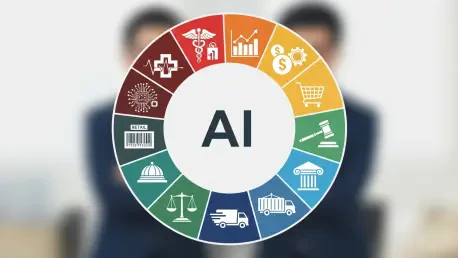
Across key sectors like manufacturing, finance, healthcare, and logistics, the integration of agentic AI is projected to unlock unprecedented efficiencies. Autonomous agents can optimize supply chains in real time, conduct around-the-clock financial market analysis, manage patient scheduling with dynamic adjustments, and streamline complex administrative workflows. This level of automation and optimization will drive significant productivity gains, reduce operational costs, and allow organizations to deliver services with greater speed and precision.
Beyond enhancing existing operations, agentic AI will spur innovation by enabling entirely new business models. Imagine autonomous personalized shopping agents that negotiate deals on behalf of consumers, or intelligent systems that manage entire fleets of delivery drones without human intervention. The ability of these agents to execute complex, goal-oriented tasks at scale will create opportunities for market disruptors to build companies around services that were previously impossible to offer, reshaping competitive landscapes. The next evolutionary step is the development of multi-agent systems, where teams of specialized AI agents collaborate to solve even more complex, dynamic problems, creating an intelligent, self-organizing digital workforce.
The Final Verdict Preparing for the Inevitable Inflection Point
The analysis of market trends and expert insights established a compelling case for the mainstream adoption of agentic AI. The convergence of mature customer demand for operationalized solutions, the technological readiness of AI models, and the ongoing build-out of foundational cloud and data infrastructure all indicated that the industry had reached a critical inflection point. This confluence of factors made the widespread implementation of autonomous systems not a matter of if, but when.
In light of these findings, strategic imperatives for business leaders became clear. The journey toward leveraging agentic AI required a deliberate and proactive approach, starting with a comprehensive data modernization strategy to create the clean, accessible data pools these systems need. Concurrently, continued investment in scalable cloud infrastructure was identified as essential for providing the necessary computational power. Leaders were advised to initiate pilot programs with specific, measurable goals to build internal expertise and demonstrate value, while also launching initiatives to upskill their workforce for a future of human-AI collaboration.
Ultimately, the advent of mainstream agentic AI presented a profound opportunity for growth and innovation. The companies that successfully navigated this transition stood to gain a significant competitive advantage, unlocking new levels of productivity and creating novel business models. The long-term vision was one of an industry fundamentally transformed, where autonomous intelligence was seamlessly woven into the fabric of daily operations, augmenting human potential and driving progress in ways previously unimaginable.