
The traditional network perimeter has not just cracked; it has completely dissolved in an age where data lives everywhere and users connect from anywhere. As organizations grapple with the increasing sophistication of business email compromise and lateral movement within cloud environments, the shift toward a “never trust, always verify” model has transitioned from a luxury to a baseline requirement. SideChannel is positioning itself at the center of this transition, moving beyond its roots as a boutique consultancy to offer a scalable, software-defined infrastructure known as Enclave. This evolution reflects a broader industry trend where security is no longer an additive layer but a fundamental characteristic of the IT fabric itself.
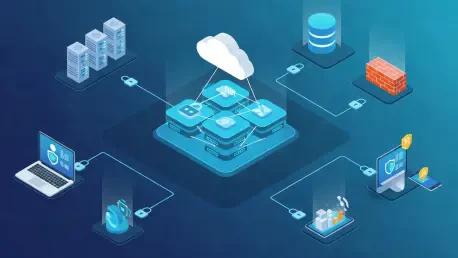
The emergence of Zero Trust SaaS infrastructure represents a response to the inherent vulnerabilities of Virtual Private Networks and legacy firewalls. While traditional systems focused on keeping threats out, modern frameworks assume the breach has already occurred or is imminent. By focusing on micro-segmentation and identity-defined access, this technology creates a series of isolated digital vaults. This shift is particularly relevant as mid-market companies, often the primary targets of opportunistic cyberattacks, seek the same level of protection once reserved for Tier-1 defense contractors and global financial institutions.
The Foundation of Modern Zero Trust SaaS
The core principle driving this technology is the decoupling of network access from network security. In a standard setup, once a user passes the perimeter, they often have broad visibility across the internal network. Zero Trust SaaS infrastructure eliminates this “flat network” risk by ensuring that every request for data is authenticated, authorized, and continuously validated. This is not merely about stronger passwords; it involves a complex orchestration of device health checks, geographical context, and behavioral analytics to ensure that the person requesting access is who they claim to be and is using a secure machine.
The significance of this evolution lies in its accessibility. Historically, deploying a true zero-trust architecture required a massive team of engineers and millions in capital expenditure. The move toward a SaaS delivery model democratizes these high-level security protocols. By abstracting the complexity into a cloud-based control plane, organizations can implement rigorous security standards without the overhead of physical hardware. This creates a more agile environment where security scales dynamically alongside business growth, rather than acting as a bottleneck to innovation.
Technical Architecture and Core Components
The Enclave Platform and Data Isolation
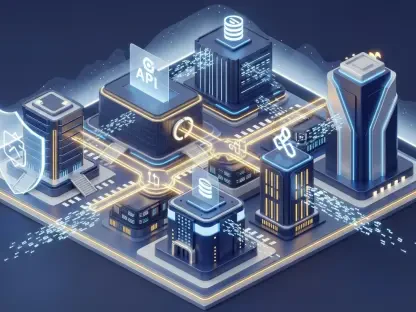
At the heart of the reviewed infrastructure sits the Enclave platform, a system designed to create secure, isolated environments within existing cloud ecosystems. Unlike traditional security tools that act as a gatekeeper at the front door, Enclave functions more like a private tunnel system that only exists when a valid connection is requested. By utilizing advanced micro-segmentation, the platform ensures that even if a single workstation is compromised, the threat remains trapped within a tiny segment of the network. This prevents the “east-west” movement that hackers typically use to traverse from a low-value target to a high-value database.
The technical performance of such a platform is measured by its ability to maintain high throughput while performing deep packet inspection and identity verification. Recent updates have integrated support for IPv6 and enhanced protections against email-based threats, acknowledging that the modern attack surface is increasingly diverse. By creating these isolated enclaves, the system effectively hides the infrastructure from the public internet. If a server cannot be seen or pinged by unauthorized actors, it becomes exponentially harder to exploit, shifting the burden of effort from the defender back to the attacker.
AI-Powered Operational Layers and Sales Automation
Beyond the raw security mechanics, the integration of artificial intelligence into the operational layer represents a significant shift in how security products are managed and sold. SideChannel utilizes AI not just for threat detection, but to streamline the entire lifecycle of the security relationship. Internally, AI-driven tools manage lead generation and predictive analytics to identify which organizations are most at risk, allowing the company to tailor its outreach with precision. This efficiency is vital for a micro-cap entity competing against giants, as it allows for a leaner, more responsive organizational structure.
In real-world usage, this AI layer translates to a more personalized user experience. Instead of receiving generic security alerts, administrators are presented with prioritized insights generated by machine learning models that understand the specific nuances of their environment. This automation reduces “alert fatigue,” a common cause of human error in cybersecurity. By filtering out the noise and focusing on high-probability threats, the system enables even small IT teams to maintain a posture that mimics a fully staffed security operations center.
Current Trends and Industry Innovations
The trajectory of the industry is currently defined by the convergence of human expertise and automated systems. We are seeing a move away from “black box” security tools toward transparent, advisory-led platforms. The trend is clearly favoring solutions that don’t just provide a dashboard, but also provide the strategic context needed to make sense of the data. This has led to the rise of the virtual CISO (vCISO) model, where high-level strategic guidance is bundled with the technical tools required to execute that strategy.
Furthermore, there is a growing emphasis on “resilience over resistance.” While preventing breaches remains a priority, the industry is innovating toward faster recovery and automated remediation. Innovations in the sector now focus on how quickly a system can self-heal after a detected anomaly. This involves using AI to automatically isolate suspicious nodes and roll back configurations to a known secure state without human intervention. This trend toward autonomous security is reshaping consumer expectations, as businesses now demand platforms that can act in milliseconds to mitigate risks that humans might not notice for hours.
Real-World Applications and Deployment Strategies
Securing Cloud-Heavy IT Environments
In practice, Zero Trust SaaS is being deployed heavily in sectors where remote work and cloud dependency are the norms. For instance, a medium-sized healthcare provider moving its patient records to a multi-cloud environment uses this infrastructure to ensure that only verified medical staff can access sensitive data, regardless of their physical location. By enforcing granular access policies at the application level rather than the network level, the provider can meet strict regulatory requirements while maintaining the flexibility of a modern, distributed workforce.
Bridging vCISO Advisory with Automated Infrastructure
A unique implementation of this technology is the hybrid approach that combines automated infrastructure with high-level human oversight. This strategy is particularly effective for organizations that are too large to be unmanaged but too small to afford a full-time executive security team. By deploying an automated platform like Enclave alongside a vCISO, companies receive a tailored security roadmap that is executed by the software. This “SideChannel Complete” model bridges the gap between high-level strategy and ground-level execution, ensuring that the technology is always aligned with the specific business risks the company faces.
Implementation Hurdles and Market Constraints
Despite the clear advantages, the path to widespread adoption is not without obstacles. One of the primary hurdles is the complexity of transitioning from legacy systems. Many organizations still rely on “on-premise” applications that were never designed for a zero-trust environment. Retrofitting these systems can lead to latency issues or compatibility bugs that disrupt business operations. Additionally, the market for these solutions is highly fragmented, leaving many decision-makers confused by the overlapping claims of various vendors.
From a financial perspective, micro-cap companies in this space face the challenge of proving long-term viability. Investors often look for rapid recurring revenue growth, which can be difficult to achieve when sales cycles for enterprise security are notoriously long. There is also the regulatory landscape to consider; as data privacy laws become more stringent globally, SaaS providers must constantly update their infrastructure to remain compliant with varying international standards. Overcoming these hurdles requires not just technical prowess, but also significant capital and a highly disciplined sales engine.
Future Outlook and Scalability Potential
Looking ahead, the potential for scalability in Zero Trust SaaS is immense, particularly as the “Internet of Things” (IoT) continues to expand the attack surface. In the near future, we can expect these platforms to extend their reach beyond traditional computers and servers to secure every connected device, from smart factory sensors to medical devices. This expansion will likely be fueled by breakthroughs in decentralized identity management and blockchain-based verification, which could provide an even more tamper-proof foundation for access control.
The long-term impact on the industry will likely be a consolidation of services. We are moving toward a future where “security” is not a separate purchase but an integrated feature of all enterprise software. As these platforms become more intelligent, they will transition from being reactive tools to proactive advisors, capable of predicting vulnerabilities before they are even written into code. The goal is a seamless environment where the infrastructure itself is the most effective defense mechanism, making the act of hacking a system as difficult as changing the laws of physics.
Final Assessment of Zero Trust Evolution
The evaluation of Zero Trust SaaS infrastructure revealed a technology that has matured from a niche government requirement into a critical commercial necessity. The shift from service-based models to automated, software-driven platforms like Enclave demonstrated a clear path toward scalable security. Organizations that adopted these frameworks benefited from significantly reduced lateral threat risks and more efficient resource allocation. The integration of AI into both the product and the sales process suggested a more modernized approach to tackling the persistent problem of cyber vulnerability.
Moving forward, the focus should shift from mere implementation to the optimization of these systems. Stakeholders would be well-served to prioritize platforms that offer deep integration with existing cloud workflows while maintaining a focus on user experience to prevent “security workarounds” by employees. The success of this evolution depended on the ability to balance technical rigor with business agility. Ultimately, the industry moved toward a state where security was no longer a barrier to progress but the very engine that enabled it.