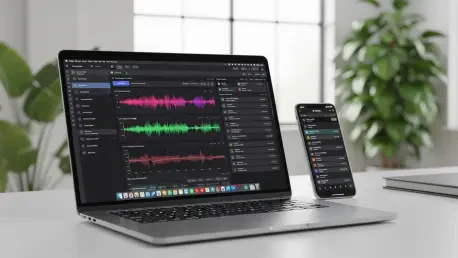

As the digital workplace becomes increasingly saturated with data, the ability to transform spoken dialogue into structured organizational intelligence has emerged as the ultimate competitive advantage for modern enterprises. The transition from simple voice-to-text tools to comprehensive AI assistants marks a pivotal shift in how modern professionals manage their daily workflows.
Wispr Flow, originally known for its high-speed dictation capabilities, is now stepping into the high-stakes arena of meeting intelligence. This strategic expansion signals a move toward deeper integration within the corporate ecosystem and reflects a transition from a simple utility tool to essential infrastructure.
The Evolution of Dictation: How Wispr Flow Is Redefining Professional Productivity
Modern professional productivity relies on the seamless conversion of ideas into actions. This evolution demonstrates a shift where dictation serves as a gateway to broader automation by creating a foundation for complex cognitive tasks.
By focusing on speed and accuracy, the tool allows users to bypass manual note-taking entirely. This integration of advanced linguistics goes beyond mere word recognition to capture the true intent and sentiment of the speaker.
Breaking Down the Move From Transcription App to Holistic Meeting Assistant
Transitioning to a meeting assistant requires a fundamental shift in data processing and design. This holistic approach aims to provide a unified experience that reduces the need for multiple disparate apps in a crowded corporate software stack.
The platform must now handle multi-speaker environments and various environmental acoustic challenges effectively. This move reflects a growing demand for streamlined workflows that prioritize cross-platform efficiency over fragmented tool usage.
Bridging the Gap Between Voice Capture and Strategic Context
Moving beyond speech conversion, the tool leverages participant metadata to generate sophisticated summaries. This addresses the loss of institutional memory during rapid-fire discussions in hybrid settings where context is often lost.
As the platform ingests sensitive meeting data, it must maintain rigorous privacy standards. Ensuring that the AI provides depth without being repetitive is crucial for maintaining the long-term trust of enterprise users.
Navigating a Crowded Arena: Challenging Established AI Notetakers
Entering the meeting space positions Wispr Flow against entrenched players like Fireflies and Otter. These competitors already possess significant market share and established user bases that are often difficult to displace.
The differentiator for this new tool lies in synthesizing insights directly into broader professional workflows. Success depends on whether it adopts a system-audio approach or a traditional bot-in-the-call model for recording.
The Rise of Professional Data Synthesis and System-Level Integration
Current trends favor centralized hubs that act as a corporate brain for the entire organization. This shift treats every spoken word as a data point that can be analyzed to predict project timelines accurately.
By identifying team bottlenecks through conversation analysis, the tool offers a diagnostic layer for leadership. It helps optimize internal communications by turning casual dialogue into structured and actionable project data.
Scaling for the $2 Billion Valuation: The Financial Stakes of AI Expansion
A potential valuation jump from $700 million to $2 billion reflects market confidence in the platform’s expansive vision. This trajectory suggests that AI assistants are becoming indispensable infrastructure for the modern global corporation.
High-level funding allows the startup to refine low-latency processing and high-accuracy speaker attribution. These technical features are essential for winning over enterprise clients who demand absolute precision and data reliability.
Maximizing Workplace Efficiency Through Next-Generation AI Synthesis Tools
Organizations should evaluate these tools based on their integration with existing project management software. This ensures that transcription accuracy is paired with actionable utility across different departments and teams.
Establishing clear protocols for AI participation in sensitive calls can further reduce administrative burdens. Teams can then shift their focus from documenting history to executing strategic initiatives and higher-value creative work.
The Future of Corporate Memory in the Age of Intelligent Workflow Hubs
Wispr Flow’s expansion into meeting intelligence represented a significant milestone in the quest for an AI-augmented workplace. The ability to synthesize human conversation into actionable data became a standard requirement for organizational success.
This development reinforced the idea that work was about intelligently automating the path forward. It ensured that every meeting served as a catalyst for measurable progress rather than a simple recording of past events.