
The global economy currently relies on a digital foundation that was built over decades through the relentless expansion of Software as a Service, yet a new era of automated creation is forcing a radical rethink of this multi-billion-dollar market. For years, the prevailing wisdom suggested that specialized cloud platforms would eventually manage every conceivable business process. From customer relationship management to intricate enterprise resource planning, these subscription-based models became the invisible nervous system of modern commerce. Today, the sector remains a dominant force, supported by a massive infrastructure of data centers and a regulatory environment that demands strict adherence to protocols like GDPR and SOC2.
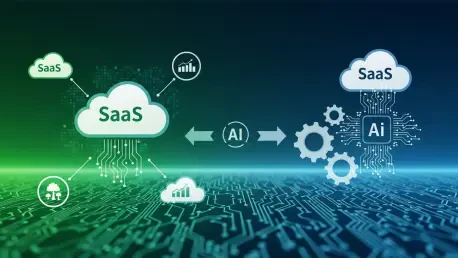
Dominant players such as Microsoft, Salesforce, and Adobe have historically enjoyed immense pricing power due to the high costs of switching and the technical expertise required to build competing tools. However, the technological landscape is shifting away from static cloud computing toward platforms where artificial intelligence is no longer just a feature but the very engine of software generation. This transition has sparked a significant debate among investors and technologists about whether the traditional SaaS model can survive a world where the barriers to software creation are effectively collapsing.
The Collision of Generative AI and Cloud Software
Emerging Trends and the Rise of “Vibe-Coding”
A new phenomenon known as vibe-coding is fundamentally altering the democratization of development by allowing non-technical employees to prompt functional applications into existence. Instead of waiting for a central IT department to approve a budget for a new third-party tool, teams are now using large language models to generate bespoke prototypes that solve immediate problems. This shift represents a move from buying off-the-shelf solutions to building internal assets that are perfectly tailored to a specific company’s workflow.
This trend, often referred to as the Citrini Thesis, suggests that the premium pricing models of established SaaS firms are becoming increasingly vulnerable. When the cost of producing code drops toward zero, the value proposition of a general-purpose software subscription begins to erode. Enterprises are now questioning why they should pay millions in recurring seat licenses when they can maintain their own AI-generated tools that evolve alongside their unique business requirements.
Market Data and the Future Growth Projection
Recent performance indicators show that AI-augmented development cycles are significantly faster than traditional manual coding, yet the productivity paradox remains a central theme in market analysis. While artificial intelligence can generate thousands of lines of code in seconds, the human oversight required to ensure these systems function correctly in a live environment is still substantial. Current data suggests that while AI tools are augmenting professional engineers, they have not yet replaced the need for high-level architectural design and strategic planning.
Growth forecasts for the coming years indicate a pivot rather than a total contraction of the SaaS market. The industry is moving toward AI-native services that offer more than just a user interface; they provide intelligent outcomes. Rather than seeing a collapse, the market is witnessing the emergence of a hybrid model where the efficiency of AI-generated code is paired with the stability of established cloud providers. This evolution suggests that the future of the industry lies in its ability to integrate these new capabilities into a reliable, enterprise-grade framework.
Critical Obstacles: The Reality of Production-Grade Software
Moving a software project from a functional prototype to a production-grade application involves overcoming the notorious 10/90 rule, where the final ten percent of the work requires ninety percent of the effort. Writing the initial code is relatively simple with modern models, but ensuring that the software can scale, remain secure, and handle edge cases without crashing is an immense technical hurdle. Established SaaS providers spend the majority of their resources on these invisible layers of maintenance and reliability that a simple AI prompt cannot yet replicate.
The stochastic nature of large language models presents a significant risk in high-stakes corporate environments. Because these models are probabilistic, they can produce inconsistent results or “hallucinations” that lead to logic errors in financial or operational software. This lack of deterministic reliability makes it difficult for enterprises to fully trust AI-generated code for mission-critical tasks. Furthermore, a move toward fragmented, in-house tools creates a risk of developing isolated legacy piles of code that no human employee truly understands, making long-term maintenance nearly impossible.
The Compliance Shield and the Legal Fortress
Enterprises do not just pay for software features; they pay for a compliance shield that offloads legal and security liability to a third-party vendor. A major corporation using a recognized SaaS platform benefits from the vendor’s investment in security patches, data indemnity, and regulatory certifications like ISO or SOC2. If a company chooses to build its own tools using generative AI, it assumes the entirety of the risk. In an era of increasing cyber threats and aggressive data privacy enforcement, this transfer of risk remains one of the most valuable aspects of the SaaS business model.
The regulatory landscape is becoming more complex, and the costs of self-certification for in-house tools can quickly exceed the price of a software subscription. SaaS providers achieve an economy of scale by spreading the costs of high-level security and auditing across thousands of clients. As auditing AI-generated systems becomes a new requirement for insurance and legal standing, the professional services sector is likely to see a boom. This ensures that the specialized software vendor remains a necessary partner for any organization that cannot afford a catastrophic data breach or a regulatory fine.
The Future Landscape: Data Moats and AI Integration
The concept of informational heat death suggests that generic AI models trained on public data will eventually hit a ceiling in terms of the value they can provide. To remain competitive, software must be fueled by specialized, high-quality data repositories that are not available on the open web. Vertical SaaS providers and data-rich organizations like Bloomberg or LexisNexis possess “low-entropy” data moats that protect them from being cannibalized by general-purpose AI. These companies own the proprietary information that makes their tools indispensable, regardless of how the code is written.
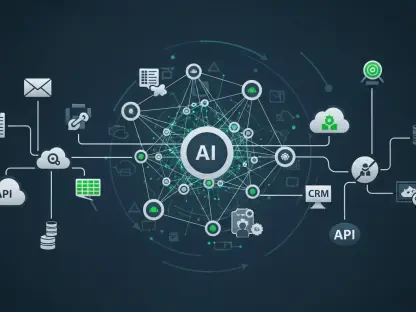
Pricing models are also undergoing a significant transformation, moving away from traditional seat-based licenses toward value-based and outcome-driven revenue. This shift forces SaaS companies to prove their worth by delivering specific results rather than just providing access to a platform. As global competition intensifies, the pressure from generative AI will likely result in a leaner industry where only those who offer unique data insights and robust integration survive. Specialized vendors who can act as the “connective tissue” between different AI systems will find themselves in a position of strength.
Final Synthesis: Evolution Over Extinction
The transition within the software industry moved from a phase of speculative disruption to a period of pragmatic integration. While the rise of AI-generated tools challenged the necessity of basic software subscriptions, it simultaneously reinforced the value of specialized data, security, and interoperability. Strategic focus shifted toward companies that provided not just the tools for work, but the foundational trust and proprietary information required to operate in a volatile digital economy. The industry effectively shed its most redundant layers, leaving behind a more resilient core of service providers who prioritized technical reliability over mere feature expansion.
Looking forward, the path for firms and investors involves prioritizing software ecosystems that function as “compliance as a service” while leveraging AI to lower their own internal costs. The most successful organizations moved beyond the binary choice of building versus buying, instead adopting a strategy where bespoke AI components were integrated into secure, vendor-managed frameworks. This evolution ensured that while the way code is written changed forever, the fundamental human need for reliable, secure, and specialized business logic remained the central pillar of the global technological infrastructure.