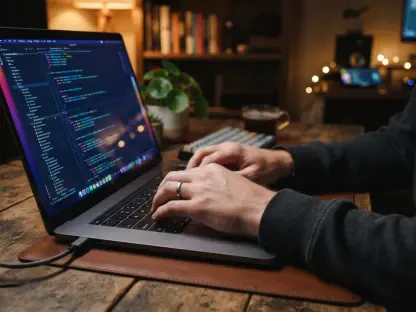

The spectacle of a singular, high-definition AI-generated clip no longer captures the collective imagination of a creative industry that has moved decisively toward holistic system management. In the professional landscape of 2026, the novelty of witnessing an artificial intelligence render a photorealistic person has vanished, replaced by an urgent demand for utility, consistency, and structural integrity. This shift marks the definitive end of the “clip generation” era, as creators and agencies pivot toward a more sophisticated paradigm: the orchestration of complete productions. The market has matured beyond the superficial allure of a five-second loop, seeking instead the robust infrastructure required to sustain long-form narratives and complex commercial campaigns.
High-quality artificial intelligence video has effectively become a commodity, which means the true competitive advantage for any studio now rests on the efficiency of its workflow. While the previous years focused on the visual fidelity of individual frames, the current priority is the cohesion of the final output across multiple scenes. Professionals are navigating a world where the distinction between a hobbyist and a director is determined by the ability to manage a project from its conceptual inception to a polished, exportable asset within a unified environment. Integrated workspaces have emerged to solve the fragmentation that once plagued the industry, offering a streamlined path that eliminates the friction of switching between disparate tools.
This trend analysis explores the transition from standalone generative models to comprehensive production systems that handle the entire creative lifecycle. It examines the benchmarks that now define professional-grade software and provides a strategic overview of how teams are leveraging multimodal integration to tell more compelling stories. By examining the current tools and methodologies, it becomes clear that the focus has moved from “what the AI can see” to “how the AI can serve” as a reliable member of a larger creative crew.
The Maturation of AI Video: From Clip Generation to Orchestration
Market Evolution: The Rise of Production Systems
Recent industry data from the start of 2026 indicates a massive shift away from generative toys that prioritize random visual splendor over practical application. The primary bottleneck in the current market has transitioned from the quality of the image to the complexity of project management, as agencies struggle to maintain a consistent visual language across varying shots. There is a burgeoning demand for tools that can ingest a simple URL or a creative brief and carry that specific data through to a final export without losing the underlying brand identity. Statistics suggest that creative teams are prioritizing “Job-to-Export” pathways, favoring platforms that reduce tool soup—the highly inefficient practice of utilizing dozens of different apps to complete a single thirty-second commercial.
The economic reality of the current production landscape favors consolidated platforms that minimize the time spent on manual post-production. From 2026 to 2028, the industry expects to see a continued decline in the usage of isolated generators that do not offer project-sharing or version-control features. Small-to-medium enterprises are the most active drivers of this trend, as they lack the resources to hire specialized technical directors for every project and instead rely on “operating systems” for video that automate the more tedious aspects of the edit. This push for efficiency has forced software developers to stop marketing their models as magicians and start marketing them as project managers.
Furthermore, the rise of these systems has fundamentally changed the internal structure of creative agencies. The role of the prompt engineer is being phased out in favor of the “technical orchestrator,” a professional who understands how to route different tasks to specific AI models within a single workspace. The goal is no longer to find a single tool that does everything perfectly but to find a workspace that allows for the seamless integration of specialized models. This evolution is driven by the realization that while one model might excel at lighting, another might be superior at character consistency, and a central hub is required to harmonize their outputs.
Real-World Applications: The New Creative Stack
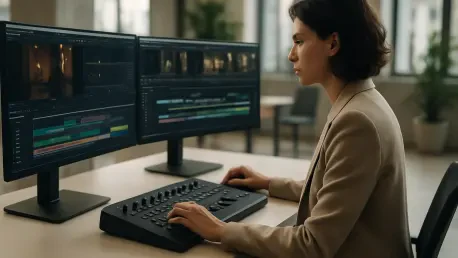
Integrated workspaces like Topview are currently setting the benchmark for the industry by allowing users to manage complex routing across different AI architectures within a single project folder. These environments enable a director to assign specific scene requirements to the model best suited for the task while maintaining a global set of references for characters and settings. Such a unified approach prevents the visual drift that historically occurred when creators moved assets from one application to another. By housing the storyboard, the generation, and the final timeline in one place, these workspaces have reduced the production time for digital ads by nearly sixty percent.
Specialized tools like Runway and Kling have found their niche as high-end components of this broader creative stack, particularly for tasks that require intense physical accuracy. When a script demands realistic liquid dynamics or the specific way fabric moves during a high-speed chase, creators turn to these “physics-forward” engines to provide cinematic precision. These tools are no longer seen as standalone solutions but as high-performance plugins that provide the hero shots required for top-tier product inserts. This specialization allows creators to match the tool to the specific bottleneck of their project, ensuring that the most difficult frames receive the highest level of technical scrutiny.
In the e-commerce sector, companies are leveraging Seedance 2.5 to break free from the constraints of short, repetitive loops that once dominated social media feeds. This technology allows for the generation of continuous narrative beats lasting thirty seconds or more, which include a clear hook, a logical proof point, and a compelling call-to-action. By moving beyond the five-second barrier, brands can tell a complete story that resonates with the audience, rather than just flashing a series of disconnected images. This capability is essential for modern digital storytelling, where the attention span of the viewer requires a narrative flow that feels intentional and human-directed.
Expert Perspectives: The Professional Creative Workflow
Industry thought leaders are currently emphasizing the concept of the “Director’s Desk,” an ideological shift where the value of an AI tool is measured by its memory layer. Professionals argue that the ability of a system to remember what a character looks like or how a specific room is lit across multiple camera angles is far more important than the quality of a single frame. The consensus among elite creators is that the next generation of storytelling requires a persistent understanding of the environment. Without this memory, the AI is merely a talented illustrator rather than a cinematic collaborator capable of supporting a long-form vision.
There is also a growing push among directors for more granular control over the technical language of the camera. The days of relying on “vibe sliders” or vague atmospheric prompts are ending, as professionals demand the ability to specify focal lengths, aperture settings, and precise crane movements. Experts suggest that for AI to be truly integrated into a professional workflow, it must speak the language of cinematography. This allows the director to manipulate the frame with the same intentionality as a human crew on a physical set, ensuring that the technology follows the creative lead rather than dictating the aesthetic through algorithmic chance.
Furthermore, directors are increasingly viewing the “creative loop” as the primary product of the workspace. The ability to revise, refine, and iterate on a shot without starting from scratch is seen as the ultimate feature of a professional platform. In contrast to the early years of AI video where one had to gamble on a new prompt to fix a mistake, modern workspaces allow for inpainting and motion brushing that preserve the good elements while correcting the errors. This refinement process is where the true artistry happens, and experts agree that the platform that makes this loop the fastest and most intuitive will ultimately dominate the professional market.
The Road Ahead: Multimodal Integration and Long-Form Narratives
The future trajectory of production lies in the seamless convergence of multimodal inputs within a single operating system. We are seeing a shift where tools no longer rely exclusively on text but can interpret images, existing video clips, and audio tracks to inform the generation process. This multimodal referencing ensures that a brand’s kit—including its specific color palettes and layout standards—is automatically applied to every frame the AI produces. This level of automation ensures brand compliance while allowing the creative team to focus on the higher-level narrative structure, effectively removing the technical barriers that once slowed down the creative process.
As cinematic kinematics continue to evolve, AI models are becoming more adept at handling complex movements like dollies, pans, and tilts with human-like intentionality. This progress suggests a move toward AI that understands the psychological impact of a camera move, knowing when to slow down for emotional emphasis or speed up for tension. While challenges such as ecosystem gating and safety filters still exist, the trajectory is clear: the technology is moving toward a state where it can simulate the expertise of a full camera crew. This will likely lead to a new era of independent filmmaking where the constraints of a physical budget no longer limit the scope of the director’s imagination.
The industry is also bracing for a period of extreme specialization where the best creators will be those who can most effectively match the tool to the specific technical bottleneck of a project. Instead of a one-size-fits-all approach, we will see workflows that utilize one model for realistic physics, another for narrative length, and a third for final color grading and polish. This modular approach to production reflects the maturity of the ecosystem, acknowledging that no single algorithm can master every facet of the cinematic arts. The successful integration of these disparate elements into a unified, high-performance workspace remains the ultimate goal for developers and artists alike.
Navigating the New ErDigital Storytelling Strategies
The analysis of current industry trends underscored that the maturity of artificial intelligence video was defined by the transition from generating isolated assets to managing professional workflows. Success in the competitive landscape of the mid-2020s required a strategic focus on visual continuity and the drastic reduction of production friction. The industry learned that spectacular demo reels were secondary to the reliability of a “shippable” final export. Creators who flourished were those who stopped treating the technology as a novelty and began treating it as a standard component of their professional toolkit.
Moving forward, the focus must remain on the intentionality of the final output, ensuring that the AI serves the broader vision of the creative director rather than distracting from it. The reduction of tool soup through the adoption of integrated workspaces provided a path for small teams to produce content that rivaled the quality of traditional large-scale studios. As the industry advanced, the emphasis on the “creative loop” and the “Director’s Desk” established a new standard for what it meant to be a professional in a digital-first world. The transition was complete: the era of generating clips had officially given way to the era of orchestrated cinematic production.