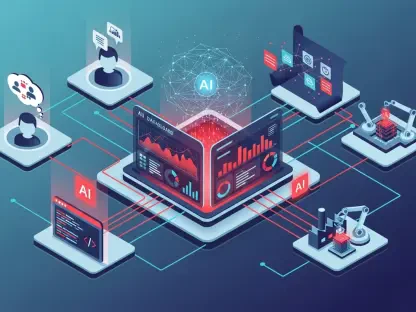

The traditional architecture of corporate operations is currently undergoing a radical dissolution as manual oversight gives way to the precision of autonomous computational agents. For decades, the global enterprise resource planning landscape relied on static, on-premise systems that functioned merely as digital filing cabinets for business transactions. Today, the sector has transitioned into a highly dynamic, AI-augmented cloud environment where software is no longer just a passive tool but an active participant in decision-making. As the operational backbone of modern commerce, ERP software must now navigate a world where human intervention is becoming the exception rather than the rule in high-volume administrative tasks.
This transformation is driven by the rise of agentic artificial intelligence, which is fundamentally reshaping standard business processes like procurement, inventory management, and financial reconciliation. Instead of a human employee logging into a system to approve a purchase order, intelligent agents now evaluate vendor reliability, check budget compliance, and execute the transaction independently. This shift has placed immense pressure on legacy providers to modernize their revenue models, moving away from providing simple software platforms to delivering verifiable, autonomous business outcomes. Investors are increasingly favoring companies that can prove their relevance in a market dominated by cloud-native competitors.
The Evolution of the Enterprise Resource Planning Landscape
The current era of enterprise computing is defined by the migration of logic from human-centric dashboards to machine-led execution layers. As corporations seek to optimize their bottom lines, they are prioritizing platforms that can function as self-healing and self-optimizing ecosystems. This change necessitates a departure from the “system of record” philosophy toward a “system of intelligence.” In this new paradigm, the value of an ERP is measured by its ability to preemptively address supply chain disruptions or automatically adjust financial forecasts without requiring a prompt from a staff member.
Furthermore, the influence of these autonomous agents is creating a ripple effect across the entire organizational structure of modern firms. Procurement and finance departments are being reimagined as lean, strategic hubs where employees focus on high-level strategy while the underlying software manages the granular details of day-to-day operations. This evolution is not merely a technical upgrade; it is a total reimagining of what it means to be an intelligent enterprise. Software vendors who fail to integrate these agentic capabilities risk being relegated to the status of a commodity utility rather than a strategic partner.
Strategic Transitions in Revenue and Market Performance
Emerging Trends in Autonomous Workflows and Machine-Led Execution
The most visible casualty of this technological shift is the per-seat licensing model that dominated the industry for nearly half a century. As AI agents replace human administrative tasks, the metric of counting individual users becomes functionally obsolete. Forward-thinking organizations are now adopting consumption-based billing, which aligns software costs with the actual volume of work performed or the complexity of the tasks executed. This ensures that the vendor is compensated for the value of the output rather than the number of people who have access to a dashboard.
In response to this trend, there is a burgeoning demand for process-specific AI rather than generic large language models. While general AI can write emails or summarize documents, it lacks the specialized knowledge required to balance a multi-national corporate ledger or optimize a global logistics network. To meet this need, vendors are deploying forward-deployed engineering teams. these specialized units work alongside clients to tailor AI integrations, ensuring that the software understands the unique business logic of the organization it serves.
Market Projections for Consumption-Based Enterprise Software
Market valuations are increasingly tied to the ability of software firms to capture revenue from generative AI and machine learning usage. Forecasts suggest that AI-driven revenue streams within the ERP sector will grow significantly as companies move toward a usage-heavy operational model. Analysts are closely monitoring key performance indicators such as “AI Units” and compute usage metrics, which are quickly replacing traditional subscription growth as the primary signals of financial health. This shift allows for a more granular understanding of how deeply integrated the software is within a client’s daily operations.
As of 2026, the industry is witnessing a surge in market capitalization for firms that successfully transition to these consumption models. By pricing software based on the processing cycles or the specific business goals achieved, companies can scale their revenue in lockstep with the success of their clients. This alignment of interests creates a more resilient financial ecosystem where growth is driven by the actual utility and efficiency of the technology provided.
Navigating the Friction of Usage-Based Economics
Despite the logical appeal of consumption-based models, they introduce significant friction in the realm of corporate budgeting. Historically, enterprise leaders preferred the stability of predictable, flat-rate subscriptions that allowed for simple fiscal forecasting. The move toward usage-based economics creates a level of cost volatility that can be unsettling for traditional CFOs. Addressing this lack of predictability requires new tools for transparency, allowing businesses to monitor their consumption in real-time to avoid “bill shock” at the end of a fiscal quarter.
Moreover, the challenge lies in translating abstract “processing cycles” into tangible return on investment. Customers are often resistant to paying for technical execution unless they can see a direct correlation to improved business outcomes, such as reduced lead times or lower operational costs. To overcome this resistance, the industry is moving toward “outcome-based” pricing. This strategy shifts the risk from the client to the provider, ensuring long-term retention by proving that the software is generating more value than it costs to operate.
Data Governance and Regulatory Compliance Standards
For autonomous agents to function effectively without human oversight, they require access to data of the highest integrity. The risk of “automated errors”—where an AI makes a catastrophic business decision based on flawed data—has made data governance a top priority. High-quality data is the lifeblood of the modern enterprise, and Master Data Management (MDM) has moved from a back-office necessity to a critical strategic asset. Ensuring that agents are operating on a “single source of truth” is the only way to maintain operational safety in a machine-led environment.
Compliance with emerging global regulations regarding AI transparency and data usage is also becoming a non-negotiable requirement. As governments implement stricter rules on how data is handled and how AI decisions are explained, enterprise software must be designed with “privacy by design” principles. This includes managing the security implications of integrating heterogeneous data sources into a unified cloud environment. A failure to secure these integrated data streams could expose an organization to unprecedented risks, both legal and financial.
The Future of Intelligent Enterprise Architectures
The architectural focus is shifting toward the creation of a “Golden Record” for enterprise data through the integration of advanced MDM solutions. Platforms like Reltio are becoming essential for unifying fragmented data points across diverse systems, ensuring that AI agents have a clean and consistent foundation. At the same time, specialized agents like “Joule” are emerging as the primary interface for business operations. Instead of clicking through menus, users interact with these agents to pull reports, initiate processes, and gain insights, making the software interface feel more like a conversation than a tool.
Innovation in this space is the only way to maintain a competitive edge against general-purpose AI providers. By focusing on the specific needs of supply chain automation and real-time financial reconciliation, legacy ERP providers can offer a level of depth that generic models cannot match. The future of the intelligent enterprise lies in its ability to synchronize complex global operations in real-time, using data that is both accurate and instantly accessible.
The transition from human-centric licensing toward autonomous output models necessitated a total restructuring of how corporate value was measured. This paradigm shift was solidified by the recognition that data integrity, anchored by sophisticated MDM acquisitions, was the only viable path to reliable AI execution. Stakeholders were encouraged to prioritize the definition of clear performance metrics and robust governance frameworks to avoid the pitfalls of unmanaged consumption. Ultimately, the industry moved toward a future where the ERP remained the indispensable backbone of global commerce by evolving into a self-governing intelligence layer that rewarded efficiency and precision over simple access.