
A Bold Proclamation We’re Done With Hiring Humans
In a move that sent shockwaves through the tech industry and turned years of theoretical debate into stark reality, one of software’s most influential voices declared an end to human sales hiring for his organization. Jason Lemkin, the widely recognized “Godfather of SaaS,” announced that his company, SaaStr, would be replacing its entire human go-to-market team with autonomous artificial intelligence agents. The declaration was not a forecast or a future goal but a present-day reality, signaling a profound shift in business operations.
This decision represents a significant leap beyond the common application of AI as a supplementary tool. For years, companies have integrated AI to assist sales teams with lead generation, data analysis, and administrative tasks. Lemkin’s initiative, however, positions AI not as an assistant but as the primary actor. It marks a pivotal moment where a core business function, traditionally reliant on human interaction and intuition, is being fully handed over to a digital workforce, forcing the entire industry to confront the practical implications of a truly automated future.
The Man and The Mission Understanding Lemkin and SaaStr
To understand the weight of this decision, one must first understand the stature of Jason Lemkin. As a venture capitalist and the founder of SaaStr, he has established himself as a preeminent authority in the software-as-a-service sector. His insights and predictions are closely followed by a global audience of entrepreneurs, executives, and investors who view him as a guidepost for industry trends. When Lemkin acts, the SaaS world pays close attention.
SaaStr itself is more than just a company; it is the world’s largest community for business-to-business (B2B) founders and executives. Through its massive conferences, online resources, and investment fund, it shapes the strategies of thousands of growing software companies. Consequently, SaaStr’s operational choices are not made in a vacuum. They serve as a powerful precedent, a real-world case study that could inspire countless other organizations to re-evaluate their own reliance on human capital for growth.
The Anatomy of an AI Takeover
The Tipping Point
The radical shift from a human to an AI sales force was not the result of a long-term strategic plan but rather a swift response to a familiar business challenge: employee turnover. The catalyst occurred in May during the SaaStr Annual conference, an event drawing over 10,000 industry professionals. In the midst of this critical period, two of the company’s high-paid sales representatives abruptly resigned, leaving a significant gap in the team at the worst possible time.
This incident forced Lemkin into a critical cost-benefit analysis. He calculated that hiring a new junior sales representative would cost the company approximately $150,000 annually, with no guarantee of loyalty or long-term retention. In contrast, an AI agent represented a scalable, consistent, and “loyal” asset. SaaStr’s Chief AI Officer, Amelia Lerutte, later framed it as a “conscious choice” to divert headcount budget from traditional salaries toward the development and deployment of a more predictable and enduring AI workforce.
The New AI Workforce
The replacement was as swift as it was comprehensive. The 10-person team of human sales development representatives and account executives was dismantled. In its place, a new workforce of 20 AI agents was deployed, effectively doubling the size of the sales function almost overnight. The company had only a single non-core agent in May but aggressively ramped up its digital team to over 20 by early June, demonstrating the incredible speed at which an AI-led department can be scaled.
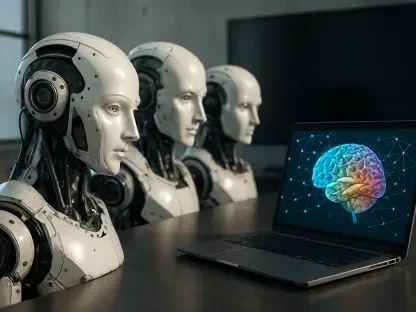
Symbolizing this new era, the physical office space was repurposed to reflect the change. Desks once occupied by human employees now bear the names of their digital successors. Agents named “Quali,” “Arty,” and “Repli” have taken their symbolic places in the office, a tangible and slightly surreal testament to SaaStr’s full commitment to an AI-first operational model. This move solidifies the AI agents not as abstract software but as integral members of the company’s structure.
The Training Regimen
SaaStr’s strategy for building its new workforce hinges on a principle of digital replication. Lemkin’s philosophy is to “train an agent with your best person, and best script,” thereby creating a digital clone of the company’s most effective salesperson. This approach aims to capture the winning formula of a top performer and deploy it at scale, ensuring every prospect interaction is handled with the same proven methodology, free from human variability or fatigue.
This methodology mirrors an emerging best practice in the industry. The cloud platform Vercel, for instance, successfully developed a highly effective sales agent by meticulously documenting every step of its top human salesperson’s workflow over six weeks. By training an AI to mimic this exact process, the company was able to achieve consistent, high-level execution. SaaStr is applying a similar principle, systematically codifying its best sales practices to build an army of elite digital sellers.
The Unprecedented Leap from AI Assisted to AI Led
The distinction between SaaStr’s model and the broader industry’s use of AI is profound. Most organizations employ AI as a co-pilot, a tool that enhances the capabilities of a human employee by automating routine tasks or providing data-driven insights. In this common paradigm, the human remains the final decision-maker and the primary interface with the customer. SaaStr, however, has flipped this model entirely.
At SaaStr, the AI agents are the primary actors. They are not merely assisting; they are leading the sales process from qualification to initial outreach and beyond. This grants the company a unique strategic advantage: the ability to scale its sales function with the same elasticity as software. If demand surges, SaaStr can deploy more agents instantly, bypassing the months-long friction of recruiting, hiring, and onboarding human employees. This on-demand scalability represents a fundamental transformation in how a company can respond to market opportunities.
Measuring the Digital Pulse Performance and Productivity
According to Lemkin, the initial results of this bold experiment are already promising. He reports that the “net productivity” of the 20-agent AI team is currently on par with that of the former 10-person human team. This early metric suggests that, at a minimum, the AI workforce is capable of matching the output of its human predecessors, validating the core thesis that AI can effectively handle these complex roles.
However, viewing the transition through the lens of current output misses the larger point. The true value proposition of the AI team lies not in matching human performance but in its potential to radically exceed it through superior efficiency and limitless scalability. While the present productivity is comparable, the AI workforce operates without the inherent limitations of human labor, such as burnout, illness, or the need for sleep. Its capacity can be expanded exponentially at a marginal cost, an advantage that a human-based team can never hope to replicate.
Reflection and Broader Impacts
Reflection
The strengths of SaaStr’s AI-driven model are clear and compelling. It effectively eliminates the persistent business risks of employee turnover, reduces long-term operational costs associated with salaries and benefits, and guarantees the consistent execution of battle-tested sales strategies. By codifying what works and deploying it through tireless digital agents, the company aims to create a perfectly optimized and predictable sales engine.
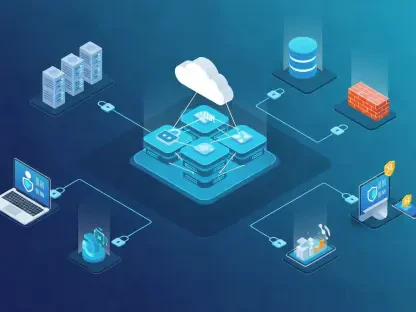
This pursuit of efficiency, however, introduces a formidable new challenge: cybersecurity. For AI agents to operate autonomously, they require deep, privileged access to a company’s core systems, including email, CRM, and internal databases. As Harry Farmer, a senior researcher at the Ada Lovelace Institute, warns, each point of access creates a new vulnerability. This deep integration dramatically expands the potential attack surface, making the company a more attractive and susceptible target for cybercriminals seeking to exploit the AI’s permissions for data breaches or other malicious activities.
Broader Impact
SaaStr’s move is a potential harbinger of a broader transformation across sales and other white-collar professions. As this model is tested and refined, other companies will undoubtedly look to replicate its successes, potentially displacing roles that were once considered safe from automation. The experiment forces a crucial conversation about the future of work and the evolving skill sets required to thrive in an AI-integrated economy.
This puts modern businesses at a critical crossroads. They must now weigh the immense productivity gains and competitive advantages offered by autonomous AI against the formidable security risks it introduces. The central tension is no longer whether AI can perform these jobs, but whether organizations can build the necessary safeguards to manage the risks that come with granting software such unprecedented levels of access and authority.
A Watershed Moment for the Future of Work
The decision made by Jason Lemkin at SaaStr was more than a simple staffing change; it was a pragmatic and audacious bet on the future. The swift and total replacement of a human department with autonomous AI agents demonstrated a level of conviction that has moved the conversation about workplace automation from the theoretical to the tangible. It presents a stark trade-off, pitting the promise of unparalleled efficiency and scale against the peril of new and complex security threats.
Ultimately, SaaStr’s pivot has established it as a live, high-stakes experiment that the entire business world is now watching. The outcomes—both the successes and the failures—will provide invaluable lessons on the true capabilities and inherent risks of an AI-led workforce. This is not just one company’s story; it is a watershed moment that is actively defining the next chapter in the future of work.