
The pervasive narrative suggesting that generative artificial intelligence will render the Software-as-a-Service industry obsolete is a compelling but ultimately flawed oversimplification of a much more nuanced technological shift. Rather than signaling an impending end, the integration of AI is catalyzing the next major evolutionary phase for the sector, an era best described as SaaS 3.0. This new paradigm is not built on the premise of replacement but on a powerful, symbiotic relationship where AI is seamlessly woven into the core fabric of software applications. This co-evolution transforms software from a static, passive tool into an intelligent and adaptive partner. The future is not a battle between AI and SaaS but a story of their convergence, creating systems that are fundamentally more powerful, context-aware, and efficient than anything that has come before. The true competitive frontier lies not in choosing one over the other, but in mastering the art of their integration.
A Legacy of Constant Adaptation
To accurately contextualize the current technological shift, it is essential to examine the SaaS industry’s well-established history of evolution and adaptation. The initial wave, now referred to as SaaS 1.0, emerged two decades ago and fundamentally revolutionized the market by facilitating a monumental shift away from cumbersome and expensive on-premise systems toward agile, cloud-based solutions. Its primary contributions were the democratization of access to enterprise-grade software for businesses of all sizes and a complete overhaul of software economics. The prohibitive, license-heavy models of the past were replaced with more accessible tiered subscription plans, drastically lowering the barrier to entry and fostering unprecedented innovation. This era established the foundational principles of scalability, accessibility, and flexibility that continue to define the industry, proving from the outset that SaaS was built to evolve in response to changing technological and market demands.
As the SaaS market matured and became increasingly saturated, the competitive landscape intensified, driving the next phase of its evolution: SaaS 2.0. Customer demand for greater personalization and bespoke solutions could no longer be met by the one-size-fits-all approach that characterized the first wave. This era, often described as “Service-as-a-Software,” was defined by the strategic integration of a human-led services layer on top of the core software product. This hybrid model successfully struck a balance between the broad, scalable accessibility of SaaS 1.0 and the deep, tailored customization required by specialized user needs and complex enterprise workflows. Offering this blend of product and service became a key differentiator in a crowded market, allowing companies to command higher prices, reduce churn, and build deeper relationships with their customers. This period underscored a critical lesson: the most resilient SaaS companies are those that adapt their delivery and economic models to meet the increasingly sophisticated expectations of their users.
Augmentation Over Annihilation
A significant portion of the current anxiety surrounding AI’s impact is rooted in the fear that it will render software engineering roles and, by extension, the entire SaaS model obsolete. While generative AI tools can indeed produce a Minimum Viable Product with impressive speed—a phenomenon sometimes called “vibe coding”—these initial creations often lack the robust, foundational engineering required for real-world, scalable application. The process can be likened to constructing a house with a visually appealing facade but no plumbing, wiring, or structural foundation. Such a product may look impressive in a demo but is destined to fail when confronted with the complex demands of real users, diverse data sets, and the unforgiving pressures of operating at scale. The superficiality of this AI-generated code highlights the continued necessity of deep engineering expertise to build reliable, secure, and performant systems that deliver tangible business value over the long term.
The more accurate and productive perspective is to view AI not as a replacement for human capability but as a powerful amplifier. AI serves as a force multiplier for skilled engineers, automating the repetitive and time-consuming “grunt work” that has long been a bottleneck in software development. This includes tasks such as plumbing, routine code generation, comprehensive testing, debugging, and maintaining documentation. By offloading these responsibilities, AI liberates engineers to concentrate their cognitive energy on higher-order challenges that demand creativity, critical thinking, and strategic insight. These challenges include designing complex system architectures, optimizing performance, navigating intricate business logic, and making critical design trade-offs. The ultimate result is a significantly accelerated development cycle, higher-quality engineering outcomes, and a greater capacity for genuine innovation, as human talent is focused where it matters most.
The Dawn of Intelligent Infrastructure
The convergence of established SaaS strengths with the adaptive capabilities of artificial intelligence marks the dawn of SaaS 3.0, an era where intelligence transitions from a feature to the core infrastructure. In this new paradigm, AI is no longer a “nice-to-have” add-on used for market differentiation; it has rapidly become a baseline expectation, a fundamental necessity that every SaaS company must integrate into its core strategy to remain relevant. The competitive landscape will no longer be defined by which company innovates with AI first, but rather by which company executes the best. Success will be determined by the ability to effectively operationalize AI, systemize its capabilities, and embed it so deeply into products and workflows that intelligence itself becomes an indivisible part of the infrastructure. This means creating systems that are not just efficient but are also modular, adaptive, and self-improving, capable of delivering measurable business impact in real time.
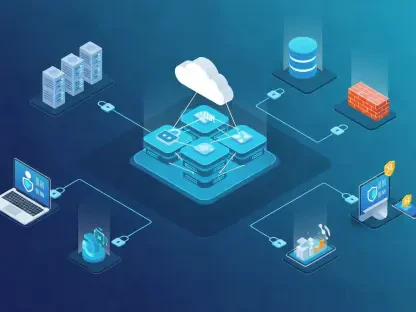
This co-evolution of AI and SaaS is set to fundamentally disrupt and redefine the industry’s long-standing economic models. As AI-driven automation reduces development costs and enhances product performance, traditional usage-based pricing models will become increasingly less relevant. The trajectory is moving decisively toward value-based pricing, where customers pay for specific outcomes and the intelligence delivered, rather than for seats or API calls. This emerging “pay-for-intelligence” model will characterize the economics of SaaS 3.0, fostering lower friction for adoption, enabling deeper personalization, and aligning the provider’s success directly with the customer’s success. The future of software is envisioned as a layered model where SaaS provides the scalable, secure, and accessible infrastructure—the “how”—while AI delivers the intelligence layer responsible for context, prediction, and learning—the “what.” This synergy creates systems that are fundamentally more powerful and efficient.
Forging a New Architectural Equilibrium
The detailed exploration of this technological shift revealed a clear and cohesive narrative. The relationship between SaaS and AI was best understood as an equilibrium, where each component was incomplete without the other. SaaS, with its focus on distribution, scalability, and security, provided the robust infrastructure—the “how”—that was necessary to deliver intelligence effectively. In contrast, AI, with its focus on learning, context, and adaptability, provided the “what,” transforming passive software into an active, responsive system. The analysis made it clear that achieving a seamless balance between these two forces was the central challenge for the next generation of software companies. This equilibrium was seen as the primary driver behind a new software architecture, one that was lightweight, API-first, and inherently “intelligence-native.” This architectural trend marked a departure from monolithic systems toward more modular and adaptive frameworks capable of delivering continuous, profound business value. Ultimately, the discussion refuted the notion of AI as a terminator for the SaaS industry. Instead, it positioned AI as the most significant evolutionary catalyst to date, one that fulfilled the original promise of SaaS—accessibility and flexibility—by infusing it with an unprecedented dimension of intelligence that changed not just how we access software, but what that software could fundamentally achieve.