
As a veteran strategist in the SaaS and software architecture space, Vijay Raina has spent years analyzing how enterprise tools evolve to meet the growing demands of professional creators. With an extensive background in software design, he offers a unique perspective on the intersection of scalability and high-fidelity output. Today, we sit down with Vijay to discuss the launch of Nano Banana 2, a model that promises to bridge the gap between rapid generation speeds and the intricate quality required for modern digital workflows.
We explore how this new iteration enhances creative production, the technical breakthroughs enabling complex multi-character scenes, and the global impact of making such powerful tools accessible to over 140 countries. Vijay also provides deep insights into the critical role of digital watermarking for transparency and how developers can leverage these advancements via the Vertex API.
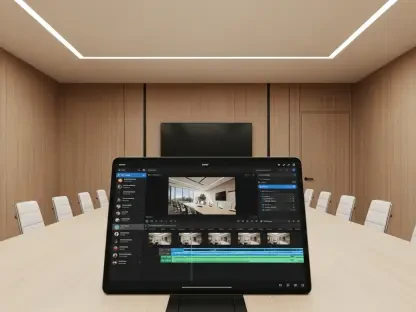
Nano Banana 2 has been integrated as the default model across various platforms, including video editing tools and search results. How does this transition impact user workflows in creative suites like Flow, and what specific improvements in speed and resolution will professionals notice most during production?
The integration of Nano Banana 2 into tools like Flow represents a massive leap forward for professionals who need to maintain momentum without sacrificing visual integrity. Because this model is built on the Gemini 3.1 Flash architecture, it dramatically reduces the latency between a creative spark and the final render. Professionals can now toggle between resolutions ranging from 512px all the way up to 4K, allowing for high-definition assets that are ready for immediate use in production environments. This speed is a game-changer for iterative design, as it removes the traditional bottleneck of waiting for high-fidelity previews while maintaining the flexible aspect ratios required for diverse social and broadcast layouts.
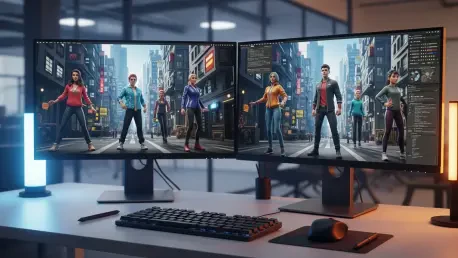
The latest model supports character consistency for up to five figures and high fidelity for over a dozen objects. What technical hurdles were overcome to allow for such complex storytelling, and how should creators structure their prompts to maximize these nuances in lighting and texture?
Managing character consistency across multiple figures has always been a significant hurdle in generative AI, as models often lose track of details when balancing five different personas simultaneously. Nano Banana 2 overcomes this by maintaining high fidelity for up to 14 distinct objects within a single workflow, ensuring that the storytelling remains coherent and visually stable. To get the most out of this, creators should focus on prompts that emphasize vibrant lighting and rich textures, as the model is specifically tuned to handle these intricate nuances. By describing the interplay of light and shadow across multiple surfaces, users can unlock the sharper detail and depth that now come standard with this version.
With the expansion of AI image generation into over 140 countries, localized adoption has seen a significant surge in regions like India. How do these diverse global demographics influence the evolution of image models, and what steps are being taken to ensure consistent quality across different cultural contexts?
The surge of millions of images generated in countries like India since the original launch has provided an invaluable feedback loop for refining the model’s cultural intelligence. When you deploy a model across 141 countries via the Google app and desktop web, you have to ensure that the AI understands a vast array of local aesthetics, traditions, and environments. This global footprint forces the development team to prioritize a model that is both versatile and culturally nuanced, ensuring that the output feels authentic regardless of the user’s location. The goal is to provide a consistent quality of service that respects localized contexts while maintaining the speed and reliability that the Flash-based architecture provides.
Integration with SynthID watermarking and C2PA Content Credentials is now a standard for all generated media. How do these verification systems function in tandem to maintain digital transparency, and what is the long-term importance of interoperability between major tech industry players?
The dual-layer approach of using SynthID and C2PA is a critical step toward establishing trust in a world filled with synthetic media. Since its launch in November, SynthID has been utilized over 20 million times, proving that there is a massive appetite for transparent verification in the Gemini app. By combining this internal watermarking with the C2PA industry standard, Google ensures that images carry their credentials across platforms owned by other leaders like Adobe, Microsoft, and Meta. This interoperability is vital because it creates a unified front against misinformation, allowing any platform to verify the origin and authenticity of a digital asset.
Developers now have access to this technology through the Vertex API and specialized tools like Antigravity. In what ways does this accessibility change the landscape for third-party application development, and what metrics should developers monitor when testing these models in a preview environment?
The availability of Nano Banana 2 through the Gemini API, CLI, and Vertex API lowers the barrier to entry for developers who want to build high-end generative features into their own applications. With the inclusion of the Antigravity development tool, which debuted last November, the ecosystem is now more robust and developer-friendly than ever. While working in the preview environment, developers should closely monitor throughput and generation latency to ensure the Flash-based model meets their specific user-experience goals. It is also important to track how well the model handles complex, multi-object prompts in real-time, as this will define the sophistication of the third-party apps being built.
High-end subscribers still retain access to the Pro version for specialized tasks via specific regeneration menus. What are the key performance trade-offs between the Flash-based Nano Banana 2 and the Pro version, and in which specific scenarios is the Pro model still the superior choice?
While Nano Banana 2 is incredibly fast and serves as an excellent default for the Gemini app’s various modes, the Pro version remains the gold standard for projects that demand the absolute highest level of detail. Subscribers on Google AI Pro and Ultra plans can still access the Pro model through the three-dot regeneration menu when they need that extra edge in quality for specialized tasks. The trade-off is essentially speed versus hyper-fine detail; while the Flash version is optimized for rapid output, the Pro version is designed for those moments where every pixel must meet a rigorous professional standard. In scenarios involving complex architectural rendering or fine-art replication, the Pro model’s depth and precision are still unmatched.
What is your forecast for Nano Banana and the future of generative image models?
I believe we are entering an era where the distinction between “fast” models and “high-quality” models will continue to vanish until the two are virtually indistinguishable. Nano Banana 2 has already narrowed that gap significantly by offering 4K resolutions and complex character handling at speeds that were previously impossible. In the near future, I expect these models to become even more deeply integrated into the fabric of our search and discovery tools, such as Google Lens, making visual creation a seamless part of how we interact with the internet. We will likely see a shift where AI doesn’t just generate an image, but understands the entire narrative context of a project, becoming a proactive partner in the creative process rather than just a reactive tool.