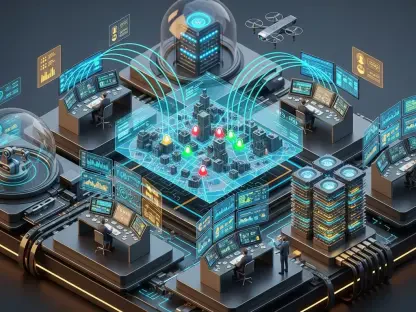

The long-standing correlation between corporate headcount and enterprise software licensing has finally dissolved as autonomous agents begin to execute complex workflows without any direct human intervention. For the better part of two decades, the software industry operated under a predictable, if somewhat rigid, economic law: as a company grew and hired more employees, it purchased more “seats” or licenses for its essential tools. This symbiotic relationship between human labor and digital utility fueled the meteoric rise of the Software-as-a-Service model, creating a trillion-dollar ecosystem built on the premise that software was a tool used by a person. Today, that premise is being systematically dismantled by the emergence of agentic systems that do not merely assist the worker but increasingly embody the worker. The shift from human-centric software to autonomous digital labor represents the most significant macroeconomic realignment in the history of the technology sector, forcing a total reconsideration of how value is created, measured, and captured in a post-SaaS landscape.
The Great Decoupling: A Macroeconomic Shift in the Software Industry
The current state of the software industry is defined by a fundamental transition away from the saturation of cloud-based applications toward a more dynamic environment of autonomous execution. In the years leading up to the present, the market witnessed a plateau in traditional seat-based growth as most enterprises reached a state of “cloud maturity,” where every employee was already equipped with a full suite of productivity tools. This saturation led to intense competition among major market players, including Salesforce, Microsoft, and Oracle, who found themselves fighting for a shrinking pool of new users. However, the arrival of agentic artificial intelligence has opened a new frontier by decoupling software value from the number of people using it. This decoupling is not just a technological curiosity; it is a structural change that allows software to tap into budgets previously reserved exclusively for human payroll, effectively expanding the addressable market by orders of magnitude.
Market players are currently navigating a landscape where the primary segments of enterprise software—Customer Relationship Management, Enterprise Resource Planning, and Human Capital Management—are being rewritten from the ground up. Technological influences, particularly the refinement of large action models and specialized agentic frameworks, allow these systems to navigate complex user interfaces and interact with disparate data silos just as a human operator would. Meanwhile, regulatory influences are beginning to catch up, as governments realize that software is no longer a passive asset but an active participant in the labor market. This shift has necessitated a move toward more granular monitoring of digital actions, ensuring that autonomous systems remain compliant with existing labor standards and professional ethics. As these technological and regulatory forces converge, the software industry is moving from an era of utility to an era of agency, where the software itself is the primary economic actor.
The significance of this transition cannot be overstated, as it alters the basic unit of economic exchange within the digital economy. In the previous era, software was a capital expenditure or an operating expense that facilitated labor; today, it is becoming a substitute for labor itself. This means that the total addressable market for software companies is no longer limited to the $1.4 trillion global IT budget but is now expanding into the $40 trillion global pool of professional services and cognitive labor. For established incumbents, this provides a massive opportunity to capture more value from their existing data sets, provided they can transition their business models away from the stagnant seat-based pricing that once defined their success. For newcomers, it offers a chance to leapfrog legacy players by building “agent-first” architectures that ignore the human user interface entirely in favor of direct machine-to-machine execution.
From Software-as-a-Service to Software-as-a-Worker
The Labor-Cost Horizon and the Expansion of Total Addressable Market
The primary trends affecting the software industry today are characterized by a move toward the labor-cost horizon, where software capabilities are directly compared to the cost and efficiency of human employees. This evolution is driven by the increasing sophistication of generative agents that can handle multi-step reasoning, memory retention, and goal-oriented execution across various platforms. Consumer behavior within the enterprise has also shifted significantly, as managers now prioritize “outcomes” over “features.” Instead of looking for a better dashboard for their sales team, leaders are looking for a digital agent that can independently qualify leads, schedule meetings, and follow up with prospects without any human oversight. This shift in demand is a powerful market driver, pushing vendors to move beyond the traditional boundaries of software and into the realm of digital labor.
Emerging technologies in this space are focusing on bridging the gap between reasoning and action, creating a new class of “Digital Workers” that can be hired for specific roles rather than licensed for general use. These agents are increasingly capable of performing high-value cognitive tasks such as legal discovery, financial auditing, and technical troubleshooting. As these capabilities expand, the opportunities for software providers to capture a larger share of the value chain grow exponentially. A software company providing an AI-driven legal associate, for instance, can charge a premium that reflects the hundreds of dollars per hour a human lawyer would cost, rather than the nominal monthly fee of a traditional word processor. This transition represents a shift from selling tools to selling the actual work performed by those tools, fundamentally changing the financial trajectory of the entire industry.
Quantifying the Transition: Growth Projections for the Digital Labor Economy
Recent market data suggests that the transition toward a digital labor economy is accelerating, with growth projections indicating that autonomous agents could manage up to 40% of standard enterprise workflows by 2028. Performance indicators are already showing a divergence between companies that have adopted agentic systems and those that remain tethered to traditional SaaS models. Specifically, firms utilizing autonomous customer service agents have reported a 60% reduction in cost-per-resolution compared to those relying solely on human-operated help desks. These data points provide a compelling argument for the rapid adoption of agentic AI, as the efficiency gains are too significant for any competitive business to ignore. The forward-looking perspective for the next several years suggests that we will see a massive reallocation of corporate spending from human-managed service contracts to digital worker platforms.
Projections for the digital labor market indicate that the sector will experience a compound annual growth rate of nearly 35% between 2026 and 2030, driven by the increasing reliability and decreasing cost of compute. This growth is not merely additive to the existing software market but is largely transformative, as it replaces old revenue streams with new, outcome-based ones. For example, the revenue generated from “per-interaction” or “per-task” pricing models is expected to surpass traditional subscription revenue in key sectors like marketing and finance within the next three years. As these performance indicators become more standardized, investors and analysts are likely to prioritize companies that demonstrate a high “agentic density,” or a high ratio of autonomous actions to human-assisted ones. This shift in valuation metrics will further incentivize software vendors to accelerate their move toward fully autonomous offerings.
Navigating the Structural Obstacles of the Agentic Era
Despite the massive potential of agentic AI, the industry faces significant structural obstacles that complicate the transition from tools to workers. One of the primary technological challenges is the “hallucination tax,” or the cost and risk associated with AI agents making errors in high-stakes environments. Unlike a human employee who can be trained and held accountable through social and professional norms, an autonomous agent requires rigorous technical guardrails and verification layers to ensure its actions are both accurate and safe. Overcoming this hurdle requires a fundamental redesign of software architecture, moving away from simple request-response loops toward sophisticated multi-agent orchestration systems that can cross-check their own work. Without these reliability layers, enterprises will remain hesitant to delegate critical business functions to autonomous systems, limiting the potential for widespread adoption.
Market-driven challenges also play a major role, as many organizations find themselves trapped in long-term contracts with legacy SaaS vendors whose architectures are ill-suited for the agentic era. These legacy systems often lack the robust, real-time APIs necessary for agents to function effectively, creating a “data gravity” problem where information is stuck in silos. To overcome these obstacles, a new breed of “middleware for agents” is emerging, designed to provide a unified interface between autonomous workers and the legacy systems they need to interact with. Furthermore, there is the ongoing challenge of pricing inertia, as both vendors and customers struggle to move away from the familiar comfort of seat-based billing. Successful strategies for overcoming this resistance involve a hybrid approach, where companies offer a baseline subscription for access alongside a performance-based fee for the work the AI agents actually complete.
Furthermore, there is a cultural and organizational complexity to integrating digital workers into a human workforce. Employees often view autonomous agents with suspicion, fearing job displacement or increased surveillance. To mitigate these concerns, forward-thinking enterprises are focusing on “augmented agency,” where AI agents take over the repetitive and mundane aspects of a role, allowing human employees to focus on strategic decision-making and creative problem-solving. This strategy not only improves morale but also enhances the overall productivity of the organization by creating a more harmonious collaboration between human and machine labor. By addressing these psychological and social barriers alongside the technical ones, the industry can create a more sustainable path toward an agentic future that benefits both the bottom line and the workforce.
Governing the Autonomous Workforce: Security, Compliance, and Data Sovereignty
The regulatory landscape is rapidly evolving to address the unique challenges posed by a digital workforce that operates at the speed of silicon. Significant laws and standards are being implemented to ensure that autonomous agents do not become a vector for systemic risk, particularly in sensitive sectors like healthcare and finance. For instance, new data sovereignty requirements dictate that the training data and operational memory of an agent must remain within specific jurisdictional boundaries, preventing sensitive corporate information from leaking into global models. Compliance is no longer just about protecting static data at rest; it is now about governing active agents in motion. This shift requires software vendors to implement advanced security measures, such as “agentic firewalls” and real-time audit logs, that can track every decision and action taken by an autonomous system in a transparent and verifiable manner.
Security measures are also becoming more complex as agents gain the ability to interact with other agents and systems autonomously. The risk of “prompt injection” or adversarial attacks is amplified when an agent has the authority to execute financial transactions or modify database schemas. To combat these threats, the industry is moving toward a zero-trust model for digital labor, where every action an agent takes must be cryptographically signed and authorized by a human-defined policy engine. This level of granular control is essential for maintaining trust in an autonomous workforce, but it also adds significant complexity to the development and deployment of agentic systems. Companies that can provide a secure and compliant “sandbox” for their agents will have a major competitive advantage, as security becomes a primary differentiator in the market for digital labor.
Moreover, the effect on industry practices is profound, as legal teams and compliance officers must now become proficient in the nuances of AI governance. This involves not only understanding the technical limitations of the models but also the ethical implications of their deployment. As agents begin to represent companies in external interactions—such as negotiating contracts or managing customer disputes—the question of legal liability becomes increasingly important. Who is responsible when an agent makes a mistake that leads to financial loss or reputational damage? Current legal frameworks are still catching up to these realities, but the trend is moving toward a model of “vicarious liability” for software providers, where they are held accountable for the predictable failures of their autonomous systems. This regulatory pressure is driving a new wave of innovation in AI safety and interpretability, ensuring that the autonomous workforce remains a manageable and predictable asset.
The Future of Enterprise Value: Systems of Action and Outcome-Based Models
Looking ahead, the future of enterprise value will be defined by the transition from “Systems of Record” to “Systems of Action.” For decades, the most valuable software companies were those that owned the authoritative database for a particular business function, such as the CRM for sales or the ERP for finance. However, in an agentic world, the value is shifting toward the orchestration layer—the “System of Action” that can actually use that data to perform work. Emerging technologies like autonomous orchestrators and event-driven agent frameworks are enabling this shift, allowing software to proactively identify opportunities and execute tasks without waiting for a human command. This transition will likely lead to a massive disruption of the traditional SaaS hierarchy, as the companies that control the execution layer gain leverage over those that merely store the data.
Potential market disruptors in this era are the “agent-native” startups that are building entire business processes around autonomous execution rather than human interaction. These companies do not design user interfaces for humans; they design APIs and environment protocols for agents. Consumer preferences are already beginning to favor these leaner, more efficient models, as they offer a higher level of responsiveness and a lower cost of operation. Furthermore, the move toward outcome-based models will redefine the relationship between software vendors and their customers. Instead of paying for access to a tool, customers will pay for the completion of a goal—such as a resolved support ticket, a closed sales lead, or a finalized financial report. This aligns the incentives of the vendor and the customer more closely than ever before, as the vendor’s revenue is directly tied to the success of the agent’s work.
Global economic conditions and the ongoing shortage of specialized labor in many sectors will further accelerate the demand for digital workers. As companies struggle to find and retain human talent for routine cognitive tasks, the pressure to automate will only increase. This creates a favorable environment for future growth areas like “AI-as-a-Service,” where companies can hire pre-trained agents for specific industry roles on a flexible, on-demand basis. Innovation in the space will likely focus on improving the “contextual awareness” of these agents, allowing them to understand the subtle cultural and operational nuances of a specific company. As these systems become more integrated and capable, the distinction between a software application and a professional service firm will continue to blur, leading to a new economic paradigm where software is the engine of global productivity.
Strategic Mandates for the Post-SaaS Pocalypse Landscape
The structural shift toward agentic AI has fundamentally reconfigured the software industry’s DNA, moving the economic center of gravity from human-mediated tools to autonomous digital workers. Throughout the transition, it became evident that the traditional seat-based subscription model was no longer sufficient to capture the immense value generated by systems that execute work independently. The industry observed a massive expansion of the total addressable market as software began to compete for labor budgets rather than just IT allocations. Vendors who successfully navigated this period did so by pivoting their product strategies toward orchestration and their pricing models toward measurable outcomes. This transformation was not merely a technological upgrade but a wholesale revision of the enterprise value proposition, placing the “System of Action” at the heart of the modern corporate infrastructure.
Legacy organizations that thrived during this era were those that recognized their existing data repositories—the Systems of Record—provided the essential context required for agents to perform reliably. By opening up these data silos and providing robust integration layers, they transformed their static databases into active work environments. In contrast, those that clung to the old “walled garden” approach found themselves marginalized by more agile, agent-native competitors who offered better performance at a fraction of the cost. The regulatory and security challenges of the time were met with sophisticated governance frameworks that prioritized transparency and accountability, ensuring that the autonomous workforce remained a trusted partner in business operations. These efforts collectively ensured that the transition to a digital labor economy was both productive and stable, despite the significant disruptions it caused to traditional employment patterns.
Looking toward the next horizon, the recommendations for participants in this economy focus on the continued refinement of agentic collaboration and the development of machine-to-machine commerce. Investors are encouraged to seek out companies that demonstrate high operational efficiency through autonomous workflows, while software developers should prioritize the creation of “invocable” architectures that are easily navigated by other AI systems. The prospects for growth remain exceptionally strong for those who can provide the infrastructure for a hybrid workforce where human oversight and digital execution are seamlessly integrated. The ultimate success of the industry will depend on its ability to move beyond the “SaaS Pocalypse” and embrace a future where the most valuable software is not the one that helps people work, but the one that does the work itself. This journey from utility to agency has redefined what it means to be a software company, establishing a new foundation for economic value in the twenty-first century.