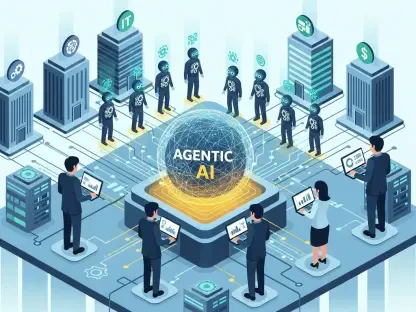

The traditional foundation of corporate computing is undergoing a seismic shift as businesses trade heavy, on-premises hardware for the fluid capabilities of cloud-delivered services. This evolution is no longer a distant projection; it is a current reality where the Software-as-a-Service (SaaS) market is aggressively moving toward a valuation of $1.58 trillion by the early 2030s. For decades, Enterprise Resource Planning (ERP) was characterized by rigid, monolithic installations that demanded significant capital and an army of specialized technicians. Today, that fortress-like model is being dismantled in favor of an agile, decentralized architecture that prioritizes speed and scalability over local control.
This analysis explores the fundamental transformation of the ERP landscape, shifting the focus from physical infrastructure to strategic service orchestration. As companies move away from “all-in-one” legacy suites, they are adopting a framework where the core ERP acts as a stable data repository while specialized SaaS tools handle specific business functions. This transition demands a new set of priorities for technology leaders, including a focus on connectivity, sophisticated risk management, and the breaking down of data silos within a cloud-first ecosystem.
From Monoliths to Managed Services: The ERP Evolution
To grasp the magnitude of this transformation, one must consider the historical limitations that once defined enterprise software. In the previous era, ERP systems were essentially static “systems of record” where every module—from finance to supply chain—was hard-wired into a central core. These environments were notoriously brittle; customization was so deep that even minor updates could trigger catastrophic system failures. Consequently, many organizations remained tethered to ancient software versions, effectively insulating themselves from technological progress to avoid the high cost of upgrades.
The current shift toward SaaS represents a structural realignment rather than a simple change in hosting location. By offloading the maintenance of hardware, security patches, and data center management to service providers, organizations are reclaiming their internal resources for innovation. This background is essential for understanding the industry’s contemporary focus on agility. In the modern market, the value of an ERP is no longer measured by the complexity of its custom code but by its ability to ingest new features and adapt to market shifts in real-time.
Orchestrating the Best-of-Breed Ecosystem
Transitioning from Infrastructure Management to Service Orchestration
As the proliferation of specialized cloud tools accelerates, the role of the information technology professional is being fundamentally redefined. The historic mandate of “keeping the lights on” through hardware maintenance is rapidly becoming obsolete, replaced by a strategic requirement for orchestration. In this new paradigm, the ERP core functions as a stabilized anchor for foundational data, while specialized capabilities—such as advanced talent management or specific logistics tracking—are outsourced to diverse SaaS providers. This means technology teams are evolving into architects of connectivity.
This transition forces a deep focus on negotiating complex service-level agreements (SLAs) and maintaining rigorous identity and access management (IAM) across a sprawling digital landscape. Instead of managing physical server stacks, professionals now ensure that data flows seamlessly between the core system and external applications. This orchestration mode allows companies to be highly selective, empowering individual departments to utilize the best tools available rather than being forced to use the mediocre modules of a single-vendor suite.
Global Drivers and Regional Market Dynamics
The expansion of the SaaS ecosystem is being fueled by three primary catalysts: the relentless pace of digital transformation, the normalization of hybrid work models, and the rapid embedding of Artificial Intelligence (AI) into core business processes. SaaS providers are uniquely positioned to deploy AI-driven features at a scale that on-premises systems cannot match, making the cloud the logical home for next-generation business intelligence. This accessibility has democratized enterprise-grade tools, allowing smaller firms to compete with global corporations through a flexible, pay-as-you-go financial model.
Geographically, the landscape is becoming increasingly complex. While North America continues to drive significant revenue due to its mature digital infrastructure, the Asia-Pacific region—particularly India and China—is emerging as the fastest-growing market. This regional shift introduces significant challenges for ERP leaders who must now navigate a patchwork of diverse regulatory environments, strict data residency requirements, and varying levels of network stability across international borders.
Solving the Challenge of Data Silos and Integration
As organizations assemble these “best-of-breed” software stacks, integration has moved from a technical detail to a primary strategic priority. The greatest risk in a decentralized SaaS environment is the creation of “data silos,” where information trapped in a specialized CRM or HRM system fails to reconcile with the financial core of the ERP. To prevent this fragmentation, modern enterprises are adopting sophisticated “reference architectures” and robust integration platforms that include API management and event-driven data buses.
These frameworks are designed to establish a “single source of truth,” clearly defining which system owns specific data points at any given time. Without this connective tissue, the primary benefits of the cloud—speed and flexibility—are neutralized by the chaos of inconsistent data. Market leaders are those that treat integration as a core competency, ensuring that every new software addition enhances the overall digital ecosystem rather than complicating it with redundant or conflicting information.
Future Trends: AI Integration and Governance
The trajectory of ERP evolution will be increasingly defined by what is known as “intelligent orchestration.” We are moving toward a future where AI is not merely an added feature within a module but the underlying fabric that binds the entire software ecosystem together. Predictive analytics and automated workflows are expected to become standard, allowing systems to suggest proactive adjustments to supply chains or financial forecasts before a human operator even identifies a potential disruption.
Furthermore, there is an anticipated shift in how companies handle regulatory and economic pressures. As “SaaS sprawl” becomes a common logistical burden—with organizations often paying for overlapping or unused tools—centralized governance platforms will rise to prominence. These platforms will be designed to audit and optimize cloud spending in real-time. The future of the enterprise lies in balancing the freedom of decentralized software adoption with the rigorous oversight necessary to maintain fiscal responsibility and cybersecurity.
Strategic Recommendations for Modern Enterprises
To navigate this transformation successfully, businesses must adopt a proactive stance regarding their software architecture. First, organizations should prioritize an “integration-first” mindset during the procurement process, ensuring that any new tool can communicate effectively with the existing core via robust, open APIs. Second, implementing centralized guardrails is essential; this allows individual business units to experiment with specialized tools while ensuring that corporate-wide security and data standards are never compromised by shadow IT.
Additionally, leaders must actively address the threat of “vendor lock-in” by looking beyond initial feature sets. When evaluating potential partners, it is critical to assess the “exit path,” which includes reviewing data export capabilities and the flexibility of contract terms. By insisting on transparency and interoperability, organizations can maintain the agility required to pivot if a vendor’s performance declines or if pricing models become unsustainable over the long term.
The New Era of Enterprise Agility
The surge of SaaS was not merely a temporary trend but a fundamental reconfiguration of how modern businesses operated. The era of the single-vendor monolith ended, replaced by a sophisticated web of interconnected services that prioritized flexibility over permanence. For ERP insiders and business leaders, success in this environment was defined by the ability to orchestrate a vast ecosystem into a coherent, secure, and agile whole.
As the industry moved toward its massive trillion-dollar valuation, the strategic focus remained centered on data governance and seamless integration. By embracing the SaaS model while maintaining a disciplined architectural framework, organizations transformed their ERP systems from rigid back-office tools into dynamic engines of competitive advantage. The landscape of business applications became decentralized, and those who mastered the art of orchestration effectively led the market.