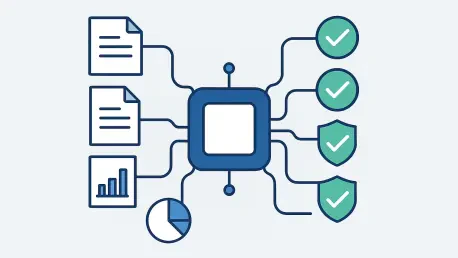

The sheer scale of a modern Indian government tender often results in a mountain of paperwork that would physically dwarf a standard office building, creating a logistical nightmare for even the most diligent procurement officers. When a single project closes for bidding, the resulting avalanche of data includes hundreds of competing technical specifications, financial disclosures, and regulatory certifications. For decades, the process of reviewing these submissions remained a slow, manual labor, tethering officers to stacks of documents and endless spreadsheet rows. This traditional workflow created a significant bottleneck where the sheer volume of information made a truly comprehensive evaluation nearly impossible to achieve within a reasonable timeframe. However, the landscape is shifting in 2026 as specialized intelligence layers begin to replace manual sorting with automated reasoning that can evaluate over 500 bidders for a single project in less than twenty-four hours.
The move toward this automated future is not merely about speed; it is about the fundamental integrity of public spending. In a country where government projects represent massive investments of taxpayer funds, the accuracy and transparency of the selection process are non-negotiable. By integrating advanced machine learning, India is effectively eliminating the human error and subjective bias that once plagued the procurement lifecycle. This shift represents a broader movement toward intelligent governance, where technology acts as a shield against inefficiency and a catalyst for national development.
Moving Beyond the Manual Bottleneck of Government Tenders
The previous reliance on manual intervention created a systemic liability that often delayed critical infrastructure and public service projects. In the old model, the time required to verify every certification and cross-reference every financial claim meant that departments were forced to choose between exhaustive accuracy and operational speed. This tension often resulted in partial sampling or surface-level reviews that could inadvertently overlook non-compliant bids or better-value propositions. The inefficiency was not a result of a lack of effort by officials, but rather a limitation of the tools available to manage the exponential growth of digital data in the procurement space.
Furthermore, the manual bottleneck meant that any discrepancy found late in the process could reset the entire timeline, causing friction between government entities and private vendors. The shift to an AI-driven approach allows for a level of data synthesis that was previously unimaginable. By automating the extraction and classification of data from thousands of pages, the system provides a level of clarity that allows procurement officers to focus on strategic decision-making rather than the clerical drudgery of document verification. This transformation ensures that the most qualified vendors are selected based on merit and adherence to specifications, rather than merely surviving a marathon of administrative hurdles.
The Necessity of Intelligent Governance in a Regulatory Ecosystem
While the Government e-Marketplace (GeM) successfully digitized the front-end access for vendors, the internal “heavy lifting” of validation and decision-making remained trapped in legacy methods for far too long. Public procurement in India is governed by the strict General Financial Rules (GFR) and oversight from the Central Vigilance Commission (CVC), making the evaluation process a high-stakes endeavor. Every decision must be defensible against intense scrutiny, yet manual reviews are inherently prone to inconsistency. This vulnerability is especially evident during audits or when responding to Right to Information (RTI) queries, where the lack of a clear, system-generated audit trail can lead to significant administrative challenges.
In an environment where projects involve national infrastructure and massive public funds, the transition to a system-driven process is essential for maintaining accountability. An intelligent governance framework ensures that every rule is applied uniformly across all bids, eliminating the risk of subjective interpretation. This consistency is vital for fostering trust within the vendor ecosystem, as companies can be certain that their submissions are being evaluated on a level playing field. Moreover, by baking compliance directly into the evaluation software, government departments can protect themselves from the legal and reputational risks associated with procurement errors.
Leveraging Multimodal AI for Unprecedented Procurement Efficiency
The backbone of this transformation is multimodal AI technology, which is designed to interpret a wide variety of data types simultaneously. Unlike traditional software that struggles with scanned PDFs or complex financial tables, this advanced technology can “read” and reason through diverse formats, including multilingual content often found in regional tenders. Recent live deployments at major oil-sector Public Sector Undertakings (PSUs) have already proven the viability of this approach. These systems processed more than 16,000 bids with an accuracy rate exceeding 98.7%, demonstrating a level of precision that manual teams simply cannot maintain over such large datasets.
By shifting from partial sampling to 100% bid coverage, these tools have successfully reduced evaluation timelines by up to 99%. This efficiency allows critical public projects to move from the bidding phase to the execution phase in a fraction of the time. What once took weeks of collective manual labor can now be completed in a single day of automated processing. This speed does not come at the cost of quality; rather, it enhances it by providing a comprehensive analysis of every single document submitted, ensuring that no detail—no matter how small—is ignored during the technical or financial evaluation.
Sovereignty and Security in the Age of Intelligent Automation
Industry experts, including Valiance Solutions CEO Vikas Kamra, have pointed out that the future of governance relies heavily on “Sovereign AI.” This concept refers to systems built on India-hosted, open-source models that eliminate dependency on foreign technology providers. For sensitive government work, data security is the primary concern, and sovereign AI ensures that all information remains within national borders. These platforms are designed to be deployed in “air-gapped” systems or MeitY-approved data centers, satisfying the most stringent requirements of defense and high-security government sectors.
Integrating international security standards such as ISO 27001 and SOC 2 further addresses the anxieties of public officials regarding cloud-based automation. The goal is to move toward a paradigm where the procurement officer’s role is elevated from a manual laborer to an informed supervisor. Instead of spending months verifying signatures and tax certificates, officials now oversee a system that does the work for them, flagging only the anomalies that require human judgment. This shift empowers the workforce to handle larger volumes of tenders without a corresponding increase in headcount or administrative stress.
A Strategic Framework for Scaling AI Across Public Departments
Adopting these advanced tools does not require a total destruction of existing digital infrastructure. Instead, the use of an enterprise SaaS model allows for a seamless integration that focuses on scalability and ease of use. The process begins with automated data retrieval from existing government portals, followed by an evidence-based evaluation. The AI provides cited sources for every finding it makes, which is a critical feature for satisfying audit requirements. This means that if a bid is rejected for a missing certification, the system can point exactly to where that document should have been, providing a clear and transparent justification.
This framework is highly flexible, allowing organizations to implement the technology on a per-tender basis. This accessibility means that even small, state-level departments can leverage the same advanced intelligence as the largest national PSUs. The journey from automated document retrieval to RTI-compliant reporting creates a standardized quality of governance across all levels of the Indian administration. As this technology continues to scale from 2026 to 2028, it will likely become the standard operating procedure for all public expenditures, ensuring that digital transformation is a lived reality for every government office.
The integration of AI into public procurement reached a definitive turning point as departments recognized that traditional methods were no longer viable in a high-speed digital economy. Government agencies that adopted these intelligent systems successfully moved toward a more transparent and efficient model of governance. The transition was marked by a commitment to data sovereignty and a shift in the workforce’s focus toward strategic oversight rather than manual data entry. By prioritizing evidence-based evaluations and automated compliance, these organizations protected public funds and accelerated the delivery of vital national projects. Leaders across the sector concluded that the path forward required a permanent move away from manual bottlenecks and toward a system-driven future where technology served as the ultimate guardian of public integrity. The focus then shifted toward expanding these capabilities into contract management and post-award monitoring to ensure end-to-end accountability in the years following the initial rollout.