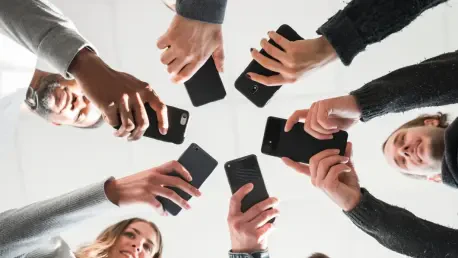

The declaration of loneliness as a public health emergency has catalyzed a powerful technological response aimed at rebuilding the very fabric of social connection, a challenge felt acutely by a diverse population. This includes remote workers who have lost the spontaneous interactions of office life and younger generations navigating the complex task of forming adult friendships. In a cultural landscape where online dating apps have thoroughly destigmatized the act of forging relationships through digital platforms, a new frontier has opened. This widespread acceptance created the perfect conditions for a wave of applications engineered not for romance, but for the universal human need for platonic companionship. These platforms are purpose-built to foster friendships and cultivate vibrant local communities, representing a significant shift in how technology addresses our social well-being and a direct answer to a growing societal need.
The Burgeoning Market for Platonic Connections
The market for applications dedicated to friendship is exhibiting robust financial health and significant user engagement, signaling a clear demand for these services. A recent analysis of over a dozen prominent friendship apps revealed they have collectively generated approximately $16 million in U.S. consumer spending within the current year alone. This financial momentum is matched by impressive user adoption, with the same platforms accumulating around 4.3 million downloads across the United States. The fundamental proposition driving this growth is the promise of a structured and less intimidating path to social connection. By offering a digital space where every participant has explicitly stated their goal is to make friends, these apps effectively dismantle the ambiguity and social anxiety that can accompany attempts to initiate friendships in physical spaces, such as approaching a stranger at a coffee shop. This curated environment lowers the perceived risk of rejection and makes the entire process feel more accessible and less daunting for users seeking to expand their social circles.
The evolution of this digital landscape is marked by both the endurance of foundational platforms and the strategic entry of major industry players from adjacent markets. A cornerstone of this space, Meetup, has been connecting individuals with shared interests since its inception in 2002. Its enduring model allows users to discover and join a vast array of groups centered on specific hobbies or professional fields, RSVP to local events, and engage with fellow members through integrated chat functions. More recently, the growing demand for dedicated friendship services prompted major dating apps to expand their offerings. Bumble, for example, introduced its BFF mode in 2016, which it later spun off into a standalone application in 2023. This strategic separation was followed by a significant redesign that placed a greater emphasis on facilitating group meetups, a clear acknowledgment that many users are looking to build a broader social network rather than just a single one-on-one connection. This move underscores a wider industry trend toward creating more holistic community-building tools.
Niche Communities and Innovative Models
As the market for friendship apps matures, there is a clear trend toward specialization, with new platforms emerging to serve the unique needs of specific demographics and communities. Les Amís, for instance, carves out a vital niche by creating a safe and inclusive environment for women, transgender, and LGBTQ+ individuals. The application employs AI to match users based on shared passions and actively encourages participation in local events like pottery classes and book clubs. Its unique weekly cycle, where new matches are delivered every Monday, is designed to help users proactively plan their social week. Similarly, platforms like Meet5 and Wyzr Friends are tailored specifically for adults aged 40 and older. Meet5, a European app that has seen a successful recent launch in the U.S., concentrates on bringing users together for group activities such as concerts and hiking trips. Wyzr Friends caters to a similar audience, including empty nesters and those who are divorced, utilizing a familiar swipe-based interface to connect people for in-person activities based on mutual interests.
Beyond demographic targeting, a new class of applications is pioneering innovative event-based and algorithmic models to foster deeper connections. Timeleft offers a highly structured and unique concept: weekly curated dinners that bring together small groups of strangers. Its algorithm meticulously matches five users based on a combination of age, gender, and personality, intentionally revealing only minimal details beforehand to build a sense of anticipation. The entire experience is designed to be a complete social evening, enhanced with a conversation-starter game and an organized after-party. Another platform, 222, uses personality test results to form compatible groups for in-person meetups at venues like wine bars, including a feature that allows users to bring a plus-one to alleviate social anxiety. Meanwhile, Pie leverages an AI-driven personality quiz to foster compatibility, organizing event attendees into pre-vetted groups of six and placing them in a private chat before the event, allowing them to build rapport and break the ice ahead of meeting in person.
Forging Connections in a Digital Age
The final frontier in this evolving landscape is the integration of location-based technology and real-time social discovery. Platforms like Clyx are focused on helping users find local events by aggregating data from sources such as Ticketmaster and TikTok. Its social layer then allows users to see which of their contacts plan to attend and receive recommendations for other users to connect with at those same events, bridging the gap between digital planning and real-world interaction. In major urban centers, newly launched apps like Mmotion are merging social discovery with real-time location tracking. Users can join interest-based groups, view a map of other active members nearby, and send messages to initiate spontaneous connections. The platform also doubles as a discovery tool, highlighting new restaurants and venues to explore, and it maintains a curated user base through an application process. These innovations reflect a move toward facilitating more organic and immediate social opportunities, leveraging technology to make the physical world feel more connected.
Ultimately, the landscape of these emerging platforms revealed several key trends that reshaped how digital tools facilitate human connection. There was a definitive shift away from the one-on-one matching paradigm popularized by dating apps and toward group-based activities, which better reflected a widespread desire for broader community integration. The use of sophisticated algorithms and AI became more prevalent, moving beyond simple interest-matching to predict personality compatibility for more meaningful relationships. Simultaneously, the market fragmented to serve niche demographics, offering more tailored and effective experiences for users of different ages, identities, and lifestyles. Across all these diverse models, the central goal remained the same: to facilitate genuine, in-person connections at a local level. The rise of these innovative applications signified a direct and robust technological response to a profound societal challenge, providing a multitude of new pathways for individuals to forge platonic bonds.