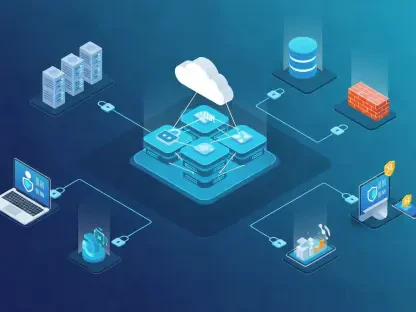

The rapid industrialization of machine learning has transformed the corporate data center into a high-velocity AI factory, yet this shift has simultaneously expanded the digital attack surface to an unprecedented scale. Organizations are no longer merely defending static databases; they are now tasked with shielding dynamic neural networks and complex inference pipelines from sophisticated threats like prompt injection and data poisoning. This review examines how the sector is pivoting toward a security-by-design philosophy to ensure that artificial intelligence remains a resilient driver of innovation rather than a liability.
The Evolution and Foundation of Enterprise AI Security
The shift from traditional IT environments to specialized machine learning workflows necessitated a fundamental change in how defense layers are constructed. Historically, security was an external wrapper applied to software after development was complete, but the unique vulnerabilities of neural networks—such as model inversion or gradient leakage—rendered this reactive approach obsolete. Today, the focus has moved toward securing the entire lifecycle, ensuring that data integrity is maintained from the initial collection phase through to the deployment of large-scale models in production.
By treating AI security as a foundational requirement, companies are beginning to mitigate risks that generic cybersecurity tools often overlook. This evolution is driven by the realization that an AI model is only as valuable as the trust placed in its outputs. Consequently, the industry is seeing a transition where security protocols are baked into the architectural blueprints of AI factories, allowing for a more proactive defense against adversarial attacks that target the logic of the models themselves rather than just the network perimeter.
Core Components and Technical Architecture
Integrated AI Infrastructure Protection
Modern security solutions have moved deep into the hardware stack, integrating directly with GPU-accelerated environments and private cloud systems. This physical-to-virtual protection layer is essential because AI workloads require massive computational power, making them prime targets for resource hijacking or unauthorized access. By securing the silicon and the hypervisor, providers like HPE and NVIDIA ensure that the underlying infrastructure remains an isolated, high-integrity environment where sensitive training processes can occur without the risk of external interference.
Unified Security Hubs and Cross-Layer Telemetry
The implementation of centralized command centers, such as TrendAI Vision One™, represents a significant leap in visibility across fragmented technology stacks. These platforms leverage cross-layer telemetry to aggregate data from endpoints and cloud containers in real-time, allowing security teams to manage exposure more effectively. This centralized approach is unique because it connects the dots between a minor vulnerability in a microservice and a potential exploit in an AI codebase, providing a holistic view that was previously impossible with siloed security tools.
Current Trends and Strategic Collaborations
A defining trend in the current market is the rise of turnkey, co-developed solutions that combine high-performance hardware with “model-aware” security software. This collaborative model simplifies the deployment of secure AI environments, moving away from fragmented, “do-it-yourself” security configurations toward standardized frameworks. Furthermore, the emergence of “SecOps for AI” indicates a professionalization of the field, where security operations are specifically tailored to the nuances of the machine learning lifecycle, focusing on model monitoring and behavioral analysis rather than just traditional log management.
Real-World Applications and Use Cases
Secure Model Development and Deployment
In highly regulated sectors like finance and healthcare, organizations are utilizing digital twin simulations to stress-test their security postures before going live. By using environments like NVIDIA DSX Air, developers can simulate cyberattacks against their models in a virtual space, identifying how a system might leak data or produce biased results under duress. This allows for the refinement of defenses without exposing actual patient records or proprietary financial data to any real-world risk, bridging the gap between theoretical safety and operational reality.
Detection of Shadow AI and Unsanctioned Microservices
A pervasive challenge for the modern enterprise is the unauthorized use of external AI tools by employees, often referred to as “shadow AI.” Modern security platforms now include specialized monitoring capabilities to detect when internal data is being fed into unsanctioned third-party APIs or external models. This proactive oversight is critical for preventing intellectual property leakage and ensuring that all artificial intelligence usage within the organization adheres to strict governance and compliance standards, thereby maintaining a clean and audited data ecosystem.
Technical Hurdles and Market Challenges
Despite these advancements, the high computational cost of running real-time security scans on massive, multi-terabyte datasets remains a significant friction point. There is often a trade-off between the depth of a security scan and the latency of the AI application, which can hinder the user experience in real-time inference scenarios. Additionally, the global talent shortage is acute; there is a pressing need for professionals who possess the rare combination of deep cybersecurity expertise and an understanding of neural network mathematics, a gap that currently slows the adoption of these advanced frameworks.
Future Outlook and Technological Trajectory
The trajectory of enterprise AI security points toward a future defined by autonomous, self-healing systems capable of mitigating adversarial threats at machine speed. We should expect a deeper convergence between security software and silicon-level protections, where model weights are encrypted even during active computation. As these technologies mature, they will likely become the standard substrate for all enterprise software, creating an AI-native economy that is resilient by default and capable of defending itself against increasingly automated cyber threats.
Final Assessment and Review Summary
The transition toward integrated AI security was a necessary response to the complexities of modern machine learning infrastructure. By embedding protection into the hardware and software layers, organizations successfully moved beyond reactive defenses to a more strategic, proactive posture. The collaboration between infrastructure giants and security specialists provided a scalable roadmap that addressed both technical vulnerabilities and governance requirements. Ultimately, these frameworks proved to be the essential link that allowed enterprises to scale their AI initiatives while safeguarding their most valuable data assets.