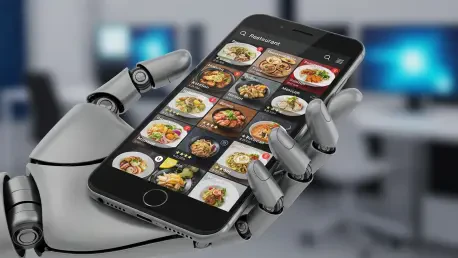

With the digital landscape for local discovery more crowded than ever, DoorDash is making a bold move beyond its delivery roots with Zesty, a new AI-powered social app. This venture pits them against giants like Google and the viral nature of TikTok, betting on a specialized blend of artificial intelligence and community curation. We sat down with our resident SaaS and software expert, Vijay Raina, to dissect this strategy. We’ll explore the specific market gaps Zesty aims to fill, how its AI synthesizes disparate data to create truly personal recommendations, and whether its unique social-first approach can overcome the inertia of established user habits.
The article highlights Zesty’s launch in the SF Bay Area and New York as a move beyond delivery. What specific gaps in the current restaurant discovery process did you identify that platforms like Google Maps or TikTok fail to address, prompting the development of this AI-powered social app?
The fundamental gap is the disconnect between raw data and human experience. Google Maps gives you a firehose of information—reviews, hours, photos—but it’s incredibly noisy and lacks nuance. You spend so much time sifting through thousands of anonymous, often contradictory reviews to figure out the vibe of a place. On the other end, TikTok offers curated vibes but in a completely unstructured, non-searchable format. You might see a great spot, but good luck finding it again next week. Zesty is trying to bridge that gap. It’s designed to translate a subjective feeling, like the need for a “low-key dinner for introverts,” into a concrete, actionable recommendation, saving you from the tedious digital detective work across multiple apps.
Andy Fang mentioned Zesty aggregates data from DoorDash, Google Maps, and TikTok. Can you walk us through how the AI chatbot synthesizes these varied sources to interpret a subjective prompt like “a low-key dinner for introverts” and provide a genuinely personalized, trustworthy recommendation?
Think of it as an expert curator. From Google, the AI pulls logistical data and a massive corpus of review text. From TikTok, it ingests visual and audio cues—the background noise level, the spacing between tables, the aesthetic. From DoorDash’s own ecosystem, it has powerful data on what’s popular, at what times, and with what kind of order patterns. So when you type in that prompt, the AI isn’t just searching for the keyword “quiet.” It’s triangulating data points. It correlates review text mentioning “intimate” or “cozy” with TikTok videos showing dimly lit corners and cross-references that with DoorDash data showing a high frequency of two-person orders. This multi-source synthesis creates a recommendation that feels less like a database query and more like advice from a friend who truly gets what you’re looking for.
Zesty is described as a social network where users can share photos, follow others, and save recommendations. What specific features or incentives are built into the app to encourage this social sharing, and what key metrics will you use to define success for the social aspect versus the AI search function?
The core incentive is building a trusted, personalized ecosystem. The app allows you to not only save places but to follow people whose taste you genuinely respect. This immediately makes recommendations feel more reliable than a sea of anonymous reviews. You’re building your own curated guide to the city. To measure success, DoorDash will have to look at two different sets of metrics. For the AI search, they’ll track conversion rates—how many searches lead to a saved or shared recommendation. For the social side, it’s all about engagement: daily active users, session length, and the volume of user-generated content like photos and comments. The ultimate sign of success will be when these two functions create a flywheel: the AI surfaces a hidden gem, a user shares their great experience, and that social proof then trains the AI to make even better recommendations for others.
The article notes that users might already use ChatGPT or prefer not to download a new app. Beyond integrating with DoorDash accounts, what is Zesty’s core value proposition to win over these users, and how will it ensure its recommendations are consistently better than other AI tools?
Its value proposition is specialization. A tool like ChatGPT is a generalist; it’s pulling from a vast, but often generic, swath of the internet. It can give you a list, but it lacks the real-time, hyperlocal, and food-specific data Zesty is built on. Zesty’s key advantage is its deeply integrated data pipeline. By connecting to your DoorDash account, it doesn’t just guess your preferences; it knows them based on your actual order history. This creates a powerful personalization loop. It ensures its recommendations are consistently better by being the most focused tool for the job. It’s not trying to do everything; it’s trying to do one thing—local restaurant discovery—better than anyone else by combining proprietary data, real-time social signals, and a dedicated user experience.
What is your forecast for the future of AI-powered local discovery?
I believe we are moving away from static search bars and toward dynamic, conversational concierges. The future isn’t about you asking for “Italian restaurants near me.” It’s about an AI knowing you had a long day at work, seeing it’s raining, and proactively suggesting a cozy pasta place you’ve never tried that has immediate seating and is on your route home. This next wave will be defined by hyper-personalization, seamless integration with services like reservations and payments, and a blend of AI efficiency with authentic human curation. The platforms that succeed will be the ones that feel less like a tool and more like an intuitive, indispensable local companion.