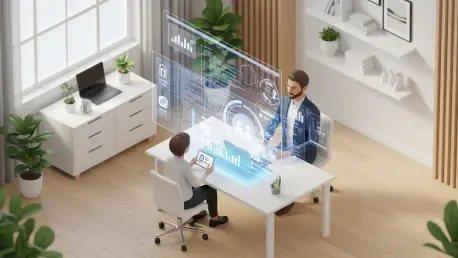

The strategic acquisition of The Interaction Company by the industry disruptor Cognition represents a monumental shift in how the technology sector perceives the relationship between autonomous software agents and the human engineers who oversee them. This high-profile deal, reportedly valued in the low nine figures, emphasizes the transition from purely utility-driven tools to systems that prioritize social intelligence and rapport. By integrating the personality-driven interaction model of Poke into the autonomous coding agent Devin, Cognition is redefining the competitive landscape for artificial intelligence. This move suggests that the future of software development relies not just on raw computational power, but on the ability of machines to integrate seamlessly into human social structures.
The analysis presented here examines the technical and economic motivations behind this union and explores how human-centric design is becoming a primary differentiator in the market. The integration serves as a blueprint for a future where technical proficiency and emotional resonance are equally weighted in professional environments. Stakeholders can expect a transformation in how development teams collaborate with their digital counterparts, as the industry moves away from transactional interfaces toward a model of persistent, relatable co-working.
The Evolution of AI Interaction: Beyond Utility to Personality
The current trajectory of artificial intelligence is moving away from sterile, command-line interfaces toward more human-centric experiences that mirror natural conversation. Historically, technical tools focused on precision and speed, often neglecting the user experience in favor of functional output. However, the rise of more sophisticated agents has revealed that a lack of social nuance can lead to a sense of isolation for the human developers working alongside these “black box” systems. Cognition’s strategy involves injecting a layer of personality into Devin to solve this friction.
This shift is driven by the realization that software development is an inherently collaborative and high-pressure activity. By utilizing the humor and familiarity that defined Poke’s success, Cognition aims to create an environment where the AI acts as a trusted peer rather than a rigid instruction-follower. This evolution signals a maturing market where the psychological comfort of the user is recognized as a vital component of long-term productivity and adoption.
From Chatbots to Autonomous Agents: A Brief History of AI Development
To appreciate the significance of this acquisition, it is necessary to look at the progression of AI tools over the last few years. Early development was limited to basic pattern matching, which often frustrated professionals with its lack of context and rigid responses. While Large Language Models improved fluency, most tools remained strictly transactional, maintaining a hard boundary between the human user and the machine. This dynamic placed a constant cognitive load on developers, who had to translate their needs into language the AI could parse.
Cognition disrupted this paradigm by introducing Devin, which could plan and execute complex tasks with minimal oversight. Despite this technical leap, the industry observed that autonomous agents still required a more intuitive way to communicate progress and handle errors. Meanwhile, Poke gained massive traction by behaving like a friend on platforms such as iMessage and Telegram. The fusion of these approaches addresses the missing link in autonomous systems: the ability to build a working relationship through recognizable social cues and persistent engagement.
Revolutionizing the Developer Experience Through Social Intelligence
The Power of Personality in Technical Environments
Developers are social creatures who thrive on effective communication, and the Poke acquisition recognizes that code is only one part of the building process. By adopting a personality-first philosophy, the new iteration of Devin can report bug fixes or suggest architectural changes with the tone of a seasoned colleague. This approach leverages data from Poke’s rapid growth, where the assistant facilitated millions of messages by using slang and high-engagement messaging. Such a change transforms the AI from a stagnant utility into a dynamic participant that understands the culture of the team it serves.
Solving the Operational Paradox of High-Engagement AI
While Poke’s user engagement was industry-leading, the startup faced the significant financial burden of maintaining high-engagement interactions at scale. This acquisition offers a pragmatic solution to these operational hurdles by merging Poke’s front-end philosophy with Cognition’s robust technical infrastructure. Utilizing the advanced SWE-1.7 software engineering model allows the conversational layer to run on a more powerful engine. This ensures that the personality of the agent does not come at the expense of speed or the reliability required for high-stakes enterprise coding.
Redefining Professional Collaboration and Memory
A significant limitation of existing AI tools has been their lack of long-term continuity across different project sessions. The synthesis of Poke and Devin aims to solve this by creating a proactive agent capable of maintaining a “memory” of past interactions and developer preferences. By leveraging sophisticated orchestration capabilities, the agent can handle multi-session tasks without requiring constant re-onboarding. This level of depth allows the AI to learn the specific nuances of a project, reducing repetitive instructions and fostering a more efficient, long-term collaboration.
The Future Landscape of Autonomous Team Members
Looking ahead, the market will likely see a surge in specialized AI agents that are judged by their “EQ” as much as their “IQ.” We are entering an era where the distinction between a software tool and a team member is increasingly blurred, leading to agents customized for specific organizational cultures. This trend will drive significant innovation in memory management and context-awareness, as agents must remember not just the code they wrote, but the social context in which they wrote it.
Economically, this shift may change how AI services are priced, moving from traditional per-seat licensing to models based on outcomes or the value of a digital “teammate.” Regulatory bodies are also expected to take a closer look at these humanized agents as the psychological impact of relatable AI becomes more pronounced. Predictions suggest that in a short time, an AI agent without a distinct, humanized interface will be considered as obsolete as a computer lacking a graphical user interface.
Strategic Takeaways for Navigating the AI Shift
Businesses must adapt their strategies to prioritize the user experience and emotional resonance of the AI tools they deploy. It is no longer sufficient to possess the most powerful underlying model; the interface must encourage trust and seamless integration into existing workflows. Engineering leaders should begin treating autonomous agents as dynamic members of the development lifecycle, requiring a unique form of cultural alignment and onboarding similar to human hires.
For individual professionals, developing “AI literacy” will become a vital skill for career longevity. This involves learning how to manage persistent digital colleagues and communicating effectively with nuanced, proactive agents. Organizations must also establish clear guidelines to ensure the agent’s personality remains professional and aligned with company values. This proactive approach helps avoid the potential pitfalls of over-familiarity while maximizing the benefits of a more intuitive and responsive development environment.
Bridging the Gap Toward a Human-Centric AI Future
The acquisition of Poke by Cognition marked a significant milestone in the journey to humanize artificial intelligence within the technical sector. This move highlighted the reality that as machine capabilities expanded, success depended on an agent’s ability to act as a relatable and proactive partner. The industry realized that the most effective tools were those that complemented human nature rather than attempting to replace it. By prioritizing social intelligence, organizations moved toward a future where technology empowered teams through meaningful, multi-dimensional collaboration.
Strategic outcomes from this deal suggested that the next phase of innovation focused on refining the emotional intelligence of large-scale models. Stakeholders recognized the necessity of blending technical excellence with rapport to navigate the complexities of modern engineering. Ultimately, the shift toward humanized coding assistants redefined the developer experience, ensuring that digital growth remained anchored in the social dynamics of the workplace. This evolution set a new standard for how high-level software development occurred in a more intuitive and human-centric world.