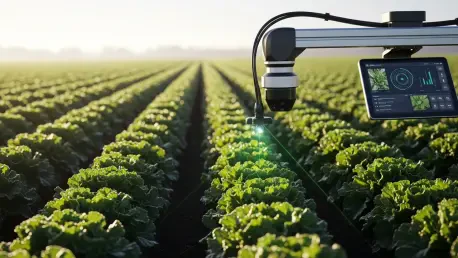

We’re joined today by Vijay Raina, a leading expert in enterprise SaaS technology and software architecture. He’s here to break down a significant leap forward in agricultural tech: an AI model that gives farmers unprecedented, real-time control over weed management. We’ll explore how this new Large Plant Model, developed by Carbon Robotics, is transforming the simple act of identifying a weed into an instant, data-driven decision, and what it signals for the future of farming.
Your previous process for identifying a new weed took about 24 hours for retraining. With the new Large Plant Model, what does the “instant” recognition process look like for a farmer in the field? Could you walk me through the steps they take?
It’s a complete paradigm shift from what they were used to. Before, if a new weed appeared, there was this frustrating 24-hour lag where we had to take data, create new labels, and push a retrained model to the machine. Now, the experience is immediate and empowering. The farmer is out there, the LaserWeeder is working, and they spot an unfamiliar plant. They can go right to the robot’s user interface, see the images the machine is capturing, and simply select the photo of that new plant. Right then and there, they can designate it as a weed to be killed. The model understands at such a deep level that there’s no retraining or labeling needed; the command is executed instantly.
The Large Plant Model was trained on over 150 million photos from farms in 15 countries. How does this diverse dataset help the model identify the same weed in different soil or lighting conditions, and what was a key challenge in standardizing this global data?
That massive dataset is the absolute core of the model’s power. With over 150 million labeled plants from farms across the globe, the AI has seen it all. It’s not just about identifying a specific plant in perfect lighting; it’s about understanding its fundamental structure. This means when it encounters the same weed species in different soil, which might slightly alter its color, or under the harsh morning sun versus an overcast sky, the model recognizes it. The key challenge we overcame was moving past the need for constant, manual relabeling for every single variation. The old way was a bottleneck. Now, the neural net has such a vast library of experience that it can infer what a plant is and what its structure is like, even if it’s a variation it has never seen before.
When a farmer encounters an unfamiliar plant, they can identify it as a weed in real time through the user interface. Can you detail how this interaction works and what safeguards prevent a farmer from accidentally targeting a valuable crop during this process?
The interaction is designed for intuitive, on-the-fly decision-making. The user interface presents the farmer with photos that the machine has collected as it moves through the field. The farmer’s role is explicit: they tell the machine what to protect and what to kill. When they see that unfamiliar plant, they select its image and tag it as a weed. The safeguard is built into this very process of deliberate selection. The farmer is in complete control, actively identifying the unwanted plants. They are essentially curating the target list, which inherently protects the valuable crops they’ve instructed the machine to leave untouched. It’s a direct, clear instruction from human to machine, which minimizes the risk of error.
With over $185 million raised from backers like Nvidia NVentures, your company has significant resources. How is this funding being allocated to not just fine-tune the LPM, but also to expand the operational footprint of your LaserWeeder fleet into new regions or crop types?
That $185 million in capital is a powerful engine for our growth on two fronts. First, it directly fuels the continuous improvement of the Large Plant Model. The model gets smarter with every plant it sees, so a significant portion of that investment goes into the data pipeline and R&D to further fine-tune its capabilities as our fleet collects more information. Secondly, and just as importantly, it supports our physical expansion. We are deploying more LaserWeeder units to our existing 100+ farms and pushing into new territories and agricultural markets. This creates a virtuous cycle: the more machines we have in more fields, the more diverse data the LPM receives, which in turn makes the entire system more valuable for every farmer using it.
What is your forecast for AI-powered robotics in agriculture over the next five years?
I believe we are at the very beginning of a revolution. Over the next five years, AI-powered robotics will become an indispensable part of farm management, moving from a niche technology to a standard tool. We’ll see advancements beyond weeding to include precision harvesting, nutrient delivery, and pest detection, all operating with a similar level of “instant” intelligence. These systems will provide farmers with a depth of data and operational efficiency that is unimaginable today, allowing them to make smarter, more sustainable decisions that increase yields while reducing environmental impact. The farm of the near future will be a highly connected, data-rich ecosystem, with autonomous robots as its tireless workers.