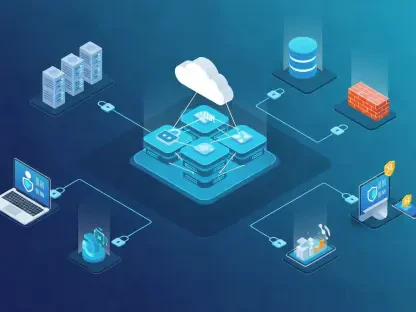

The digital storefront that once defined a generation of software-as-a-service companies is quietly being dismantled, not by a competitor, but by the very platforms that delivered its customers. The established workflow of search, click, and engage is becoming a relic of a bygone era, replaced by a conversational layer where artificial intelligence acts as the ultimate intermediary. For SaaS businesses built on attracting and retaining users through carefully crafted interfaces, this evolution from a web of destinations to a world of AI-driven actions represents an existential crossroad. The strategies that guaranteed growth are now liabilities, and the path to relevance demands a radical reimagining of what a software product is and how it delivers value.
The SaaS Status Quo: A World Built on Clicks and Interfaces
For over a decade, the Software-as-a-Service industry has thrived within a predictable and highly optimized ecosystem. Success was defined by a company’s ability to create a compelling, intuitive Graphical User Interface (GUI) and drive traffic to it. Digital marketing funnels were meticulously engineered to capture user attention, guide them through a website, and convert them into paying customers. This model positioned the SaaS platform as the final destination where value was created and delivered, with the user’s direct interaction being the central focus of product design, marketing, and monetization.
At the heart of this paradigm was a symbiotic relationship with search engines. Platforms like Google acted as the primary discovery layer, indexing the web and directing user queries to the most relevant SaaS providers. In turn, these providers built their online presence around search engine optimization, ensuring they appeared prominently for keywords related to the problems they solved. This created a reliable and scalable pipeline: a user had a need, searched for a solution, discovered a service, and then engaged with that service’s proprietary interface to fulfill the need. The entire digital economy was built on this foundation of human-driven search and human-navigated interfaces.
The Inevitable Shift: From Search Engines to Action Engines
The Rise of Zero-Interface: When AI Becomes the User
The fundamental shift underway is the evolution of the user itself. The primary interactor with a SaaS platform is no longer guaranteed to be a human navigating a visual layout. Instead, it is increasingly an AI agent, executing tasks on a human’s behalf. This transition toward a zero-interface model replaces the click-based journey with a single, intent-driven command. A user does not need to browse multiple travel sites to book a flight; they simply state their destination and preferences to an AI, which then orchestrates the entire booking process in the background.
This change is catalyzed by the transformation of search engines into “action engines.” Google’s AI Mode, for example, is no longer content with merely providing links to information. It now aims to fulfill the user’s ultimate goal directly within its own environment. It has moved from being a passive information retriever to an active task executor. Consequently, user behavior is being reconditioned. The habit of searching, evaluating, and then acting on a third-party site is being replaced by the convenience of delegating the entire workflow to a trusted AI assistant.
Gauging the Tectonic Shift: Market Signals and Growth Projections
This technological evolution is not a distant forecast; it is a present-day reality reflected in market behavior and industry investment. Recent data indicates a dramatic acceleration in the adoption of AI agents for completing complex, multi-step tasks that were once the exclusive domain of dedicated SaaS applications. Consumers are rapidly growing accustomed to the efficiency of delegating scheduling, purchasing, and planning to AI assistants, signaling a permanent change in expectations for digital convenience.
However, a critical gap persists between this market demand and the operational readiness of most organizations. While a majority of companies are experimenting with AI, a far smaller fraction has successfully implemented the architectural changes necessary to participate in an agentic ecosystem. Most current AI initiatives remain inwardly focused on internal process optimization rather than externally focused on making their core services accessible to third-party AI agents. This disparity highlights a significant vulnerability, as the market leaders of tomorrow will be those who bridge this gap first.
The Great Unbundling: Existential Threats for the Modern SaaS
For SaaS companies built on the traditional UI-centric model, this agentic shift poses a severe and immediate threat of disintermediation. When an AI agent becomes the primary interface between the user and the service, the SaaS platform risks becoming an invisible, commoditized utility. Its carefully crafted brand identity, user experience, and direct customer relationship are all bypassed. The service is reduced to a backend function, competing with others on price and reliability alone, while the AI platform captures the user’s loyalty and controls the point of transaction.
This strategic challenge is compounded by significant technological hurdles. Many established SaaS platforms are built on monolithic architectures that tightly couple the business logic with the user interface, making it difficult to expose core functions through an API. Shifting from a UI-first to an API-first mindset requires more than just a technical refactoring; it demands a deep, cultural change within product and engineering teams. For companies with years of investment in legacy infrastructure, the process of decoupling services to make them “headless” and machine-consumable is a daunting and expensive proposition, yet it is no longer optional.
Navigating the New Frontier: AI Agency, Data Privacy, and Compliance
The rise of autonomous AI agents acting on behalf of users introduces a new and complex regulatory landscape that SaaS providers must navigate. When an AI is authorized to execute transactions, questions of liability, data consent, and transactional authority become paramount. Companies must establish clear protocols for how an agent can access and use personal data, ensuring compliance with privacy regulations like GDPR and CCPA in a context where the user is not directly interacting with their service. Determining who is responsible for an erroneous transaction—the user, the AI provider, or the SaaS platform—is a legal gray area that requires new standards and contractual frameworks.
This new operational model also necessitates a complete rethinking of security and authentication. Traditional methods based on human-provided credentials are insufficient for a world of machine-to-machine communication. SaaS platforms must implement robust, secure protocols that allow trusted AI agents to access user accounts and perform actions without compromising security. This involves adopting standards like OAuth 2.0 for delegated authority and developing sophisticated systems to verify that an AI agent is acting legitimately within the scope of the permissions granted by the user.
The Agent-Ready Future: Blueprints for Thriving in a Headless World
In this emerging ecosystem, market leadership will not be determined by the most polished user interface but by the most robust and accessible backend architecture. The successful SaaS companies will be those that embrace a “headless” model, where their core services are decoupled from the presentation layer and exposed through well-documented, reliable APIs. This API-first approach transforms the product from a destination into a platform, enabling seamless integration with a multitude of AI agents, assistants, and other third-party systems.
Consequently, the metrics of value are shifting dramatically. The focus moves from front-end concerns like user engagement and conversion rates within a proprietary UI to back-end fundamentals. Key performance indicators will include API uptime, response latency, data accuracy, and the overall reliability of machine-to-machine transactions. In a headless world, the user experience is defined not by visual design but by the seamless, instantaneous, and accurate execution of a user’s intent by an AI agent powered by the SaaS platform’s backend services.
The 2026 Mandate: Adapt or Become Invisible
The analysis presented has underscored a fundamental transformation in the digital landscape. The transition from a human-centric, interface-driven web to an AI-mediated, agentic ecosystem proved to be the defining challenge for the SaaS industry. Those who recognized this shift early and undertook the necessary strategic and technical work were positioned to thrive. They understood that their product was no longer just a website but a set of callable, reliable services ready for machine consumption.
In contrast, companies that clung to the old model of attracting direct user traffic to a proprietary interface found themselves increasingly marginalized. Their value proposition was obscured as AI agents became the primary channel through which users executed tasks. The urgent mandate was not for incremental product improvements but for a foundational reinvention of infrastructure and business strategy. Survival required moving beyond experimentation with AI and committing to the deep, architectural work needed to remain visible and relevant in a world where the user is no longer a person, but an agent acting on their behalf.