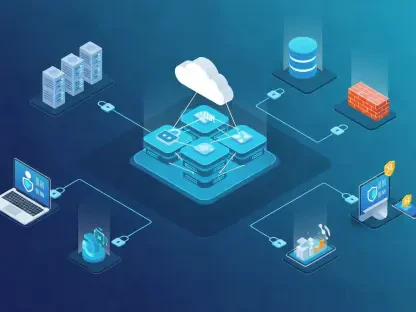

The staggering complexity of modern cloud ecosystems has pushed traditional scheduling tools to a breaking point, forcing global enterprises to seek a unified control plane capable of managing billions of concurrent operations. This fragmentation across cloud and on-premises environments has created a significant demand for holistic orchestration. As legacy infrastructures struggle to integrate with modern AI applications, open-source frameworks are emerging as the essential bridge. Thousands of organizations are now pivoting toward these flexible solutions to maintain a cohesive grip on their digital operations.
The role of a unified control plane is becoming central to managing global data systems and complex business processes. Without a singular layer of visibility, technical debt and operational silos often lead to systemic inefficiencies. Consequently, the transition to a more integrated orchestration model is not just a trend but a strategic necessity for companies aiming to survive the current landscape of digital complexity.
Analyzing the Shift Toward Developer-Centric and AI-Driven Automation
Key Drivers of Growth: From Bottom-Up Adoption to Agentic AI Orchestration
Software procurement has undergone a radical transformation, moving away from executive-led mandates toward a developer-first strategy. Engineers now prioritize versatility and extensive plugin libraries that allow them to solve immediate technical frustrations without the friction of traditional top-down approvals. This shift ensures that tools are adopted based on their practical utility in solving real-world problems, fostering a loyal community that drives continuous innovation.
Emerging technologies like agentic orchestration and real-time observability are further accelerating this evolution by enhancing workflow efficiency. As engineer behavior continues to favor hybrid-cloud support and air-gapped security, the demand for adaptable platforms has increased. These systems do more than execute tasks; they provide the intelligence needed to manage complex dependencies in an increasingly automated world.
Measuring Impact: Explosive Scaling and Enterprise Performance Metrics
The scale of this shift is best reflected in performance metrics that show billions of workflows being executed across diverse industrial sectors. Recent financial indicators suggest exponential revenue growth, particularly as platforms transition toward usage-based pricing models that align costs with actual value. This momentum indicates deep market penetration, with North American and European enterprises leading the charge in modernizing their automation stacks.
Looking ahead, the launch of managed cloud services will likely accelerate this trend by removing the operational overhead of self-hosting. Organizations are looking for scalable solutions that can handle the massive data volumes generated by modern AI pipelines. This transition signals a broader industry move away from rigid, license-heavy software toward agile, performance-driven infrastructure.
Overcoming Structural Barriers in Complex Enterprise Environments
Technical debt remains a primary hurdle for large-scale digital transformation. Infrastructure provisioning that once took months is now being streamlined into a matter of days through unified orchestration platforms. By consolidating disparate automation scripts and local data center processes into a single, observable layer, companies can significantly reduce deployment timelines and eliminate the tool sprawl that often paralyzes IT departments.
These strategies are particularly effective for industrial players operating across heterogeneous environments. Instead of managing dozens of isolated tools, teams utilize a central hub to coordinate activities across various cloud providers. This consolidation not only improves efficiency but also provides the transparency needed to identify and resolve bottlenecks before they impact the bottom line.
Establishing Trust Through Security and Compliance in Regulated Sectors
In high-stakes industries like banking, aerospace, and global manufacturing, security is the paramount concern. Regulatory requirements demand that orchestration tools offer air-gapped deployments and sovereign cloud capabilities to maintain strict data integrity. Automating cybersecurity remediation and compliance reporting has become essential for meeting global standards while maintaining operational control during large-scale migrations within sensitive technical ecosystems.
Maintaining trust in these environments requires more than simple encryption; it requires a platform that understands the nuance of regulated workflows. By integrating compliance checks directly into the automation lifecycle, organizations ensure that every action is audited and secure. This proactive approach to security allows even the most conservative sectors to embrace modern orchestration without compromising their safety protocols.
Defining the Next Generation of Universal Orchestration Infrastructure
The evolution toward distributed execution engines marks a new chapter in the history of enterprise automation. As legacy schedulers are displaced by AI-native systems, the focus is shifting toward real-time data orchestration and high-efficiency tools. Global economic conditions are further driving the demand for systems that can handle massive scale while remaining cost-effective and manageable.
Native agentic orchestration will soon redefine the intersection of human workflows and artificial intelligence, creating a more intuitive relationship between developers and their code. These next-generation systems are designed to be the backbone of the digital economy, providing the reliability required for the next decade of innovation. The transition to these universal platforms is inevitable as the limits of traditional automation are reached.
Synthesizing the Future of Automated Enterprise Ecosystems
The shift from fragmented tools to a standardized orchestration layer represented a fundamental change in how global enterprises approached digital transformation. By prioritizing developer-led movements and open-source flexibility, organizations successfully dismantled the silos that previously slowed down innovation. The massive capital infusions into this space confirmed that the industry was ready for a more robust and scalable way to manage complex technical operations across the globe.
Future strategies should involve a deep commitment to modernizing legacy infrastructure through agile, observable platforms that can grow alongside AI capabilities. Leaders must move beyond the limitations of static job scheduling and embrace the dynamic nature of agentic orchestration to remain competitive. The long-term viability of these developer-centric movements demonstrated that technical vision, when paired with practical utility, could indeed redefine the standard for enterprise-grade automation.