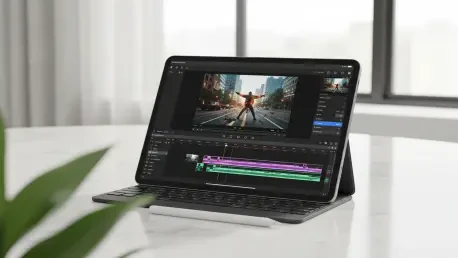

The rapid integration of high-fidelity generative artificial intelligence into consumer editing suites has fundamentally altered the competitive dynamics between legacy software providers and agile social media giants like ByteDance. By embedding the advanced Dreamina Seedance 2.0 model directly into CapCut, the company has transitioned from offering a basic mobile editor to providing a sophisticated generative powerhouse. This move enables users to produce professional video content from text prompts or static images, challenging the market dominance of established players. This analysis explores how such democratization affects production standards and whether ByteDance can navigate the strategic hurdles inherent in a global AI rollout.
The Evolution of Video Production: From Manual Assembly to Generation
Historically, video editing software focused on refining user interface efficiency and providing basic automation for trimming or layering. CapCut originally gained momentum by simplifying these complex tasks for social media creators, filling a void for accessible, high-quality mobile tools. However, the industry has shifted toward generative AI, where software no longer merely organizes clips but builds them from a blank digital canvas. This evolution represents a departure from traditional editing to a “generative” creation phase that prioritizes conceptual input over manual technical execution.
The decision to mainstream the Seedance 2.0 model reflects a significant market trend where creators demand the ability to visualize ideas instantly. By removing the logistical and financial barriers associated with physical filming, ByteDance is repositioning the creative process. This background is essential for understanding the current landscape, as it highlights a broader industry movement toward reducing the time between a creative spark and a finished visual product.
Navigating the Technical and Ethical Frontier of Generative Video
High-Fidelity Rendering: Overcoming Traditional Motion Barriers
A primary technical challenge for AI video models has been the “uncanny valley” effect, characterized by jerky or unnatural movements in synthetic clips. Dreamina Seedance 2.0 targets this specific weakness by specializing in fluid, motion-heavy sequences such as action scenes or athletic tutorials. By rendering realistic textures and sophisticated lighting across 15-second clips, the model provides a level of polish previously restricted to high-budget production houses.
Early data indicates that this high-fidelity capability is highly effective for rapid prototyping. Creators use the tool to visualize early-stage concepts or sketches, allowing for visual style iteration before physical cameras are even deployed. This efficiency reduces the risk of expensive reshoots and empowers smaller creators to compete with the visual quality of larger agencies, fundamentally changing how b-roll and supplementary footage are sourced.
Balancing Creative Liberty: Implementing Robust Safety Guardrails
As generative tools become more accessible, the risks associated with deepfakes and misinformation necessitate rigorous oversight. ByteDance has implemented strict ethical guardrails, including blocks on generating real human faces and automated filters to prevent the infringement of intellectual property. These measures aim to foster a safe environment for experimentation while mitigating the legal and social risks inherent in synthetic media creation.
Furthermore, the integration of invisible watermarks ensures content provenance, providing a layer of transparency for platforms and audiences. This balance between innovation and caution is vital for maintaining the trust of brand partners who are increasingly wary of AI-generated content. These safeguards represent a necessary compromise, ensuring that the technology remains a tool for creative expression rather than a source of digital deception.
Geographical Strategy: Managing the Intellectual Property Bottleneck
The rollout of Seedance 2.0 has been intentionally selective, focusing on markets like Brazil and Indonesia while initially bypassing the United States and Europe. This phased approach reflects the complex legal landscape regarding AI and copyright. In regions with stringent intellectual property laws, the entertainment sector has expressed concerns over how training data is sourced and whether it displaces human labor.
By refining compliance frameworks in specific regions first, the company is attempting to navigate these legal hurdles. This strategy allows ByteDance to address common misconceptions about AI-generated art while building a more sustainable global deployment model. Understanding these regional disparities is crucial for recognizing how global regulations will eventually shape the standard tools used by digital storytellers across the globe.
Looking Ahead: The Future Landscape of AI-Assisted Media
The trajectory of video creation points toward a collaborative future where AI acts as a creative partner rather than a mere utility. Emerging trends suggest a shift toward real-time video generation, enabling creators to adjust lighting, wardrobe, or environmental settings via voice commands during the editing process. Significant technological advancements will likely allow for longer, more coherent narratives that maintain visual consistency across multiple scenes, bridging the gap between short-form clips and cinematic storytelling.
As regulatory frameworks continue to stabilize, these tools will become standardized in professional workflows. This shift will likely give rise to a new category of “AI-native” filmmakers who prioritize visual direction and prompt engineering over traditional technical skills. The economic impact will be substantial, as the cost of entry for high-end video production continues to plummet, encouraging a more diverse range of voices to enter the media landscape.
Practical Strategies: Navigating the New Creative Reality
For businesses and creators to remain competitive, they should view AI as an enhancement to their existing workflows. Professionals are encouraged to use these tools for rapid “mood-boarding” and prototyping to align stakeholders on visual directions early in the project lifecycle. Best practices include utilizing Seedance 2.0 to generate supplementary b-roll or to experiment with high-risk sequences that would otherwise be too costly or dangerous to film live.
Marketers can significantly reduce production timelines by adopting these AI-driven methods for testing multiple visual concepts simultaneously. By applying these insights, creators can focus more on narrative strategy and audience engagement while the software handles the intensive labor of visual rendering. This approach ensures that the human element of storytelling remains central even as the technical process becomes increasingly automated.
Final Verdict on the Evolution of Digital Storytelling
The integration of Dreamina Seedance 2.0 into the CapCut ecosystem represented a defining moment for the digital media industry. By combining high-fidelity visual rendering with calculated safety protocols and a targeted market strategy, ByteDance established a new benchmark for mobile and desktop editing. This shift proved significant because it empowered a global community of creators to produce professional-grade content with unprecedented ease and speed. As the technology matured and legal frameworks stabilized, the ability to turn imagination into high-quality video became a standard expectation for everyone. These developments forever altered how stories were told, making the digital landscape more visual, dynamic, and accessible than it was in previous eras.