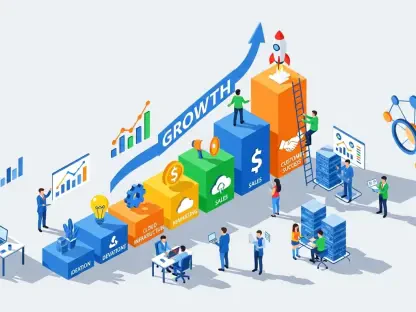

The traditional software-as-a-service model is currently undergoing its most volatile transformation since the cloud revolution, as the line between static tools and autonomous intelligence continues to blur. While skeptics once argued that generative artificial intelligence would cannibalize the subscription software market, the reality unfolding across the global landscape suggests a more symbiotic evolution. Software is no longer just a digital filing cabinet for business data; it has become an active participant in commercial strategy. This shift is particularly evident in the way market leaders are retooling their core offerings to move beyond mere utility toward comprehensive intelligent partnership.
Recent market shifts indicate that the software industry has reached a point of saturation where efficiency gains from standard digital tools have plateaued. Modern enterprises now demand platforms that do more than organize information—they require systems that can interpret, predict, and act upon that data. This demand has forced a rapid consolidation of technologies, where the integration of large language models and vertical-specific expertise determines who stays relevant. Regulatory bodies are also keeping a close watch, ensuring that as these systems become more autonomous, they remain transparent and compliant with evolving data privacy standards across international borders.
The Convergence of Software and Intelligence: A New Era for SaaS
The global SaaS sector is currently defined by a Great Decoupling, where general-purpose tools are losing ground to specialized platforms that offer deep, industry-specific intelligence. As we navigate the current fiscal year, the significance of this shift is reflected in how major players like Weimob Group have restructured their entire value proposition. The industry is no longer satisfied with providing a dashboard; the goal is now to provide an outcome. This transition is fueled by the rapid maturation of AI commercialization, moving from speculative experimental phases into a period of measurable financial contribution and operational necessity.
Technological influences, specifically the rise of autonomous agents, have forced a reevaluation of what constitutes a valuable software subscription. Market players that failed to adapt are seeing their churn rates climb, while those that pivoted early are capturing a larger share of the enterprise wallet. This new era is also shaped by stringent data governance and localized regulations, requiring software providers to maintain high security standards while delivering the agility that modern commerce demands. The result is a more complex but potentially more lucrative ecosystem for those who can successfully bridge the gap between code and cognition.
From Software Utilities to Intelligent Business Partners
Emerging Trends in Vertical SaaS and AI Integration
One of the most profound trends affecting the industry is the rise of vertical SaaS as a primary vehicle for AI deployment. Unlike general-purpose AI that lacks context, vertical platforms possess a deep moat consisting of years of proprietary industry data and operational know-how. This specialized knowledge allows software to act as a digital expert rather than a blank slate. We are seeing a shift where businesses no longer look for a tool to build a website; they look for a partner that can build the website, write the copy, and optimize the conversion rates automatically based on real-time market behavior.
Emerging technologies like multi-agent orchestration are now allowing these platforms to handle complex, multi-step business processes that previously required significant human intervention. This evolution is driven by a change in consumer behavior, as merchants and brands prioritize speed and automation over manual control. The market is increasingly rewarding platforms that can demonstrate an immediate impact on the bottom line through intelligent automation, creating a new set of drivers focused on performance-based software rather than just administrative convenience.
Performance Metrics and the Economic Value of AI Commercialization
The financial metrics from the past year provide a clear quantitative validation of the AI-first strategy. Weimob Group reported a total annual revenue of RMB 1.592 billion, an 18.9% increase that highlights the resilience of the SaaS model when infused with intelligence. Even more telling is the specific growth of AI-related revenue, which surpassed RMB 116 million. The trajectory is sharply upward, with the second half of the year showing a growth rate of 137.5% compared to the first half. These figures prove that AI is no longer a theoretical cost center but a primary driver of top-line growth.
Looking ahead toward 2027 and 2028, projections suggest that AI-enhanced services will continue to represent a growing percentage of total SaaS revenue. This growth is supported by high adoption rates for products like Weimob WAI, which has transitioned from generating simple text to executing complex business tasks. As the industry moves further into this decade, the economic value of SaaS will be increasingly measured by the efficiency gains and revenue growth it generates for the end user, rather than the sheer number of features it offers.
Navigating the Existential Threat of AI Agents and Market Obsolescence
Despite the optimistic growth figures, the industry faces an existential question regarding the long-term viability of traditional software interfaces. Some analysts suggest that by 2030, a significant portion of single-function SaaS tools will be replaced by independent AI agents. This threat is particularly acute for tools that only manage simple workflows. To overcome this, successful platforms are leveraging their deep API scheduling capabilities and industry knowledge. By becoming the orchestrator of these agents rather than a tool to be replaced by them, vertical SaaS providers maintain their position as the essential infrastructure for business operations.
The strategy to counter obsolescence involves turning the software into a skill-scheduler. When a platform can decompose a complex natural language instruction into a series of executed tasks, it becomes indispensable. The solution to the threat of AI is, paradoxically, more AI—specifically, AI that is deeply integrated into the existing business logic of the user. Companies are also navigating the challenge of high infrastructure costs by adopting hybrid pricing models that align their revenue with the actual computational value provided to the client, ensuring sustainability even as the underlying technology evolves.
The Governance of Data and Compliance in AI-Driven Ecosystems
As AI becomes the engine of SaaS, the importance of data governance and compliance has never been higher. Regulatory landscapes are shifting to address the unique challenges of machine learning, including bias, transparency, and data sovereignty. For a company like Weimob, maintaining a competitive edge requires not just technological innovation but a rigorous adherence to international security standards. This is especially true as these companies expand into North American and Southeast Asian markets, where data protection laws are both stringent and varied.
Compliance is no longer just a legal hurdle; it is a feature that builds trust with enterprise clients. Security measures must be woven into the fabric of the AI models themselves to prevent data leakage and ensure that the intelligence being used is based on high-quality, ethically sourced data. As we move forward, the role of the software provider as a custodian of business intelligence will be a defining characteristic of market leadership. Practices are shifting toward more transparent AI operations, where users have greater visibility into how decisions are made by the autonomous systems they employ.
The Future Roadmap: Skills-Scheduled Agents and Global Expansion
The industry roadmap is clearly pointing toward a future dominated by Skills-scheduled Agent 2.0 systems. This represents a fundamental shift in human-computer interaction, where the user no longer needs to learn how to navigate a complex software interface. Instead, the merchant provides an intent, and the system identifies the necessary skills from a vast operational knowledge base to achieve the goal. This democratization of high-level business strategy allows even small enterprises to operate with the sophistication of a large corporation, using AI as a digital super employee.
Global expansion remains a critical growth area, with North America and Southeast Asia serving as the primary battlegrounds for AI-native SaaS solutions. Innovation in independent website building and localized e-commerce tools will be the wedge that allows regional leaders to become global contenders. Factors such as international financing and strategic investments in AI-native startups will accelerate this process. As global economic conditions continue to fluctuate, the companies that offer the most efficient, automated path to revenue for their clients will be the ones that capture the next wave of market share.
Strategic Synthesis: Redefining Value in the AI-First Economy
The findings of this report suggested that the integration of intelligence into software ecosystems was not merely an additive feature but a fundamental rebirth of the SaaS industry. By moving away from static tools and toward autonomous partnership, companies demonstrated that the existential threat of AI could be converted into a massive growth catalyst. The transition from workflow-based systems to intent-driven agents redefined the user experience, making sophisticated business operations accessible to a broader range of merchants. This shift was supported by robust financial data, showing that AI-driven revenue became a dominant factor in organizational stability and expansion.
Future considerations for investors and industry leaders should focus on the continued evolution of consumption-based pricing and the deepening of vertical-specific moats. The success of the 2025 fiscal year served as a blueprint for navigating the transition to an AI-first economy, emphasizing that the marriage of deep industry data with flexible AI scheduling is the most defensible position in a rapidly changing market. Organizations must now prioritize the development of specialized agents that can handle niche operational tasks with high precision. Ultimately, the industry moved past the fear of obsolescence by proving that when software becomes truly intelligent, it becomes more essential than ever before.