
The era of navigating through dozens of disparate browser tabs to finish a single task ended as autonomous agents took over the heavy lifting of enterprise workflows. For decades, the Graphical User Interface (GUI) functioned as the indispensable bridge between human intention and binary data. This legacy created a software landscape defined by visual complexity, where the value of a platform was often measured by the comprehensiveness of its dashboard. These interfaces were designed to help humans navigate systems of record, ensuring that data entry was accurate and information retrieval was possible. However, the current shift toward agentic execution is rendering these visual layers redundant, moving software from a passive container of information to an active participant in business processes.
The transition from software as a system of record to AI agents as a system of action represents a fundamental change in the execution runtime of the enterprise. In this new paradigm, the primary consumer of software is no longer a human eye but an autonomous agent capable of direct system-level interactions. This shift means that the architectural priority has moved away from user-facing screens and toward the robustness of the backend logic and the accessibility of the underlying data. As software becomes a background utility, the traditional SaaS dashboard is being hollowed out, leaving behind a headless structure that prioritizes programmatic efficiency over aesthetic navigation.
Generative AI facilitated this evolution by transforming Large Language Models (LLMs) from simple conversational chatbots into sophisticated reasoning engines. While early versions of these models were confined to text generation, the current generation of agents possesses the agency to perform multi-system interactions. These agents can interpret complex instructions, browse the web, execute code, and manipulate files across various cloud environments. By leveraging these capabilities, organizations are moving beyond mere automation and toward true autonomous work, where agents manage the nuances of a task without requiring constant human intervention.
The market landscape reflects this massive structural change as both open-source innovators and established giants race to define the new standard. Frameworks like OpenClaw have gained significant traction by providing developers with the tools to build agentic layers that can interact with any operating system or browser. Simultaneously, entrenched leaders such as Microsoft and Salesforce are re-engineering their entire stacks to support agent-first workflows. This competitive environment is no longer about who has the best user interface, but rather who can provide the most reliable execution environment for the agents that now perform the bulk of the work.
The Rise of Conversational Operating Systems and Autonomous Workflows
Emerging Trends in Interface Abstraction and Shadow Automation
A significant portion of enterprise activity has migrated away from specialized SaaS tabs and toward centralized communication layers like Slack, Discord, and WhatsApp. These platforms are becoming the new hubs of the conversational operating system, where work is requested and fulfilled within the same chat thread. By integrating AI agents directly into these messaging environments, companies allow employees to trigger complex workflows through natural language. This abstraction layer effectively hides the complexity of the underlying software, making the specialized SaaS interface a secondary tool used only for high-level administration or rare manual overrides.
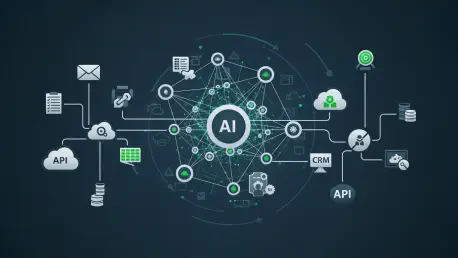
This migration has empowered a “headless” SaaS architecture where the frontend is entirely bypassed in favor of direct API interactions. When an agent can pull data from a CRM, analyze it in a spreadsheet, and post the summary to a messaging channel, the need for a human to log into those individual platforms disappears. This trend is particularly evident in organizations that have adopted “zero-touch” processes, where agents handle everything from lead qualification to invoice processing. As the frontend becomes invisible, the strategic value of a software provider increasingly depends on the quality of its API and the depth of its integration capabilities.
Furthermore, the rise of shadow AI and local empowerment is disrupting traditional enterprise procurement cycles. Developers and teams are increasingly deploying their own open-source agentic layers locally to automate their specific tasks, often bypassing the formal software evaluation process. These local agents provide a level of customization and speed that centralized enterprise tools struggle to match. This bottom-up adoption forces IT departments to reconsider their governance strategies, as they must now manage a fleet of disparate, locally hosted agents that are performing critical business functions outside of the official company dashboard.
Market Projections and the Economics of Agentic Software
The economic model of the SaaS industry is undergoing a radical transformation, moving from per-seat licensing to outcome-based or execution-based value. Historically, software companies generated revenue based on the number of human users logged into the platform. As agents replace human users, this model becomes obsolete. Forward-thinking vendors are now exploring pricing structures that charge based on the successful completion of a task or the amount of compute resources consumed by an agent. This shift aligns the cost of software more closely with the actual business value generated, though it creates significant revenue volatility for legacy providers.
Growth indicators suggest a rapid decline in manual dashboard interactions as agentic frameworks become the standard for developer productivity. The adoption rates of these frameworks on platforms like GitHub have outpaced almost every previous software trend, signaling a deep desire for automation over manual navigation. By 2027, it is projected that over seventy percent of routine administrative tasks will be initiated and completed by agents without a human ever opening a traditional SaaS application. This decline in manual interaction represents a trillion-dollar shift in how enterprise value is captured and distributed across the technology stack.
Future forecasts indicate that the $200B+ SaaS market will eventually consolidate around the platforms that successfully serve as the primary “software consumers.” As agents become the dominant users of software, the platforms that are easiest for an agent to navigate—rather than those that are easiest for a human to use—will win. This means that technical documentation, API consistency, and data accessibility will become more important than user experience design. The companies that fail to adapt to this agent-centric reality risk becoming irrelevant as their expensive, high-touch interfaces are ignored by the very automation that was supposed to enhance them.
Navigating the Reliability Cliff and Structural Barriers
One of the most pressing technical challenges in the current era is the 13-step reliability constraint, which refers to the sharp drop in performance as agents attempt complex, multi-stage workflows. While an agent might have a ninety-five percent success rate on a single-step task, that probability compounds negatively over a sequence of thirteen or more steps. This “reliability cliff” remains a significant barrier for mission-critical operations, such as legal compliance or complex financial auditing. To overcome this, organizations are developing modular orchestration strategies that break down long processes into smaller, verifiable segments where each output is validated before the next step begins.
To bridge the gap between AI autonomy and absolute reliability, the human-in-the-loop necessity remains a vital component of the modern enterprise. High-stakes processes require deterministic guardrails that prevent an agent from making unauthorized decisions or hallucinating incorrect data. These guardrails often take the form of manual validation steps where a human supervisor must approve an agent’s proposed action before it is executed. This hybrid model ensures that companies can benefit from the speed of agentic automation while maintaining the accountability and judgment that only a human professional can provide in a complex regulatory environment.
Security vulnerabilities have also evolved, with new threats like prompt injection and “ClawJacked” attacks targeting the unique permissions granted to agents. Because agents often have broad access to browser sessions and local file systems, a malicious prompt can trick them into performing unintended actions, such as transferring funds or deleting sensitive records. Combating these threats requires a new generation of security tools that can monitor agent behavior in real-time, detecting anomalies and intercepting malicious commands before they reach the execution runtime. Security is no longer just about protecting the perimeter; it is about governing the behavior of the internal workforce of agents.
Data exfiltration risks are particularly acute when agents are granted the ability to move information across different platforms and geographic borders. An autonomous agent might inadvertently leak sensitive enterprise data, such as private SSH keys or proprietary source code, while trying to solve a coding problem or generate a report. Developing strategies to prevent these leaks is essential for maintaining corporate secrets and complying with data protection laws. This includes the implementation of strictly scoped permissions and the use of data loss prevention (DLP) technologies that are specifically designed to analyze the context of agent-driven data transfers.
Governance, Identity, and the New Regulatory Frontier
The emergence of specialized identity governance for AI, such as Microsoft’s Entra Agent ID, highlights the growing need to track and audit non-human actors within the enterprise. Just as every employee has a digital identity, every agent must now have a verifiable identity that defines its permissions and records its actions. This allows organizations to maintain a clear audit trail, ensuring that every change made to a system can be traced back to a specific agent and its original instruction. Managing these non-human identities is becoming a core responsibility of IT departments, requiring new tools for lifecycle management and access control.
Navigating global standards for data sovereignty and compliance is increasingly difficult as agents move information seamlessly across various platforms and borders. When an agent fetches data from a server in Europe to process it using a model hosted in North America, it creates complex legal challenges regarding data privacy and residency. Organizations must implement sophisticated routing rules that ensure agents stay within the bounds of regional regulations like GDPR or local data protection acts. This requires a deep integration between the agent’s orchestration layer and the organization’s compliance infrastructure to ensure that automation does not come at the cost of legal liability.
Regional regulatory divergence is also shaping the development of agentic AI, with different markets taking vastly different approaches to oversight. In many Asian markets, a “Sovereign AI” approach emphasizes national control and the hyper-centralization of data within government-approved ecosystems. In contrast, Western markets tend to favor decentralized, innovation-led frameworks that prioritize market competition and developer flexibility. These diverging paths mean that global enterprises must maintain highly adaptable agent architectures that can be reconfigured to meet the specific legal and cultural requirements of each region in which they operate.
The role of audit trails has expanded from a reactive compliance measure to a proactive tool for maintaining transparency in a world of invisible, automated work. Robust logging mechanisms are now necessary to capture every reasoning step an agent takes, providing a window into the “black box” of AI decision-making. This transparency is vital for troubleshooting errors, justifying business decisions to stakeholders, and proving compliance during regulatory audits. By maintaining a complete history of agentic activity, companies can build the trust necessary to expand the scope of automation into increasingly sensitive areas of the business.
The Future of the Enterprise Stack: Orchestration as the Ultimate Moat
Competitive advantage is rapidly moving from the visual layer of software to the identity and data gravity layers of the infrastructure. In a world where agents do the work, the platform that holds the most context and the most secure authentication methods becomes the “control tower” of the enterprise. This shift means that the battle for dominance is no longer fought over who has the best user interface, but over who controls the orchestration of agents. The winner will be the platform that can most effectively manage the interaction between different agents, ensuring that data flows securely and workflows are executed without friction.
The orchestration race is heating up as platforms fight to become the central point of contact for agent authentication and context retrieval. To be effective, an agent needs access to a wide range of data, from calendar events and emails to real-time sales figures and project updates. The platform that can provide this unified context while maintaining strict security protocols will naturally become the primary environment for enterprise work. This centralization allows for more sophisticated automation, as agents can leverage a holistic view of the organization to make better decisions and execute more complex tasks across multiple systems.
Hyper-centralized ecosystems, particularly those prevalent in Asian markets like Lark and DingTalk, are accelerating the death of standalone SaaS tools by integrating all essential functions into a single, agent-friendly platform. These all-in-one environments provide a massive amount of live data for agents to reason over, reducing the need for complex integrations between disparate third-party apps. As these ecosystems continue to evolve, they represent a significant threat to the specialized SaaS model, offering a more cohesive and efficient environment for agentic automation to thrive.
Innovation in zero-copy architecture is further transforming the enterprise stack by allowing agents to reason over live data without moving it out of secure environments. This approach minimizes the risk of data leakage and ensures that the most up-to-date information is always being used. By bringing the reasoning power of the AI to the data, rather than moving the data to the AI, organizations can maintain a higher level of security and performance. This architecture is becoming the gold standard for enterprise AI, providing a foundation for autonomous workflows that are both powerful and inherently secure.
Redefining the Digital Workplace for the Agentic Era
The transition from interface-centric to execution-centric enterprise software fundamentally altered the digital workplace. This investigation confirmed that the traditional SaaS dashboard, once the cornerstone of productivity, was largely relegated to a supervisory role as autonomous agents assumed responsibility for routine system interactions. The research showed that the decoupling of the user interface from the underlying execution runtime allowed for a more fluid and integrated work environment, primarily centered within conversational platforms. These changes necessitated a complete reevaluation of how software value was measured and how enterprise security was maintained in a landscape populated by non-human actors.
The modern professional successfully evolved from a data entry specialist into an agent supervisor and exception handler. The analysis of labor trends indicated that as agents took over the mechanical aspects of software navigation, human workers focused their efforts on high-level strategy, creative problem-solving, and the ethical oversight of automated systems. This shift required a new set of skills, emphasizing the ability to orchestrate complex digital workflows and manage the output of diverse agentic fleets. The workforce that embraced this change saw a significant increase in productivity, as the burden of administrative overhead was shifted to the execution layer.
Strategic investment recommendations focused heavily on agent orchestration, security infrastructure, and identity governance as the primary growth areas. It was determined that the most resilient organizations were those that invested in the architecture of trust, ensuring that their autonomous agents operated within a well-defined and secure framework. Furthermore, the move toward zero-copy data architectures and localized agentic layers was identified as a key trend for maintaining data sovereignty in a global market. These investments provided the necessary foundation for organizations to scale their automation efforts without compromising on security or compliance.
The findings suggested that the future of work belonged to those who successfully controlled the infrastructure of execution rather than the pixels on the screen. The death of the traditional SaaS interface was not the end of enterprise software, but rather the beginning of a more efficient, autonomous, and integrated era of digital work. By moving beyond the constraints of the GUI, the enterprise stack became more flexible and responsive to the needs of the business. Ultimately, the successful navigation of this transition relied on the ability to build a robust ecosystem where agents and humans collaborated seamlessly to achieve complex organizational goals.